
How to Choose the Right Commercial-Grade Pots and Pans
Stainless steel cookware is a core asset in every commercial kitchen. Whether you run a high-volume restaurant, a hotel culinary operation, or a catering business, the right cookware directly influences food consistency, operational efficiency, and long-term cost control. Stainless steel stands out for its durability, heat resistance, cleanability, and versatility—making it the professional’s preferred choice.
This guide provides clear, procurement-oriented direction to help you evaluate and select the best stainless steel cookware for your business.
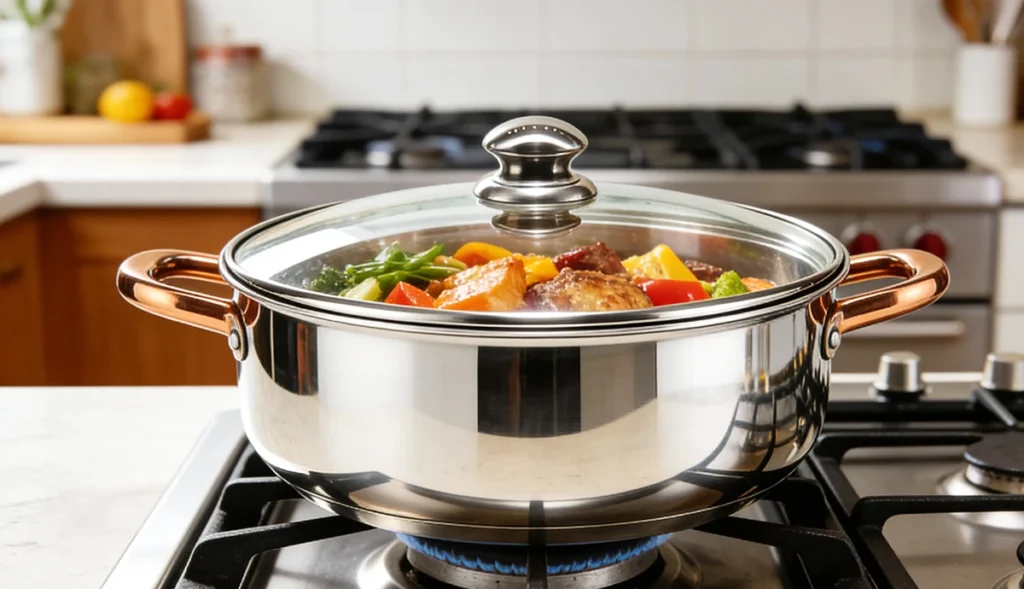
What Is Stainless Steel Cookware?
Stainless steel cookware refers to pots and pans constructed primarily from iron alloyed with chromium and nickel. Its defining benefits include corrosion resistance, strong structural integrity, and stability under high heat.
Common Construction Types
Single-Ply Stainless Steel
A single layer of stainless steel. Durable but may heat unevenly.
Multi-Ply (Tri-Ply, 5-Ply, 7-Ply)
Layers of stainless steel combined with aluminum or copper for better heat conductivity and uniformity.
Impact-Bonded Base
A thick aluminum or copper plate fused to the base of stainless steel cookware. Cost-effective and suitable for most commercial kitchens.
Stainless Steel Material Grades
304 Stainless Steel (18/8 or 18/10)
Corrosion-resistant, durable, and ideal for professional kitchens.
201 Stainless Steel
More economical, slightly lower corrosion resistance but widely used in the foodservice industry.
316 Stainless Steel
Superior corrosion resistance; used in premium cookware and specialized applications.
Nickel and Chromium
Chromium (Cr) provides rust resistance.
Nickel (Ni) improves shine and corrosion resistance.
Higher nickel content generally means higher quality and longevity.
Key Factors to Consider When Purchasing
Stainless Steel Grade
304 → best overall balance of durability and hygiene
201 → budget-friendly for large-volume purchase
316 → premium, chemical-resistant
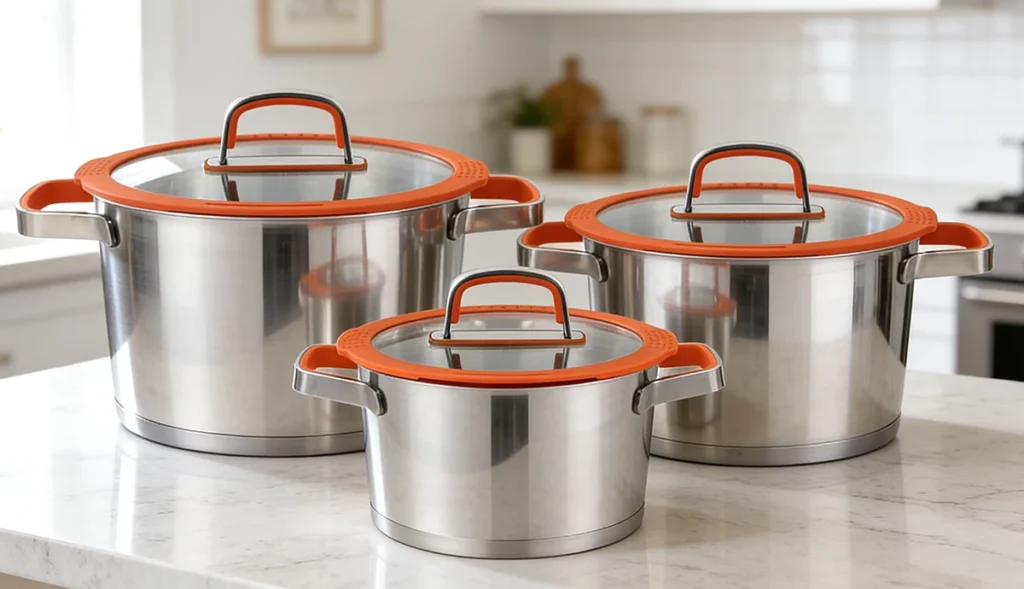
Ply Structure
Tri-Ply (Stainless–Aluminum–Stainless): Excellent heat distribution for most professional uses
5-Ply: Greater heat retention and control
Encapsulated Bottom: Economical, suitable for general commercial cooking
Thickness and Weight
Heavier cookware offers superior heat retention but requires more handling strength.
Heat Conductivity
Aluminum or copper cores inside the ply construction ensure even cooking and prevent hot spots.
Compatibility
Ensure compatibility with:
Induction cookers
Gas stoves
Electric or ceramic cooktops
Handle Type
Riveted handles: Strong and durable
Rivetless handles: More hygienic for commercial environments
Lid Options
Stainless steel lids: Durable and heat-safe
Glass lids: Allow visibility but require more careful handling
Types of Cookware to Evaluate
Saucepans
Sauté pans
Woks
Braziers
Steamers
Multi-size sets for restaurant chains or central kitchens
Comparison Table: Stainless Steel Cookware Options
| Feature | Tri-Ply | 5-Ply | Encapsulated Base | 201 Grade | 304 Grade |
| Heat Distribution | Excellent | Outstanding | Good | Fair | Excellent |
| Durability | High | Very High | High | Medium | High |
| Ideal For | Restaurants, cafés | Hotels, premium kitchens | General foodservice | Budget operations | Most commercial kitchens |
| Pros | Even heating | Maximum control | Cost-effective | Affordable | Corrosion-resistant |
| Cons | Higher cost | Heavier + higher cost | Less conductive | Lower corrosion resistance | Higher price than 201 |
Use Case Scenarios for Commercial Kitchens
Quick-Service Restaurant (QSR)
Requires durable cookware with fast heat response.
Recommended: Tri-ply fry pans and sturdy stock pots.
Hotel or Banquet Kitchen
High production volume and diverse menus.
Recommended: 5-ply cookware for superior performance and consistency.
Catering Business
Mobility, durability, and versatility are key.
Recommended: Impact-bonded pots, easy-to-clean rivetless designs.
Asian Wok or High-Heat Applications
Needs fast heat transfer and thermal shock resistance.
Recommended: Tri-ply or heavy-gauge stainless steel woks.
Braising and Slow Cooking Operations
Requires heat retention and steady simmer.
Recommended: Thick-base tri-ply or 5-ply stockpots and braziers.
Maintenance, Cleaning & Lifespan
To keep stainless steel cookware performing at its best:
Cleaning Best Practices
Use warm water and mild detergent
For stuck-on food, deglaze with warm water
Use Bar Keepers Friend or vinegar for discoloration
Avoid abrasive cleaning pads on polished surfaces
Preventing Common Issues
Rainbow stains: Caused by overheating; clean with vinegar
Burnt residue: Soak with hot water + baking soda
Sticking: Preheat the pan properly and use adequate oil
Lifespan
High-quality stainless steel cookware can last 10–20 years in commercial environments when properly maintained.
Common Buyer Mistakes
Choosing cookware by price alone
Buying home-grade cookware for a commercial kitchen
Ignoring ply structure and heat distribution
Not confirming induction compatibility
Overlooking ergonomic and hygiene factors (e.g., rivetless handles)
Frequently Asked Questions
Is 304 stainless steel better than 201?
Yes, 304 offers superior corrosion resistance and durability, making it more suitable for long-term commercial use.
What is tri-ply cookware and why does it matter?
Tri-ply cookware distributes heat more evenly and prevents hot spots, improving consistency and cooking efficiency.
Can stainless steel be used on induction?
Most stainless steel cookware is induction-compatible, but always confirm the base materials.
What thickness is ideal for restaurant cookware?
Typically 0.6–1.2 mm for pans; heavier gauges for stock pots and high-heat applications.
Conclusion: Making the Right Purchase Decision
Selecting stainless steel cookware for a commercial kitchen requires evaluating material grade, ply construction, heat conductivity, and operational use case. The right cookware will reduce labor time, improve food quality, increase energy efficiency, and withstand long-term commercial use.
By understanding your kitchen’s workflow—volume, menu type, heating equipment—you can match cookware specifications to your business needs and make a confident, cost-effective investment.
-
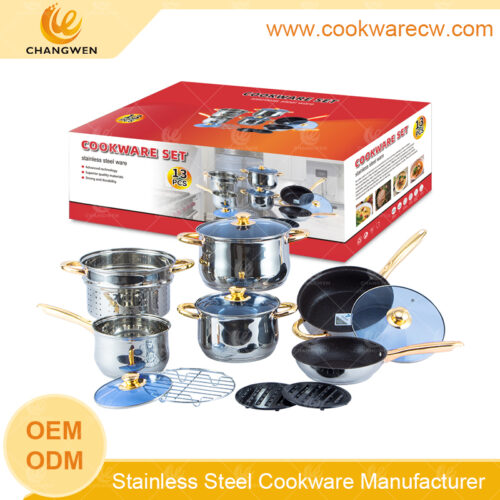
Factory Wholesaler 13 pcs nonstick stainless steel cookware set fry pan saucepan casserole steamer rack black mats CW-M1301
-
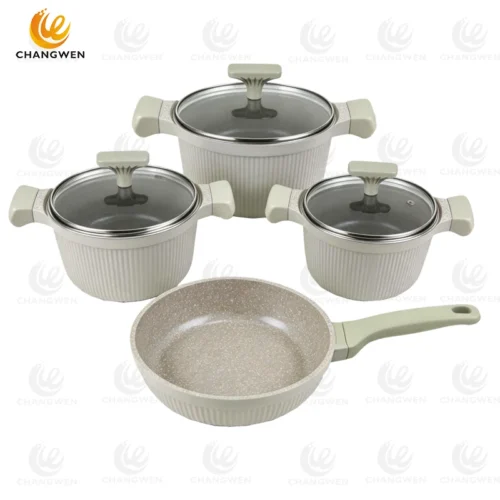
7pcs Vertical Stripe Nonstick Aluminum Cookware Set with Silicone Lid | Changwen Aluminum Cookware Factory China
-
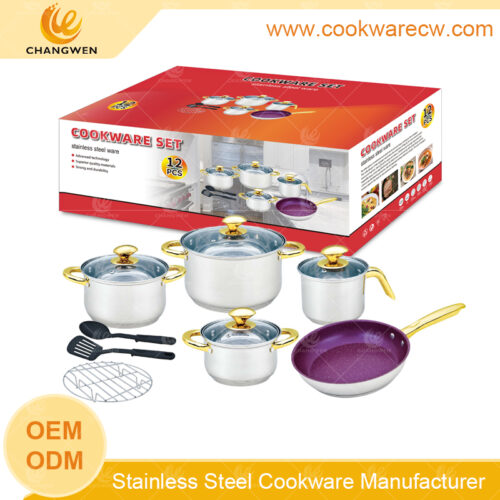
Cookware wholesaler 12pcs pots and pans stainless steel cooking sets kitchenware tools and steamer CW-M1211
-
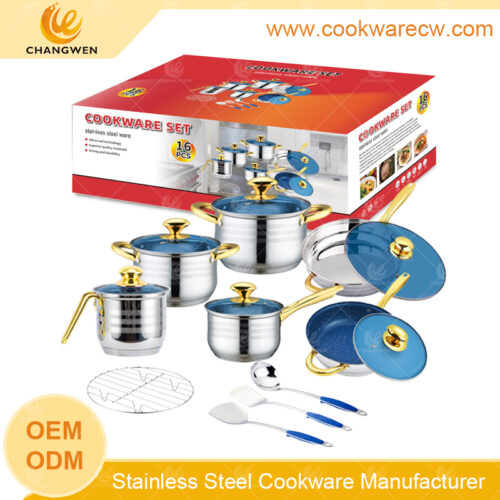
Heavy high quality stainless steel pots and pans 16pcs cookware set with gold plated nonstick fry pan steamer rack and slotted turner spatula ladle CW-M1601
-
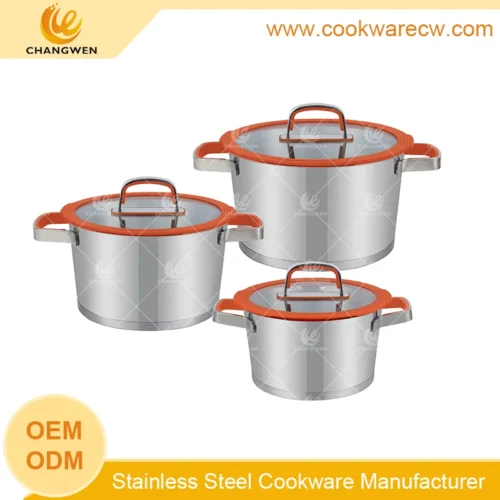
6-Piece Stainless Steel Pot Set with Orange Silicone-Edge Lids CW-ES0611
-
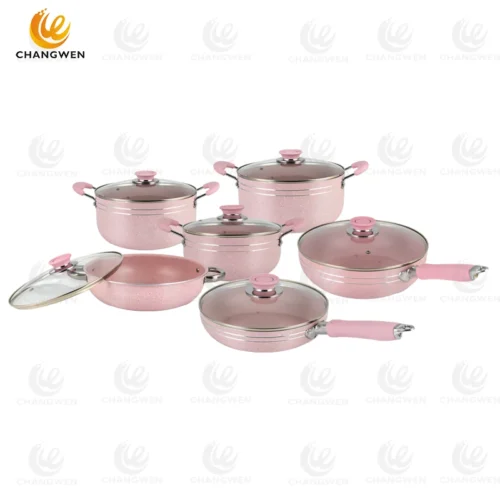
Ceramic Non Stick Aluminum Cookware Set
-
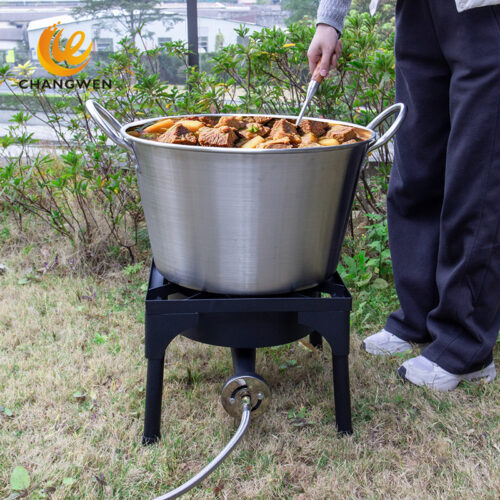
Large Stainless Steel Cazo
-
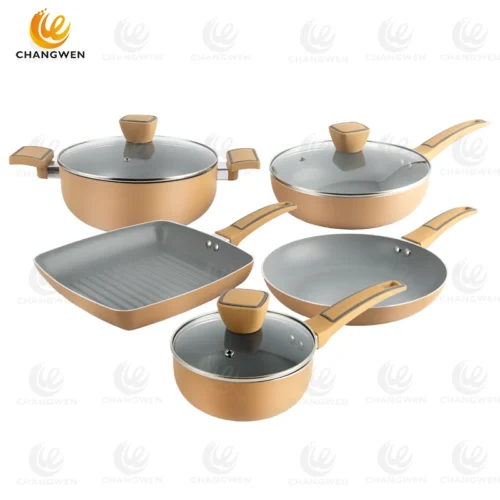
8pcs Stretched Aluminum Cookware Set Nonstick Pots and Pans | Aluminum Cookware Wholesale Supplier China