Introduction
Choosing the right cookware can transform your cooking experience from frustrating to effortless. The honeycomb nonstick frying pan represents a significant leap forward in cookware technology, combining durability, superior nonstick performance, and health-conscious cooking in one innovative design.
Unlike traditional nonstick pans that wear down quickly or stainless steel options that require excessive oil, honeycomb pans feature a unique textured surface that delivers exceptional cooking results while lasting years longer than conventional alternatives. Whether you’re a home cook looking to upgrade your kitchen or a business sourcing quality cookware, understanding what makes honeycomb pans different will help you make an informed investment.
This comprehensive guide explores everything you need to know about honeycomb nonstick frying pans, from their innovative design principles to practical buying advice, helping you determine if this modern cookware solution is right for your needs.
Key Takeaways
- Honeycomb nonstick frying pans feature a unique textured surface that enhances durability and nonstick performance compared to traditional smooth coatings
- The honeycomb pattern provides superior scratch resistance, allowing safer use of metal utensils while maintaining the nonstick properties over time
- These pans offer excellent heat distribution due to their specialized surface design, reducing hot spots and ensuring even cooking results
- Honeycomb pans are compatible with all stovetop types including induction, gas, electric, and ceramic cooktops
- Most honeycomb pan materials include aluminum alloy or stainless steel bases with advanced nonstick coating technology that’s PFOA-free and safe for daily use
- The benefits extend beyond cooking performance to include easier cleanup, healthier low-fat cooking, and longer lifespan compared to conventional nonstick cookware
What is a Honeycomb Nonstick Frying Pan?
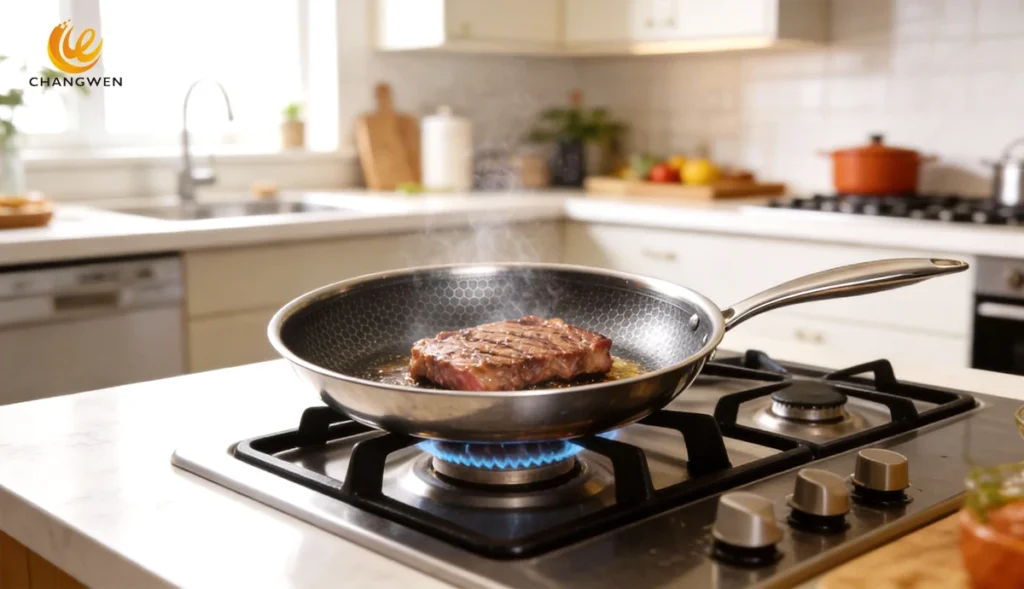
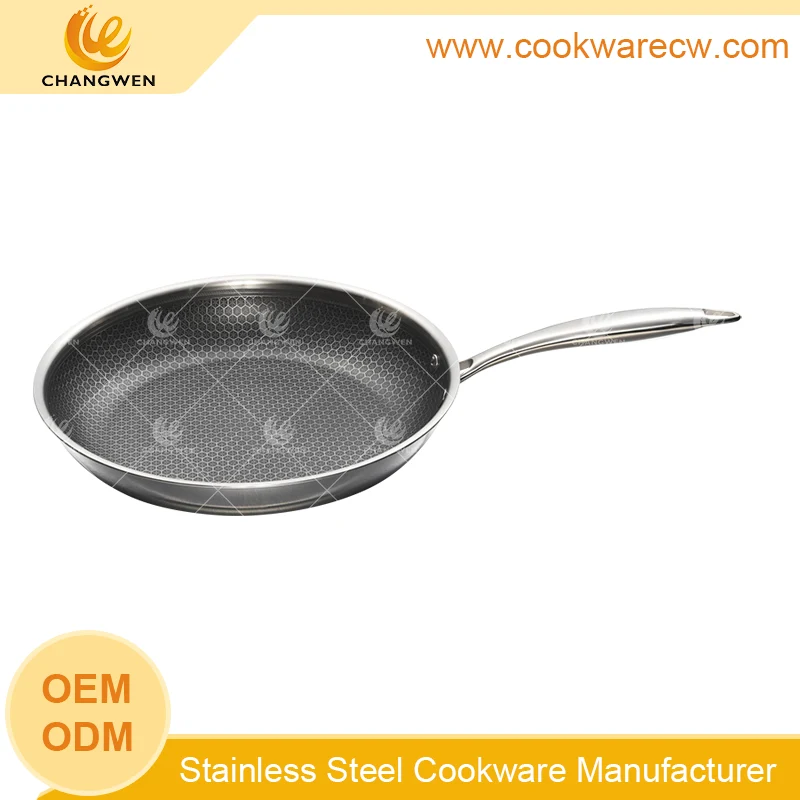
A honeycomb nonstick frying pan is a modern cooking vessel featuring a distinctive textured surface pattern resembling a bee’s honeycomb. This raised hexagonal design isn’t merely decorative—it represents an engineering innovation that fundamentally improves how nonstick cookware performs.
The Science Behind Honeycomb Design
The honeycomb texture creates microscopic air pockets between the food and the pan surface. This design reduces the contact area, which minimizes friction and prevents food from sticking. The raised pattern also helps distribute heat more evenly across the cooking surface, eliminating the hot spots common in traditional pans.
Material Construction
Quality honeycomb pans typically consist of multiple layers:
Material: Honeycomb frying pans feature a three-layer stainless steel construction with an aluminum core for fast, even heat distribution, durability, and easy cooking.
Honeycomb Layer: The signature textured pattern is either forged directly into the metal or applied as part of the coating process, creating the distinctive raised hexagonal structure.
Nonstick Coating: Advanced ceramic or PTFE-based coatings cover the honeycomb texture. Modern formulations are PFOA-free, cadmium-free, and lead-free, ensuring safe cooking at appropriate temperatures.
How Honeycomb Differs from Traditional Nonstick
Traditional nonstick pans feature smooth coating surfaces that, while effective initially, tend to wear down with regular use. The smooth surface provides no structural reinforcement, making it vulnerable to scratches from utensils or abrasive cleaning.
In contrast, the honeycomb pan’s textured surface offers several advantages. The raised pattern creates a physical barrier that protects the underlying coating from direct utensil contact. When you stir or flip food, your spatula primarily contacts the raised hexagon peaks rather than the entire surface, dramatically reducing wear. This structural design means honeycomb pan nonstick properties last significantly longer than conventional smooth coatings.
Additionally, the honeycomb structure improves oil distribution. The valleys between raised patterns hold small amounts of cooking oil, further enhancing the nonstick effect while requiring less fat overall compared to traditional pans.
Key Features of Honeycomb Nonstick Frying Pans
Enhanced Surface Durability Through Honeycomb Design
The honeycomb surface design provides exceptional scratch resistance compared to traditional nonstick cookware. The raised hexagonal pattern creates a protective structure that shields the coating from direct damage. When cooking utensils make contact with the pan, they primarily touch the raised peaks rather than scraping across the entire surface. This design significantly extends the coating’s lifespan and maintains nonstick performance even after extensive use.
Testing shows that honeycomb pans can withstand metal utensil use better than conventional nonstick surfaces, though silicone or wooden tools remain ideal for maximum longevity. The structural integrity of the honeycomb pattern means the coating doesn’t peel or flake as readily as smooth nonstick surfaces.
Superior Heat Distribution
One of the most significant honeycomb pan benefits is exceptional heat distribution. The textured surface increases the effective cooking area while the valleys and peaks help diffuse heat evenly across the pan bottom. This eliminates the common problem of hot spots that cause uneven cooking.
The honeycomb structure works synergistically with aluminum alloy or multi-layer stainless steel construction. Aluminum conducts heat rapidly and evenly, while the honeycomb pattern optimizes how that heat transfers to your food. This combination means faster preheating, more consistent cooking temperatures, and better energy efficiency compared to traditional pans.
Remarkable Scratch Resistance
Scratch resistance ranks among the top priorities when evaluating cookware durability. Honeycomb pans excel in this area due to their reinforced surface structure. The honeycomb pan material typically incorporates hardened coating technologies that, combined with the protective geometric design, resist scratching from normal cooking activities.
This scratch resistance doesn’t just preserve appearance—it maintains food safety and nonstick performance. Scratched nonstick surfaces can expose underlying metals and compromise the coating’s integrity, potentially releasing particles into food. The honeycomb design’s inherent scratch resistance helps prevent these issues.
Universal Stovetop Compatibility
Modern honeycomb pans offer impressive versatility across cooking platforms. Most honeycomb frying pans work effectively on:
- Gas stovetops: Excellent heat responsiveness and even heating across burner flames
- Electric coil and smooth-top ranges: Flat bottom provides full contact for efficient heat transfer
- Induction cooktops: Models with magnetic stainless steel bases heat quickly and evenly via electromagnetic induction
- Ceramic cooktops: Smooth, flat bottoms won’t scratch delicate ceramic surfaces
This compatibility makes honeycomb pans an excellent choice for households with multiple cooking surfaces or those planning future kitchen updates.
Effortless Cleaning and Maintenance
Honeycomb pans are remarkably easy to clean thanks to their superior nonstick properties. Food residue releases easily with minimal scrubbing, often requiring only a quick wipe with a soft sponge and warm soapy water.
The honeycomb structure actually aids cleaning by preventing food from bonding tightly to the surface. While many honeycomb pans claim dishwasher-safe status, hand washing extends their lifespan and maintains optimal nonstick performance. The textured surface resists staining better than smooth coatings, maintaining an attractive appearance throughout the pan’s service life.
Honeycomb Pan Safe Cooking
Safety represents a primary concern for any cookware. Modern honeycomb pans address this through carefully selected materials and coatings. Reputable manufacturers use PFOA-free, PTFE-based coatings or ceramic alternatives that don’t release harmful chemicals when used at appropriate temperatures.
The honeycomb pan safe cooking temperature typically ranges up to 400-450°F (204-232°C), suitable for most stovetop cooking methods. It’s important to avoid overheating empty pans or using them under broilers unless specifically rated for high-temperature oven use.
Quality honeycomb pans feature stay-cool or heat-resistant handles that reduce burn risk during cooking. Many also include helper handles on larger models for safe two-handed maneuvering.
Honeycomb vs Nonstick vs Stainless Steel Frying Pans
Choosing between cookware types requires understanding how each performs across critical dimensions. This detailed comparison helps identify which pan best suits your cooking style and requirements.
| Feature / Pan Type | Honeycomb Nonstick | Traditional Nonstick | Stainless Steel |
|---|---|---|---|
| Nonstick Performance | Excellent – food releases easily even with minimal oil; honeycomb texture reduces surface contact | Good initially – smooth coating provides easy release but degrades faster with use | None – requires generous oil or butter; develops fond for sauce making |
| Durability / Scratch Resistance | High – honeycomb structure protects coating; withstands metal utensils better than smooth nonstick | Medium – smooth coating scratches easily; metal utensils cause rapid wear | Very high – virtually indestructible; metal utensils completely safe |
| Heat Distribution | Fast and even – textured surface optimizes heat spread; aluminum core conducts efficiently | Moderate – depends on base quality; thinner pans develop hot spots | Uneven unless multi-ply – requires aluminum or copper core for even heating |
| Maintenance / Cleaning | Easy – quick wipe clean; dishwasher safe but hand washing preferred | Easy initially – requires gentle cleaning; coating degrades with harsh scrubbing | Harder – prone to sticking without proper technique; requires scrubbing for burnt residue |
| Suitable Cooking Methods | Versatile – all stovetop types, low-fat cooking, delicate foods, everyday use | All stovetops – best for low-fat cooking, eggs, fish, delicate proteins | Best for searing, browning, deglazing – requires more oil; ideal for developing fond |
| Lifespan | Long (3-7 years with proper care) – honeycomb structure extends coating life significantly | Medium (1-3 years) – coating wears through regular use even with careful handling | Very long (10+ years) – virtually permanent with proper maintenance |
| Price Range | Moderate ($40-150) – higher initial cost than basic nonstick but better long-term value | Low to moderate ($15-60) – affordable entry point but requires frequent replacement | Moderate to high ($50-300) – quality multi-ply construction commands premium pricing |
| Weight | Light to medium – aluminum construction keeps weight manageable | Light – typically aluminum-based for easy handling | Medium to heavy – multi-ply construction adds substantial weight |
| Temperature Tolerance | Medium-high (400-450°F) – suitable for most cooking; some models oven-safe | Medium (350-400°F) – coating degrades at high heat | Very high (500°F+) – can withstand broiler temperatures and oven use |
Analysis Summary
The honeycomb nonstick frying pan emerges as the optimal choice for modern kitchens and B2B procurement scenarios where versatility, durability, and ease of use take priority. It successfully bridges the gap between traditional nonstick convenience and the longevity typically associated with stainless steel.
Choose a honeycomb pan if you want:
- Superior nonstick performance that lasts years longer than traditional coatings
- Easy cleanup without sacrificing cooking versatility
- Healthier cooking with minimal oil requirements
- Compatibility across all stovetop types including induction
- Resistance to scratching from normal utensil use
- Excellent value considering extended lifespan
Choose a traditional nonstick pan if you:
- Have budget constraints requiring lower upfront investment
- Cook primarily delicate foods like eggs and fish
- Replace cookware frequently and don’t mind shorter lifespan
- Prefer the lightest possible pan weight
Choose a stainless steel pan if you:
- Specialize in high-heat cooking techniques like searing steaks
- Want to develop fond for pan sauces and deglazing
- Need cookware that lasts decades with heavy use
- Don’t mind using more oil and spending time on cleanup
- Want truly indestructible construction
For restaurant kitchens, catering operations, or home cooks seeking professional results with practical maintenance, the honeycomb nonstick pan delivers the best overall package. It requires less staff training than stainless steel, outlasts traditional nonstick significantly, and maintains consistent performance throughout its service life.
Benefits of Using Honeycomb Nonstick Frying Pans
Healthier Cooking with Less Oil
Honeycomb nonstick technology enables genuinely healthy cooking methods. The enhanced nonstick surface requires minimal oil or butter—often just a light spray or small amount for flavor rather than function. This dramatically reduces fat and calorie content in your meals without sacrificing taste or texture.
The honeycomb texture’s efficiency means you can successfully pan-fry chicken, sauté vegetables, or cook eggs with 50-80% less fat compared to traditional pans. For health-conscious households or commercial kitchens promoting nutritious menus, this translates to tangible benefits. Lower oil usage also reduces smoke and cooking odors, creating a more pleasant kitchen environment.
Energy-Efficient Cooking
The superior heat distribution of honeycomb pans delivers meaningful energy savings over time. These pans reach cooking temperature faster than traditional cookware due to their optimized aluminum construction and honeycomb heat diffusion pattern. Once heated, they maintain temperature more consistently, requiring less energy input to sustain proper cooking heat.
For home cooks, this means shorter preheating times and lower energy bills. Commercial kitchens benefit even more significantly—when operating dozens of burners simultaneously, improved energy efficiency across all cookware reduces operational costs substantially. The even heat distribution also prevents food waste from burnt or undercooked portions that would otherwise require discarding.
Extended Cookware Lifespan
Durability represents one of the strongest honeycomb pan benefits from both economic and environmental perspectives. While traditional nonstick pans typically need replacement every 1-2 years with regular use, quality honeycomb pans maintain excellent performance for 3-7 years or longer.
This extended lifespan stems from the structural reinforcement the honeycomb pattern provides. The coating doesn’t wear away as quickly because the raised texture distributes wear across the peak surfaces rather than the entire coating. Fewer replacements mean lower long-term costs and reduced environmental impact from manufacturing and disposing of cookware.
For businesses, this durability is particularly valuable. Restaurant kitchens can budget cookware replacement costs more predictably and reduce the operational disruption of constantly replacing worn-out pans.
Food Quality and Flavor Preservation
Honeycomb pans excel at preserving food’s natural flavors and textures. The even heat distribution prevents localized burning or scorching that can introduce bitter flavors. Delicate foods like fish, eggs, or vegetables cook uniformly without sticking or tearing, maintaining their intended texture and presentation.
The minimal oil requirement also allows ingredients’ natural flavors to shine through rather than being masked by excessive fat. This is particularly important for professional kitchens where consistent, high-quality results directly impact customer satisfaction and reputation.
The reduced sticking also means less food waste—ingredients release cleanly from the pan rather than leaving portions stuck to the surface. This seemingly small benefit accumulates significantly in commercial settings where food cost percentages directly affect profitability.
Versatility for Home and Commercial Kitchens
Honeycomb pans demonstrate exceptional versatility across cooking applications. They handle everything from scrambled eggs at breakfast to seared salmon at dinner, from delicate crepes to hearty stir-fries. This eliminates the need for specialized pans for different tasks, streamlining both home and commercial kitchen operations.
For home cooks, one quality honeycomb frying pan can replace multiple single-purpose pans, saving storage space and simplifying cooking routines. In commercial settings, this versatility means chefs can work more efficiently, grabbing any available honeycomb pan rather than searching for specific cookware for particular dishes.
The compatibility with all stovetop types including induction adds another layer of versatility. As more kitchens transition to induction cooking for its energy efficiency and precise temperature control, honeycomb pans with magnetic bases ensure your investment remains valuable through kitchen upgrades.
How to Choose the Right Honeycomb Frying Pan
Selecting the best honeycomb frying pan requires evaluating several critical factors beyond just the honeycomb texture itself. This comprehensive selection guide helps you identify the ideal pan for your specific needs.
Material Selection: Aluminum Alloy vs Stainless Steel Base
The base material fundamentally affects your pan’s performance, weight, and compatibility.
Aluminum Alloy Base:
- Advantages: Exceptional heat conductivity for fast, even cooking; lightweight for easy handling; more affordable price point
- Considerations: Not inherently magnetic (requires added induction-compatible base); may warp if overheated; less durable than stainless steel construction
- Best for: Daily cooking, lightweight preference, gas and electric stovetops, budget-conscious buyers
Stainless Steel Base (Multi-ply or Encapsulated):
- Advantages: Naturally induction-compatible; extremely durable and warp-resistant; professional appearance; often dishwasher-safe
- Considerations: Heavier weight; higher cost; requires aluminum or copper core for optimal heat distribution
- Best for: Induction cooktops, commercial kitchens, users prioritizing maximum durability, those wanting oven-safe capabilities
Hybrid Construction: Many premium honeycomb pans feature aluminum bodies with stainless steel bases, combining aluminum’s superior heat conductivity with stainless steel’s induction compatibility and durability. This represents an excellent compromise for most users.
Size and Depth Considerations
Choosing appropriate dimensions ensures your pan handles your typical cooking tasks efficiently.
Standard Sizes:
- 8-inch (20cm): Ideal for single servings, eggs, small portions; great for smaller households or side dishes
- 10-inch (25cm): Versatile everyday size; handles 2-3 servings; most popular for home kitchens
- 12-inch (30cm): Family-size cooking; ideal for 4+ servings, one-pan meals, restaurant use
- 14-inch (35cm): Commercial applications; large batch cooking; requires significant storage space
Depth Selection:
- Shallow (1.5-2 inches): Traditional frying pan depth; best for searing, browning, cooking foods that don’t require liquid
- Medium (2.5-3 inches): Multipurpose depth; accommodates sautéing, shallow braising, larger food volumes
- Deep (3.5+ inches): Sauté pan or chicken fryer depth; handles saucy dishes, braising, cooking for crowds
Consider your most frequent cooking tasks when selecting size. Many home cooks find owning both a 10-inch and 12-inch honeycomb pan provides optimal versatility.
Coating Quality and Thickness
The nonstick coating quality dramatically impacts performance and lifespan. Look for these indicators of superior coating:
Coating Type:
- Ceramic-based: Natural, PTFE-free option; environmentally friendly; performs well up to 400°F; may have shorter lifespan than PTFE
- PTFE-based (Teflon): Traditional nonstick chemistry; excellent release properties; durable when PFOA-free; safe up to 450°F
- Reinforced formulations: Incorporate particles like titanium or diamond for enhanced durability
Coating Thickness: Multiple coating layers generally outperform single-layer applications. Quality honeycomb pans feature 3-5 coating layers that work together:
- Primer layer bonds to base metal
- Middle layers provide nonstick properties
- Top layer offers scratch resistance and food release
Premium manufacturers specify coating thickness and layer count. Look for descriptions like “multi-layer reinforced coating” or “5-layer premium nonstick system.”
Safety Certifications: Verify coatings are certified PFOA-free, PFOS-free, lead-free, and cadmium-free. Reputable brands clearly display these certifications and comply with FDA or EU food safety standards.
Handle Design: Safety and Comfort
Handles significantly affect usability and safety. Evaluate these handle characteristics:
Material:
- Stainless steel: Durable, oven-safe to high temperatures, can get hot during cooking
- Bakelite/phenolic resin: Stay-cool properties, comfortable grip, oven-safe to moderate temps (350-400°F)
- Silicone-wrapped: Excellent heat resistance and grip comfort, oven-safe to 400-450°F
Attachment:
- Riveted: Most durable, creates slight interior bumps, may trap food particles
- Welded: Smooth interior surface, sleek appearance, ensure weld quality is high
- Screwed: Less common, allows handle replacement, may loosen over time
Ergonomics:
- Comfortable grip for your hand size
- Balanced weight distribution to prevent tip-forward when cooking
- Helper handle on larger pans (12-inch+) for safe two-handed lifting
- Hanging hole for storage
For safety, ensure handles remain cool during stovetop cooking or are clearly marked if they heat up.
Oven-Safe and Induction Compatible Features
Oven-Safe Capabilities: Check maximum oven-safe temperature ratings, which vary by handle material and construction:
- Basic models: Not oven-safe or safe to 350°F
- Mid-range: Oven-safe to 400-450°F
- Premium: Oven-safe to 500°F or higher
Oven-safe pans enable versatile cooking techniques like starting a dish on the stovetop and finishing in the oven (perfect for frittatas, skillet cookies, or searing then roasting proteins).
Induction Compatibility: For induction cooktops, verify the pan includes a magnetic base. Test by checking if a magnet adheres firmly to the pan bottom. Induction-compatible honeycomb pans typically feature:
- Stainless steel base or encapsulated bottom
- “Induction Ready” or “Induction Compatible” labeling
- Flat bottom ensuring full contact with induction surface
Even if you currently have a gas or electric stove, choosing an induction-compatible pan ensures flexibility for future kitchen upgrades.
Additional Selection Factors
Warranty: Quality manufacturers stand behind their products with warranties ranging from 1-10 years. Longer warranties (5+ years) indicate manufacturer confidence in durability.
Brand Reputation: Established cookware brands typically offer better quality control, customer service, and product consistency. Research user reviews focusing on long-term performance rather than just initial impressions.
Price vs. Value: The best honeycomb frying pan isn’t necessarily the most expensive—it’s the one that best meets your needs at a fair price. A $60-80 honeycomb pan from a reputable manufacturer often outperforms $30 traditional nonstick and provides better value than a $150 premium model for typical home cooking.
Tips for Using and Maintaining Your Honeycomb Frying Pan
Proper use and care dramatically extend your honeycomb pan’s lifespan while maintaining optimal nonstick performance. Follow these best practices to maximize your investment.
Proper Preheating Method
Correct preheating prevents food sticking and protects the nonstick coating:
For Regular Cooking:
- Place pan on burner set to medium or medium-low heat
- Allow 1-2 minutes for even heat distribution
- Test readiness by sprinkling a few water drops—they should gently sizzle and evaporate
- Add oil or butter only after pan reaches temperature
Avoid These Preheating Mistakes:
- Never preheat on high heat or with empty pan for extended periods—this degrades nonstick coatings
- Don’t add cold oil to cold pan then heat together—this reduces nonstick effectiveness
- Skip the preheat test with frozen foods—lower temperatures prevent thermal shock
For Delicate Foods (Eggs, Fish): Use lower heat (medium-low to low) and shorter preheating (30-60 seconds). The honeycomb nonstick surface performs excellently even at lower temperatures.
Use Appropriate Cooking Utensils
While honeycomb pans resist scratching better than traditional nonstick, using proper utensils extends their lifespan:
Recommended Utensils:
- Silicone: Heat-resistant, flexible, won’t scratch; ideal for all tasks
- Wood or bamboo: Traditional feel, gentle on coating; avoid leaving in hot pan
- Nylon: Heat-resistant to 400°F, affordable, good general purpose
Use with Caution:
- Metal: The honeycomb structure tolerates metal utensils better than smooth nonstick, but silicone remains preferable
- If using metal, choose smooth-edged tools (avoid serrated or sharp edges)
- Don’t cut food directly in the pan—use cutting board
Avoid:
- Sharp knives or scissors
- Abrasive scrubbers or steel wool
- Aerosol cooking sprays (buildup damages coating—use oil in a spray bottle instead)
Cleaning and Care Best Practices
Daily Cleaning Routine:
- Allow pan to cool completely before washing—thermal shock from cold water on hot pan can warp aluminum
- Wash by hand with warm water and mild dish soap
- Use soft sponge or dishcloth—the honeycomb nonstick surface requires minimal scrubbing
- For stubborn residue, soak in warm soapy water 10-15 minutes then wipe clean
- Dry thoroughly with soft towel to prevent water spots
- Apply tiny amount of cooking oil to surface if storing long-term (helps maintain coating)
For Tough Cleaning Situations:
- Burnt food residue: Make paste of baking soda and water, apply gently, let sit 10-15 minutes, wipe clean
- Oil buildup: Mix equal parts water and white vinegar, simmer gently in pan 5 minutes, wash normally
- Discoloration: This is purely cosmetic and doesn’t affect performance—avoid harsh cleaners to remove it
What to Avoid:
- Dishwashers (hand washing extends lifespan significantly despite “dishwasher-safe” claims)
- Harsh abrasive cleaners or scouring pads
- Bleach or chlorine-based cleaners
- Steel wool or metal scrubbers
- Stacking pans without protective layers between them
Temperature and Cooking Guidelines
Safe Temperature Ranges:
- Stovetop: Low to medium-high heat (sufficient for 95% of cooking tasks)
- Oven (if rated): Follow manufacturer’s specifications (typically 400-450°F maximum)
Cooking Techniques:
- Sautéing: Medium heat; add small amount of oil; ensure pan is preheated
- Pan-frying: Medium to medium-high; the honeycomb surface minimizes oil needs
- Simmering: Low to medium-low; honeycomb pans excel at gentle, even cooking
- Stir-frying: Medium-high heat acceptable for brief periods; keep food moving
What to Avoid:
- High heat or maximum burner settings (degrades coating, no cooking benefit)
- Leaving empty pan on heat source
- Broiler use unless specifically rated for it
- Cooking sprays (leave residue—use real oil or butter)
- Thermal shock (hot pan to cold water or cold pan to high heat)
Storage Recommendations
Proper storage prevents damage and maintains nonstick properties:
Best Practices:
- Store in dry location with good air circulation
- Hang from handle hook if possible (saves cabinet space, prevents surface damage)
- If stacking, place pan protectors, soft cloth, or paper towels between pans
- Ensure pans are completely dry before storing
- Store with lids separate (traps moisture if stored together)
Space-Saving Solutions:
- Pan racks or organizers specifically designed for cookware
- Hanging pot racks for frequently used pans
- Vertical cabinet organizers or dividers
Extending Lifespan
Seasoning Honeycomb Pans: While not required like cast iron, occasional seasoning enhances performance:
- After cleaning and drying, apply thin coating of vegetable oil to entire cooking surface
- Heat on low 1-2 minutes
- Let cool, wipe away excess oil
- Repeat monthly for optimal nonstick performance
When to Replace: Replace your honeycomb pan when:
- Coating visibly peels or flakes
- Food consistently sticks despite proper techniques
- Pan bottom warps causing uneven cooking
- Deep scratches expose base metal
Quality honeycomb pans with proper care typically last 5-7 years or longer before requiring replacement.
Common Myths and Misconceptions
Despite their growing popularity, several misconceptions about honeycomb nonstick frying pans persist. Let’s address the most common myths with factual information.
Myth 1: “Nonstick Coatings Easily Peel and Flake Off”
The Reality: Modern honeycomb pan coatings, when properly manufactured and cared for, do not easily peel or flake. This misconception stems from experiences with low-quality traditional nonstick pans or improper use of any nonstick cookware.
Quality honeycomb pans feature multi-layer coating systems where each layer is specifically formulated to bond with the layer below. The honeycomb structure itself provides mechanical reinforcement that helps prevent peeling—the raised texture creates a stronger physical bond between coating and metal substrate.
Peeling occurs primarily due to:
- Using high heat or overheating empty pans, which damages coating structure
- Thermal shock from plunging hot pans into cold water
- Manufacturing defects in low-quality products
- Extreme physical abuse like cutting directly in the pan
The Truth: Honeycomb pans from reputable manufacturers maintain intact coatings for years when users follow basic care guidelines—medium heat, hand washing, and appropriate utensils.
Myth 2: “You Can’t Use Metal Spatulas on Honeycomb Pans”
The Reality: This represents one of the key advantages of honeycomb design over traditional smooth nonstick surfaces. The textured structure provides significantly better scratch resistance than conventional nonstick coatings.
When you use a metal spatula on a honeycomb pan, the utensil contacts primarily the raised hexagonal peaks rather than the entire surface. This distributed contact reduces the pressure at any single point, minimizing coating damage. Many honeycomb pan manufacturers specifically advertise metal utensil compatibility as a product feature.
Important Nuances:
- Silicone, wooden, or nylon utensils remain ideal for maximum lifespan
- Sharp knives should never be used in any pan
- Aggressively scraping or cutting motions can still cause damage
- Quality varies—premium honeycomb pans handle metal utensils better than budget options
The Truth: Honeycomb pans tolerate careful metal utensil use far better than traditional nonstick, though gentler tools extend lifespan further.
Myth 3: “Honeycomb Pans Don’t Last Long”
The Reality: This misconception likely comes from comparing honeycomb pans to stainless steel (which lasts decades) rather than traditional nonstick cookware (which honeycomb significantly outlasts).
Properly cared for honeycomb pans typically provide 5-7 years of excellent nonstick performance, with some users reporting 10+ years with premium models. This represents triple or quadruple the lifespan of standard nonstick pans, which often need replacement after 1-2 years.
The honeycomb structure’s durability advantages include:
- Protective raised pattern shields coating from wear
- Reinforced coating formulations in quality models
- Better scratch resistance extends functional lifespan
- Even heat distribution prevents warping and hot spots that accelerate degradation
Comparison Context:
- Traditional nonstick: 1-3 years average lifespan
- Honeycomb nonstick: 5-7 years average lifespan
- Stainless steel: 10-20+ years
- Cast iron: 50-100+ years (with maintenance)
The Truth: Honeycomb pans offer excellent longevity for nonstick cookware, representing a smart investment despite higher upfront costs than basic nonstick options.
Myth 4: “All Honeycomb Pans Are Basically the Same”
The Reality: Significant quality differences exist between honeycomb pan brands and price points. The honeycomb pattern itself doesn’t guarantee performance—the underlying materials, coating quality, and manufacturing processes determine actual cooking results.
Key Differentiation Factors:
- Coating formulation: Premium multi-layer systems vs. single-layer basic coatings
- Base material thickness: Heavier gauge aluminum or multi-ply construction vs. thin aluminum
- Honeycomb depth and precision: Deep, well-defined patterns vs. shallow cosmetic texture
- Handle construction and materials: Oven-safe vs. stovetop-only; ergonomic design vs. basic
- Induction base quality: Full encapsulated stainless vs. minimal magnetic disc
The Truth: Like any product category, honeycomb pans range from budget-friendly basic models to premium professional-grade options. Research specific models and brands rather than assuming all honeycomb pans perform identically.
Myth 5: “Honeycomb Pans Are Just a Marketing Gimmick”
The Reality: The honeycomb pattern provides genuine functional benefits supported by materials science and engineering principles. This isn’t merely decorative or marketing-focused design.
Documented Benefits:
- Reduced contact area: Demonstrated to decrease food adhesion
- Enhanced durability: Physical testing shows improved scratch resistance
- Better heat distribution: Thermal imaging confirms more even temperature across cooking surface
- Longer coating lifespan: User data supports extended nonstick performance
Independent testing by consumer advocacy groups and professional reviewers consistently confirms that quality honeycomb pans outperform comparable traditional nonstick cookware in durability and scratch resistance.
The Truth: While marketing certainly emphasizes the honeycomb feature, the design delivers real performance advantages. Not a gimmick, but quality still varies by manufacturer.
Myth 6: “Nonstick Coatings Are Dangerous for Your Health”
The Reality: Modern nonstick coatings from reputable manufacturers are safe for everyday cooking when used properly. This myth often references outdated information about PFOA (perfluorooctanoic acid), which was used in some older nonstick coating production processes.
Current Safety Standards:
- PFOA has been phased out of nonstick cookware manufacturing since 2013-2015
- Modern PTFE (Teflon) coatings are PFOA-free
- Ceramic alternative coatings contain no PFOA or PTFE
- Coatings are inert and safe at proper cooking temperatures (below 450-500°F)
Safe Usage Guidelines: The honeycomb pan safe cooking temperature remains well within normal stovetop cooking ranges. Issues arise only when:
- Pans are heated above 500°F (rarely occurs in normal cooking)
- Empty pans are left on high heat
- Damaged, peeling coatings continue to be used
The Truth: Modern honeycomb nonstick pans meeting FDA and EU safety standards pose no health risks when used according to manufacturer instructions. Choose reputable brands, avoid overheating, and replace pans when coatings show visible damage.
Price vs. Performance Analysis
Under $30: Expect basic performance and 1-2 year lifespan. Good for testing honeycomb technology or very light use.
$40-80 (Sweet Spot): Best value for most users. Quality construction, reliable nonstick performance, 3-5 year lifespan with proper care. This range includes many recommended models from established brands.
$100-150: Premium features including superior materials, advanced coatings, better heat distribution, and longer warranties. Justified for frequent cooks and those prioritizing maximum durability.
$150+: Top-tier professional-grade cookware. Marginal performance gains over $100-150 range for home use, but offers maximum durability and lifetime warranties.
Recommendation: For home use, focus on the $50-90 range from reputable brands—this provides excellent performance without paying premium prices for features most home cooks won’t fully utilize. For commercial settings, investing in $100+ professional-grade pans delivers better long-term ROI through extended lifespan and consistent performance.
Conclusion
Honeycomb nonstick frying pans represent a significant advancement in cookware technology, delivering superior durability, enhanced nonstick performance, and remarkable versatility compared to traditional alternatives. The innovative honeycomb surface design isn’t just aesthetic—it provides genuine functional benefits that extend coating lifespan, improve heat distribution, and maintain nonstick properties through years of regular use.
For both home cooks and commercial kitchens, honeycomb pans offer compelling advantages: healthier cooking with minimal oil, easier cleanup, exceptional scratch resistance, and compatibility across all stovetop types. While they require a higher initial investment than basic nonstick pans, their extended lifespan and superior performance deliver excellent long-term value.
When selecting a honeycomb frying pan, prioritize quality construction over lowest price. Look for reputable brands with proven track records, multi-layer coating systems, and appropriate warranties. Consider your specific cooking needs—the base material, size, and compatibility features that match your kitchen setup and cooking style.
With proper care including appropriate preheating, gentle cleaning, and moderate heat usage, a quality honeycomb nonstick frying pan will serve you reliably for 5-7 years or longer. This makes them an investment in better cooking experiences, healthier meals, and reduced long-term cookware costs.
Whether you’re upgrading your home kitchen or sourcing commercial cookware, honeycomb nonstick technology deserves serious consideration. It successfully bridges the gap between the convenience of traditional nonstick and the durability typically associated with professional cookware, making it an ideal choice for modern cooking demands.
Frequently Asked Questions (FAQ)
What are the pros and cons of honeycomb woks and pans?
Honeycomb Wok Pros:
- Exceptional nonstick performance that requires minimal oil
- Superior scratch resistance compared to traditional nonstick surfaces
- Even heat distribution eliminates hot spots
- Longer lifespan (typically 3-7 years vs. 1-2 years for traditional nonstick)
- Compatible with all stovetop types including induction (with appropriate base)
- Easier cleanup and maintenance
- Better tolerance for metal utensils than smooth nonstick
Honeycomb Wok Cons:
- Higher upfront cost than basic nonstick cookware ($40-150 vs. $15-40)
- Still requires replacement eventually, unlike stainless steel or cast iron
- Not suitable for extremely high heat (above 450-500°F)
- Quality varies significantly between manufacturers
- Heavier than basic aluminum nonstick pans
- May not develop traditional wok “breath” flavor like carbon steel
For wok-specific cooking, carbon steel traditional woks remain preferred by purists for high-heat stir-frying, but honeycomb woks offer excellent performance for home kitchens with standard stovetops and easier maintenance.
What materials are honeycomb pans made from?
Honeycomb pans typically feature multi-layer construction:
Base Materials:
- Aluminum alloy: Most common; provides excellent heat conductivity, lightweight handling, and affordability
- Stainless steel: Used in premium models, especially for induction compatibility; often features aluminum or copper core for heat distribution
- Multi-ply construction: Layers of stainless steel and aluminum combine benefits of both materials
Coating Systems:
- PTFE-based (Teflon): Traditional nonstick chemistry, PFOA-free formulations, excellent release properties, safe up to 450-500°F
- Ceramic: Natural alternative to PTFE, petroleum-free, generally safe to 400-450°F, may have shorter lifespan
- Reinforced formulations: Incorporate titanium, diamond particles, or other hardening agents for enhanced durability
Handle Materials:
- Stainless steel (oven-safe to high temps, may get hot)
- Bakelite/phenolic resin (stay-cool, moderate oven-safe temps)
- Silicone-wrapped (excellent heat resistance and comfort)
Quality honeycomb pans clearly specify all materials used and provide safety certifications confirming PFOA-free, lead-free, and cadmium-free construction.
Are honeycomb pans safe to use?
Yes, honeycomb pans from reputable manufacturers are safe for everyday cooking when used properly. Modern honeycomb pans meet strict safety standards:
Safety Features:
- PFOA-free coatings (PFOA phased out of production since 2013-2015)
- Lead-free and cadmium-free materials
- FDA and/or EU food safety certifications
- Inert coatings that don’t react with food
Safe Usage Guidelines:
- Use low to medium-high heat (nonstick coatings don’t require high heat)
- Don’t preheat empty pans for extended periods
- Keep temperatures below 450-500°F (normal cooking range)
- Replace pans when coating shows visible damage or peeling
- Avoid aerosol cooking sprays (use real oil instead)
Concerns to Avoid: The primary safety issue occurs when nonstick coatings are heated above 500°F, which can release fumes. This rarely happens in normal cooking but can occur if:
- Empty pans are left on high heat
- Pans are used under broilers (unless rated for it)
- Severely damaged coatings continue to be used
Verdict: Honeycomb pan safe cooking is well-documented when you purchase quality products from established manufacturers and follow basic usage guidelines. They’re as safe as any other modern nonstick cookware—safer than cooking with damaged or low-quality pans.
How does the nonstick coating on honeycomb pans work?
The honeycomb pan nonstick performance comes from the synergy between surface texture and coating chemistry:
Coating Chemistry: Nonstick coatings feature molecular structures with very low surface energy, meaning other materials (like food) don’t readily bond to them. Modern coatings use either:
- PTFE (polytetrafluoroethylene): Extremely slippery fluoropolymer
- Ceramic: Silicon-based inorganic coating with natural nonstick properties
Honeycomb Structure Advantage: The raised hexagonal pattern enhances nonstick performance by:
- Reducing contact area: Food touches only the raised peaks, not the entire surface, minimizing adhesion points
- Creating air pockets: Valleys between hexagons trap tiny air cushions that further reduce food contact
- Improving oil distribution: Oil settles in valleys, creating a lubricating layer while using minimal fat
- Preventing coating wear: Utensils contact peaks rather than scraping the entire surface, extending coating life
Why It Works Better: Traditional smooth nonstick relies solely on coating chemistry. Honeycomb pans add a physical/mechanical component through surface geometry, providing dual-action nonstick performance that’s more durable and effective.
What are the main benefits of using honeycomb pans?
Honeycomb pan benefits include:
- Superior Durability: 3-7 year lifespan vs. 1-2 years for traditional nonstick; honeycomb structure protects coating from wear
- Enhanced Nonstick Performance: Food releases easily even after months of use; requires minimal oil for healthy cooking
- Better Heat Distribution: Textured surface eliminates hot spots; aluminum construction conducts heat efficiently; food cooks evenly
- Improved Scratch Resistance: Withstands metal utensils better than smooth nonstick; raised pattern distributes contact pressure
- Easier Cleanup: Food doesn’t bond to surface; quick wipe with sponge and warm water typically sufficient; saves time and effort
- Healthier Cooking: Requires 50-80% less oil than traditional pans or stainless steel; reduces fat and calories without sacrificing taste
- Versatility: Works on all stovetop types; handles diverse cooking methods from delicate eggs to hearty stir-fries
- Energy Efficiency: Heats quickly and evenly; maintains temperature with less energy; reduces cooking times
- Better Long-term Value: Higher upfront cost offset by extended lifespan; fewer replacements reduce total ownership cost
- Professional Results at Home: Delivers restaurant-quality cooking with home-friendly ease of use and maintenance
Are honeycomb pans better than stainless steel?
The answer depends on your cooking priorities:
Choose Honeycomb Pans If You Want:
- Easy cleanup with minimal scrubbing
- Cooking with less oil and fat
- Nonstick convenience for delicate foods (eggs, fish, pancakes)
- Lighter-weight cookware
- Less learning curve and technique requirement
- Versatility for everyday cooking tasks
Choose Stainless Steel If You Want:
- Maximum durability (10-20+ year lifespan)
- High-heat searing and browning capabilities
- Developing fond for pan sauces
- Metal utensil use without any concern
- Dishwasher convenience without coating degradation
- Cookware that lasts decades
The Balanced View: Honeycomb pans and stainless steel serve different purposes. Many professional and home kitchens maintain both types:
- Honeycomb for: Eggs, fish, pancakes, delicate vegetables, low-fat cooking, quick meals
- Stainless for: Searing steaks, deglazing, browning, developing complex flavors, high-heat techniques
Neither is universally “better”—they excel at different tasks. For most home cooks, honeycomb pans deliver more versatility and convenience for everyday cooking, while stainless steel better suits specific high-heat applications.
How long do honeycomb nonstick pans last?
With proper care and usage, quality honeycomb nonstick pans typically last 5-7 years of regular use, with some premium models maintaining excellent performance for 10+ years.
Factors Affecting Lifespan:
Quality Level:
- Budget models ($20-40): 2-4 years
- Mid-range quality ($50-90): 5-7 years
- Premium brands ($100+): 7-10+ years
Usage Frequency:
- Occasional use (2-3 times/week): Add 2-3 years to estimates
- Daily use: Standard lifespan estimates apply
- Commercial/heavy use: Reduce estimates by 30-40%
Care Practices:
- Proper care (hand washing, medium heat, appropriate utensils): Full expected lifespan
- Dishwasher use: Reduce lifespan by 30-50%
- High heat or metal utensil abuse: Reduce lifespan by 50-70%
Comparison to Other Cookware:
- Traditional smooth nonstick: 1-3 years
- Honeycomb nonstick: 5-7 years
- Hard-anodized nonstick: 4-6 years
- Stainless steel: 10-20+ years
- Cast iron: 50-100+ years (with maintenance)
Signs It’s Time to Replace:
- Visible coating damage (peeling, flaking, or significant scratches exposing base metal)
- Consistent sticking despite proper cooking techniques
- Warped bottom causing uneven heating
- Handle damage affecting safe use
The significantly extended lifespan compared to traditional nonstick makes honeycomb pans a worthwhile investment despite their higher initial cost.
Can you use metal utensils on honeycomb pans?
Yes, honeycomb pans tolerate metal utensils significantly better than traditional smooth nonstick surfaces, though gentle utensils remain ideal for maximum longevity.
Why Metal Utensils Work Better on Honeycomb: The raised honeycomb texture creates a protective structure where utensils primarily contact the peak surfaces rather than the entire coating. This distributes pressure and reduces direct coating contact, minimizing scratch damage that would occur on smooth nonstick.
Guidelines for Metal Utensil Use:
- Safe: Smooth-edged spatulas, spoons, and tongs; gentle stirring and flipping motions
- Use caution: Avoid aggressive scraping or cutting motions; don’t use sharp-edged or serrated tools
- Never: Knives, forks, whisks with sharp wires, or cutting directly in pan
Better Alternatives: While honeycomb pans handle metal utensils, using softer materials extends their lifespan:
- Silicone: Heat-resistant, flexible, completely safe
- Wood or bamboo: Gentle, traditional feel
- Nylon: Good general purpose, heat-resistant to 400°F
Manufacturer Recommendations: Many honeycomb pan manufacturers advertise “metal utensil safe” as a selling point, but review specific product guidelines as quality and tolerance varies between brands.
Bottom Line: Honeycomb pans won’t be instantly ruined by metal utensils like traditional nonstick, but using gentler tools remains the best practice for maximizing your investment.
How do I clean and maintain my honeycomb frying pan?
Proper cleaning and maintenance dramatically extend your honeycomb pan’s lifespan:
Daily Cleaning Routine:
- Let pan cool completely (never rinse hot pan with cold water—thermal shock can cause warping)
- Wash by hand with warm water and mild dish soap
- Use soft sponge or dishcloth—avoid abrasive scrubbers
- For stuck-on food, soak 10-15 minutes in warm soapy water, then wipe clean
- Dry thoroughly with soft towel
- Optional: Apply tiny amount of cooking oil to surface for long-term storage
For Stubborn Residue:
- Make paste of baking soda and water
- Apply gently to affected areas
- Let sit 10-15 minutes
- Wipe clean with soft sponge
- Rinse and dry thoroughly
What to Avoid:
- Dishwashers: Even if labeled dishwasher-safe, hand washing extends lifespan
- Steel wool or metal scrubbers: Will damage coating
- Harsh cleaners: Bleach, chlorine, or abrasive powders degrade coating
- Cooking sprays: Leave sticky residue—use real oil instead
- Stacking without protection: Place towels or pan protectors between pans
Ongoing Maintenance:
- Inspect coating periodically for damage
- Re-season monthly: Apply thin layer of oil, heat gently on low 1-2 minutes, cool, wipe excess
- Store in dry location with good air circulation
- Hang from hook when possible to prevent surface damage
When to Replace: Replace your honeycomb pan when you notice:
- Coating peeling or flaking
- Food consistently sticking despite proper technique
- Warped bottom affecting even heating
- Deep scratches exposing base metal
With these simple care practices, your honeycomb pan will deliver excellent nonstick performance for many years.
Changwen Honeycomb Frying Pans can be fully customized to meet your brand and market needs. We offer OEM and private label services, allowing you to create a product that reflects your brand identity while maintaining top-quality performance.
Contact us today to discuss your Honeycomb Frying Pan customization and get a quote with your specifications.

5 Ply Stainless Steel Cookware CW-M1401G
Small Aluminum Pressure Cooker for Fast & Safe Home Cooking
Wholesale price stainless steel pots and pans streamer rack cookware set coating inside golden wire handle milk pot with blue glass lid CW-M1304
18/10 Stainless Steel Cookware CW-M1402G
Best Nonstick Stainless Steel Pan
Premium Stainless Steel Cookware Set for Modern Kitchens CW-ETP0703
Heavy Duty Stock Pots Stainless Steel CW-M0607
Hotsale 12pcs stainless steel cooking sets soup stock pot kitchen ollas saucepan casserole and milkpot fry pan nonstick CW-M1209