Introduction
Aluminum cookware is one of the most widely used types of cookware in the world — affordable, lightweight, and an excellent conductor of heat. Yet it is also one of the most misunderstood, with persistent questions about aluminum cookware health risks, safety for different stovetops, and how to choose the right type.
This guide cuts through the noise. You will find a clear breakdown of aluminum cookware types, an honest assessment of the health and safety evidence, practical guidance on using aluminum cookware on a glass top stove, and the information importers and buyers need on HS codes and sourcing.
Whether you are buying a single pan for your kitchen or sourcing an aluminum cookware set for retail or wholesale, this guide gives you what you need to make an informed decision.
Key Takeaways
- Aluminum cookware is safe for everyday home use when it is anodized or coated — bare, uncoated aluminum carries higher risk when used with acidic foods.
- The main aluminum cookware health risks come from low-quality or artisanal cookware made from recycled scrap metal, which can leach lead and other contaminants. Certified cookware from reputable manufacturers does not carry this risk.
- Hard-anodized aluminum is the safest and most durable type — the anodizing process creates a hard, non-reactive surface that significantly reduces any leaching.
- Aluminum cookware can be used on a glass top stove, but with specific precautions to prevent scratching and damage to the cooktop surface.
- The HS code for aluminum cookware is 7615.10 under the Harmonized System, covering table and kitchen articles of aluminum.
- India is a significant aluminum cookware manufacturer, particularly for the domestic market and regional export trade.
Types of Aluminum Cookware
Not all aluminum cookware is the same. The type of aluminum and its surface treatment determines performance, safety, and durability.
Bare (Uncoated) Aluminum
The most basic form — plain aluminum with no surface treatment. It is inexpensive and conducts heat well, but it is reactive. Acidic foods (tomatoes, citrus, wine-based sauces) can cause the metal to leach into food, affecting flavor and potentially increasing aluminum intake. Bare aluminum also scratches and pits over time. Not recommended for regular cooking with acidic ingredients.
Hard-Anodized Aluminum
The gold standard for aluminum cookware. The anodizing process uses an electrochemical treatment to create a hardened oxide layer on the surface — making it non-reactive, scratch-resistant, and significantly more durable than bare aluminum. Hard-anodized aluminum is two to three times harder than stainless steel by surface hardness, and it does not leach under normal cooking conditions. This is the type used in most quality aluminum cookware sets.
Non-Stick Coated Aluminum
Aluminum pans with a non-stick coating (PTFE/Teflon-type or ceramic) are the most popular category for home cooking. The coating creates an easy-release cooking surface and eliminates the reactivity of bare aluminum. Key considerations:
- PTFE coatings perform well but should not be overheated above 260°C (500°F). Modern PTFE coatings are PFOA-free — older cookware may not be.
- Ceramic coatings are PFOA and PFAS-free, making them the more health-conscious choice. Quality ceramic coatings maintain performance well when used with non-abrasive utensils and gentle cleaning.
Cast Aluminum
Made by pouring molten aluminum into molds, cast aluminum is heavier than sheet aluminum cookware and offers better heat retention. It is often used for Dutch ovens, grill pans, and specialty pots. Cast aluminum cookware typically has thicker walls, making it less prone to warping.
Forged Aluminum
Produced by pressing aluminum under high hydraulic pressure, forged aluminum creates a denser, stronger structure with fewer microscopic pores than cast aluminum. The forging process reduces leaching risk and improves durability. Most premium non-stick aluminum sets use forged aluminum as the base.
Aluminum Cookware Health Risks: What the Evidence Says
This is the most searched question about aluminum cookware, and it deserves a clear, evidence-based answer.
The Leaching Question
Aluminum can migrate into food during cooking — this is called leaching. The amount depends on:
- Whether the surface is coated, anodized, or bare
- The acidity of the food being cooked
- The condition of the cookware (pitted, scratched, or worn surfaces leach more)
- The cooking time and temperature
For anodized or coated aluminum cookware in good condition, the amount of aluminum that migrates into food under normal cooking conditions is well below the safety thresholds set by the WHO and EFSA. The European Food Safety Authority sets a tolerable weekly intake of 1 mg per kg of body weight — aluminum from quality cookware in typical use falls far below this level.
For bare, uncoated aluminum cookware used with acidic foods, leaching can be significantly higher. Studies have shown that cooking tomato-based sauces in uncoated aluminum can produce leaching levels that exceed EU limits.
The Lead Contamination Risk
This is the more serious and less widely understood concern. In 2025, the FDA issued alerts about certain imported aluminum cookware found to contain lead — particularly artisanal or low-cost cookware made from recycled scrap metal. This type of manufacturing is most common in informal production in some developing countries, where scrap sources may include vehicle parts and lead batteries.
The practical advice: buy aluminum cookware from established, certified manufacturers. Look for FDA compliance, LFGB certification (EU), or equivalent food safety certification. Avoid very low-priced, unbranded aluminum cookware with no certification documentation.
The Alzheimer’s Question
Early studies in the 1960s–1970s suggested a possible link between aluminum and Alzheimer’s disease. Decades of subsequent research, including reviews by the Alzheimer’s Association and the ATSDR, have found no convincing evidence that aluminum from everyday sources including cookware causes Alzheimer’s disease. This is no longer considered an active scientific concern by major health bodies.
Who Should Be More Careful
Most people can use quality aluminum cookware without concern. However, individuals with kidney disease should be more cautious, as impaired kidneys are less efficient at excreting aluminum. Infants and young children also warrant extra care given their lower body weight and developing systems.
Aluminum Cookware Safety: Practical Guidelines
Following these practices maximizes aluminum cookware safety regardless of the type you own:
Use anodized or coated cookware for acidic foods. Tomatoes, citrus-based sauces, vinegar, wine, and rhubarb should not be cooked in bare uncoated aluminum. Use stainless steel, ceramic, or well-coated aluminum for these dishes.
Replace damaged cookware. When non-stick coatings are heavily scratched or peeling, or when bare aluminum shows significant pitting and corrosion, it is time to replace the pan. Damaged surfaces leach more and reduce cooking quality.
Avoid metal utensils on coated pans. Use silicone, wood, or nylon utensils to protect non-stick coatings and extend the life of the pan.
Do not overheat non-stick coated pans. PTFE coatings can degrade at very high temperatures. Use medium heat for most cooking tasks and never leave a non-stick pan empty on a high flame.
Hand wash when possible. Dishwasher detergents can be harsh on both anodized surfaces and non-stick coatings. Hand washing with mild soap extends cookware life significantly.
Buy certified products. For EU markets, LFGB certification. For US markets, FDA compliance. These standards include limits on heavy metal content including lead and cadmium.
Using Aluminum Cookware on a Glass Top Stove
Glass top stoves (ceramic or induction cooktops) require more care than gas or coil burners. Here is what you need to know about aluminum cookware on a glass top stove:
Standard aluminum cookware works on glass top stoves — with important caveats:
- Flat, smooth bases are essential. Warped pans or pans with rough, textured bottoms can scratch the glass surface. Always check that your pan sits completely flat before use.
- Lift, don’t slide. Sliding aluminum pans across a glass cooktop can cause fine scratches over time. Always lift the pan when moving it.
- Avoid very high heat. Aluminum heats quickly — starting on medium heat and adjusting is preferable to high heat from the start, which also reduces the risk of warping.
- Anodized or coated aluminum with a smooth base is the safest choice for glass top stoves. The harder surface of anodized aluminum is less likely to leave residue on the glass.
- Aluminum is NOT compatible with induction cooktops unless the pan has a magnetic stainless steel base layer added specifically for induction use. Pure aluminum is not magnetic and will not work on induction. Look for “induction compatible” labeling if your stove is an induction model.
Aluminum Cookware HS Code: Reference for Importers
For importers, exporters, and sourcing teams, the correct HS code classification is important for customs declarations, duty calculation, and trade compliance.
International HS Code (Harmonized System):
- 7615.10 — Table, kitchen or other household articles and parts thereof, of aluminum
Sub-classifications (EU / international):
- 7615.10.10 — Cast aluminum cookware
- 7615.10.30 — Manufactured from foil (thickness ≤ 0.2 mm)
- 7615.10.80 — Other aluminum household articles (covers most standard cookware)
US HTS Codes:
- 7615.10.7130 — Aluminum bakeware not suitable for stovetop use, not cast, not enameled, without non-stick finish
- 7615.10.9100 — Other aluminum cookware
India HSN Code for aluminum cookware:
- 7615.10.21 — Most commonly used HSN code for aluminum non-stick cookware in India
- 7615.10.11 — Aluminum pressure cookers
Always verify the specific sub-heading with your customs broker, as classification can vary based on construction, coating, and intended use. Incorrect HS code selection can affect import duty rates and export benefit eligibility.
Aluminum Cookware in India: Manufacturing and Market Overview
India is one of the world’s major aluminum cookware manufacturers, with production concentrated in several regions:
- Tamil Nadu (Chennai, Coimbatore, Tirunelveli): Major hub for aluminum pressure cookers and cookware sets, serving both domestic and export markets.
- Maharashtra (Vasai, Mumbai region): Active aluminum cookware manufacturing and wholesale distribution network.
- Gujarat (Ahmedabad): Aluminum cookware production with focus on domestic market supply chains.
Aluminum cookware India manufacturers serve a domestic market where aluminum pressure cookers and pots remain the most common cooking vessels in millions of households. Indian-manufactured aluminum cookware is also exported to the Middle East, Africa, and Southeast Asian markets.
How to Choose an Aluminum Cookware Set
When selecting an aluminum cookware set for home use, evaluate these factors:
Construction type: Hard-anodized or non-stick coated aluminum sets offer the best combination of safety, performance, and durability. Avoid bare uncoated sets for regular cooking.
Gauge (thickness): Thicker aluminum (heavier gauge) heats more evenly and is less prone to warping. For stovetop use, look for sets with a gauge of at least 3–4 mm at the base.
Coating certification: For non-stick sets, confirm PFOA-free and PFAS-free status. Ceramic coatings are the most health-conscious choice.
Handle construction: Riveted handles are standard and durable for home use. Check that handles are oven-safe if you plan to finish dishes in the oven.
Induction compatibility: If you have an induction cooktop, confirm the set includes a magnetic base layer. Standard aluminum is not induction-compatible.
Certifications: LFGB (EU), FDA (US), or equivalent food safety certification indicates the manufacturer has been tested for heavy metal content including lead and cadmium.
FAQ
Is aluminum cookware safe to use daily?
Yes — anodized or coated aluminum cookware is safe for daily use when used correctly. The key is avoiding acidic foods in bare uncoated aluminum and replacing heavily damaged or scratched cookware. Quality certified aluminum cookware from reputable manufacturers poses no meaningful health risk under normal cooking conditions.
What are the main aluminum cookware health risks?
The primary risks are: leaching from bare or damaged aluminum into acidic foods, and lead contamination in low-quality cookware made from recycled scrap metal. Both risks are significantly reduced by choosing anodized or coated aluminum from certified manufacturers. The Alzheimer’s link is not supported by current scientific consensus.
Can I use aluminum cookware on a glass top stove?
Yes, with precautions. Use pans with flat, smooth bases. Lift rather than slide pans on the glass surface. Avoid very high heat. Note that standard aluminum does not work on induction cooktops — you need induction-compatible cookware with a magnetic base layer for induction stoves.
What is the HS code for aluminum cookware?
The international HS code for aluminum cookware is 7615.10. Sub-classifications vary by product type and destination country. In India, the most commonly used HSN code for aluminum non-stick cookware is 76151021. Always confirm with your customs broker for your specific product and market.
What is hard-anodized aluminum and why is it safer?
Hard-anodized aluminum has undergone an electrochemical process that creates a hardened, non-reactive oxide layer on the surface. This layer prevents direct contact between food and the aluminum metal, effectively eliminating leaching under normal cooking conditions. It is more durable than standard aluminum and resistant to scratching.
Is aluminum or stainless steel cookware better?
They serve different purposes. Aluminum heats faster and distributes heat more evenly, making it excellent for even cooking. Stainless steel is more durable, non-reactive, and better suited for acidic dishes. The best of both is achieved with tri-ply stainless steel cookware, which uses an aluminum core inside stainless steel layers — combining aluminum’s heat conductivity with stainless steel’s non-reactive surface.
Where are aluminum cookware manufacturers located in India?
Major aluminum cookware manufacturing regions in India include Tamil Nadu (Chennai, Coimbatore, Tirunelveli), Maharashtra (Vasai), and Gujarat (Ahmedabad).
Conclusion
Aluminum cookware remains one of the most practical and widely used cooking materials in the world — when you choose the right type and use it correctly. Hard-anodized and quality non-stick coated aluminum cookware is safe for everyday use, performs excellently across most cooking tasks, and is available at a wide range of price points to suit every kitchen.
The risks associated with aluminum cookware are real but manageable: avoid bare uncoated aluminum with acidic foods, choose certified products from established manufacturers, replace heavily damaged cookware, and verify induction compatibility before purchasing for a glass top induction stove.
For buyers, importers, and sourcing professionals, the fundamentals are the same as for any cookware category — material verification, certification documentation, and supplier credibility matter more than price alone.
About Changwen
Changwen is a manufacturer supplying aluminum cookware to cookware brands and distributors in South America, Southeast Asia, the Middle East, and Europe. Our product range includes aluminum cookware sets, aluminum pressure cookers, aluminum steamers, and aluminum frying pans. We also provide comprehensive OEM and ODM services.
📧 changwen@cwcooking.com 📞 0086-18022963948 🌐 www.cookwarecw.com/contact-us

Premium Stainless Steel Cookware Set for Modern Kitchens CW-ETP0703
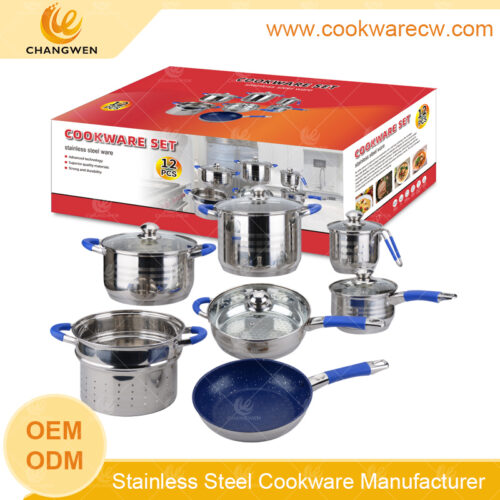
12pcs stainless steel cookware set with silicon handles coating conic frypan 24cm pasta pot in China CW-M1311
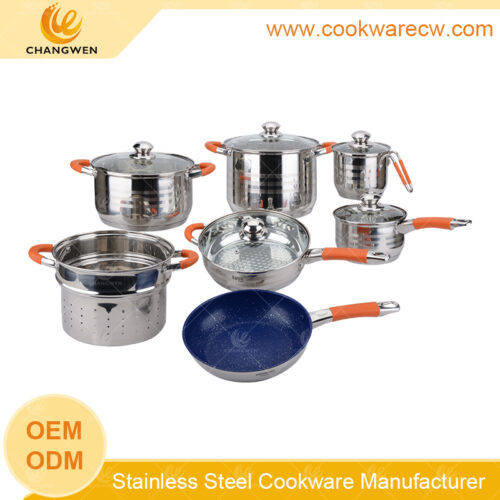
Cookware wholesaler 12pcs pots and pans stainless steel cooking sets kitchenware tools and steamer CW-M1211
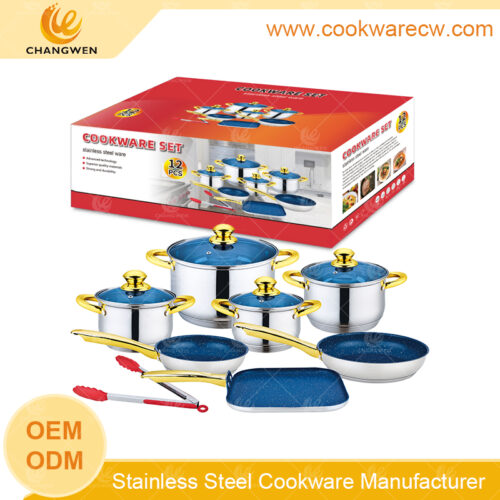
Wholesaler stainless steel cookware set conic fry pan square aluminum coated frypan with a kitchenware grater CW-M1003
12pcs stainless steel cooking pots & pans set with color silicon handles coating conic frypan 24cm pasta pot in China CW-M1311
Hot sale SS ollas non-stick coated frying pans and pots stock pot with a kitchenware clip CW-M1204
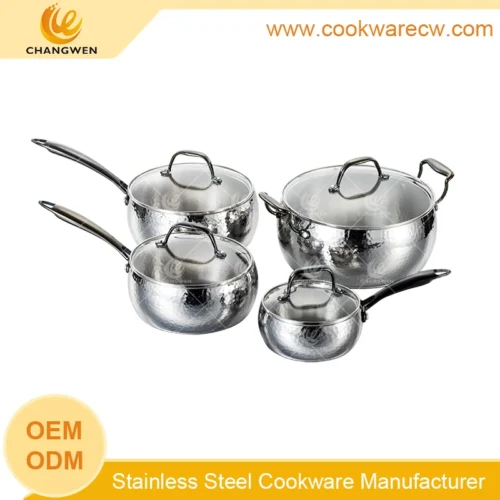
Apple-Shaped Hammered Stainless Steel Cookware Set CW-TP0802
Best Quality Stainless Steel Pots And Pans