Stainless Steel Cookware Ultimate Buying Guide

A task-first guide to choosing stainless steel cookware by vessel shape, usable size, construction, cooktop compatibility, handling, and verifiable quality.


A task-first guide to choosing stainless steel cookware by vessel shape, usable size, construction, cooktop compatibility, handling, and verifiable quality.
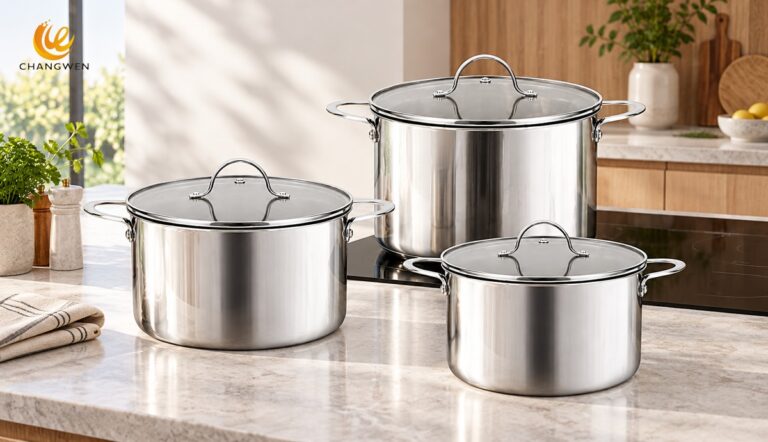
An evidence-led buying guide to tri-ply stainless steel cookware, covering layer verification, pan selection, heating tests, induction, inspection, and OEM approvals.
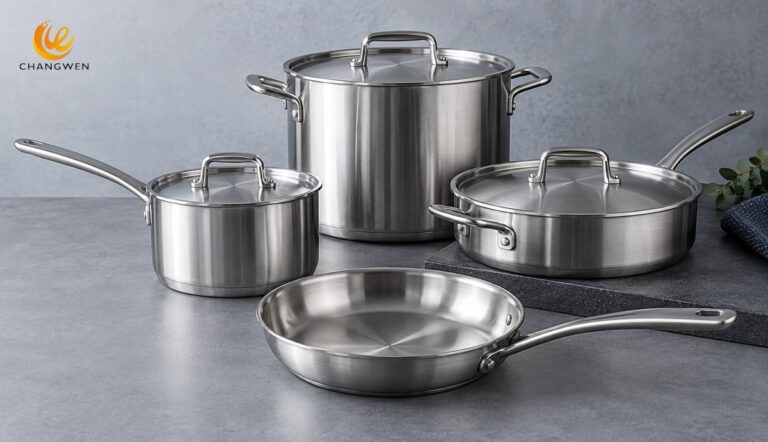
A practical framework for importers and private label brands to compare stainless steel cookware specifications, samples, testing, packaging, costs, and production controls.

Compare stay-cool cookware handles with a repeatable test covering probe positions, heat sources, controlled variables, metrics, and thermal cycling.

Identify cookware polishing defects such as waves, burn marks, drag lines, and pits, then trace causes, set acceptance limits, and control rework.

Compare cookware base designs with a repeatable nine-point hot-spot test, rotation check, controlled variables, metrics, and reporting method.

Learn how cookware base disc diameter affects edge heating. Compare core coverage, burner fit, measurement methods, and sample tests before ordering.

Learn how XRF testing verifies cookware stainless steel grade through sampling, surface control, element review, documentation, and laboratory escalation.

Approve cookware golden samples with 25 checks covering materials, dimensions, performance, packaging, deviations, evidence, and production release controls.
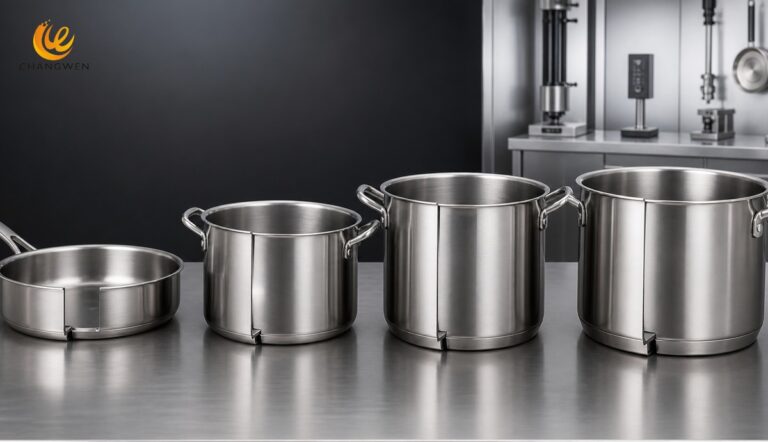
Compare 0.5, 0.8, 1.0, and 1.2 mm stainless steel cookware thickness by durability, weight, heat response, vessel size, and OEM application.

Learn how to compare cookware manufacturers with a controlled trial project that tests requirement control, engineering changes, sample repeatability, pilot production, packaging, and problem response before a full-volume order.

A practical method for normalizing cookware quotations, calculating risk-adjusted landed cost, validating production consistency, and comparing supplier evidence.