
Estimated reading time: 13 minutes.
Cookware golden sample approval is the documented decision that an identified pot, pan, lid, and packaging configuration may serve as a production reference for specified characteristics. A useful sign-off connects the physical sample to drawings, measured results, test evidence, accepted deviations, and release authority. An attractive sample alone cannot prove material composition, long-term durability, or consistent mass production.
The practical rule is to approve evidence, not impressions. Every applicable checkpoint needs a requirement, a verification method, an actual result, and a responsible decision maker. A blank field is an unresolved question, while a failed safety-related requirement remains a production hold even when the other 24 checks pass.
This 25-point checklist is an editorial purchasing framework for non-pressure cookware, especially stainless steel OEM and private-label programs. It is not a universal certification scheme or a substitute for product-specific engineering. Pressure cookers, electrical appliances, and specialized foodservice equipment require additional review beyond this checklist.
What makes a cookware sample a controlled golden sample?
A cookware sample becomes a controlled golden sample when authorized people identify the approved version, define the attributes it represents, and preserve access to the reference. The word golden describes reference status, not a gold finish or a promise of perfection. The sample should represent an agreed, achievable production condition rather than exceptional hand finishing that the normal line cannot reproduce.
| Reference type | Useful purpose | What it does not establish |
|---|---|---|
| Catalog sample | Evaluate a supplier platform and general design | Approval of customized materials, artwork, or packaging |
| Development prototype | Resolve shape, handling, and design questions | Readiness of final tooling and manufacturing processes |
| Approved golden sample | Control specified appearance, assembly, and other approved attributes | Conformity of every future production unit |
| Production inspection sample | Evaluate actual goods selected from a production lot | Automatic acceptance of an untested design change |
The golden sample should complement the written specification instead of overriding it silently. A drawing may control dimensions, a material specification may control composition, and a physical reference may control appearance. If the documents and sample disagree, resolve the conflict in writing before approval. The broader custom cookware OEM process guide explains where sample development fits within an overall sourcing program.
How should the 25-point sign-off record be prepared?
The sign-off record should contain one row per checkpoint and separate columns for specification reference, acceptance criteria, method, actual result, evidence ID, status, reviewer, and date. Numerical characteristics need measured values and units rather than a simple tick. Appearance characteristics need defined lighting, viewing conditions, and defect boundaries so a later inspector can make the same decision.
The checklist should use four clear statuses: pass, fail, not applicable with justification, and pending evidence. A pending laboratory report is not a pass, and an omitted feature is not automatically inapplicable. Assign technical review to engineering or quality personnel, commercial exceptions to the authorized buyer, and final release to a named role with explicit authority.
The following five groups contain exactly 25 checkpoints. Record additional model-specific requirements separately, including special coatings, removable handles, pouring systems, or customer protocols. The checklist number is a navigation aid, not a quality score; a missing critical requirement cannot be offset by successful cosmetic checks.
Which identity and specification checks come first?
1. Is the exact SKU and sample revision identified?
Confirm the product code, size, finish, sample ID, revision, build date, and requested configuration on both the cookware and its record. Photograph the identity tag together with the complete product. A photograph labeled only saucepan cannot distinguish two similar revisions, while a unique sample ID connects comments, measurements, and approvals to one physical object. Hold approval if the received sample cannot be identified reliably.
2. Does the sample use the intended production route?
Record the factory, tooling status, forming route, finishing process, and any manual rework used to produce the sample. Ask which steps will differ during normal manufacture and how those differences will be validated. A hand-polished prototype can demonstrate a visual target without demonstrating production repeatability. Undisclosed temporary tooling or exceptional rework should trigger clarification rather than automatic approval for a full order.
3. Are drawings, BOM, and purchase specifications aligned?
Confirm the revision of the drawing, bill of materials, component list, finish specification, and relevant purchase requirements. List each controlling document in the approval record rather than attaching an unnamed folder. A correct pan paired with an obsolete handle drawing creates conflicting instructions. Resolve document precedence and revise inconsistencies before the factory receives a release, especially when several buyers or designers supplied comments.
4. Are material identity and component traceability supported?
Match specified materials to the body, base, handles, fasteners, lid, coating, and other relevant components. Review traceable material records and obtain appropriate analytical verification when required by the project. Weight, color, and magnetic response are not substitutes for complete material evidence. A report for another grade or construction cannot establish conformity of the submitted sample merely because the products look similar.
5. Does the evidence cover the intended market and use?
Check whether the compliance review and test documents identify the same product construction, food-contact materials, intended use, and destination requirements. Record report numbers, issuing organizations, scope, and any limitations. A generic supplier certificate does not automatically cover every cookware configuration. Ask a qualified compliance specialist or laboratory to resolve gaps; visual sample approval should not be treated as permission to make unsupported compliance claims.
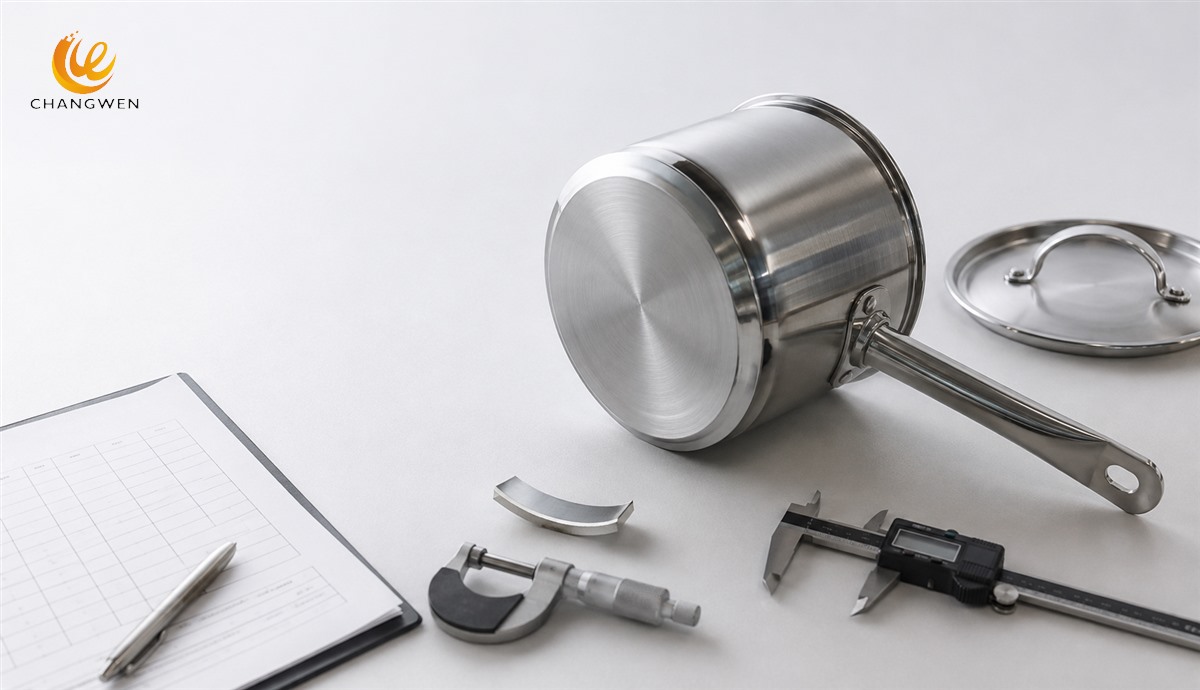
Which dimensions and construction details need measured approval?
6. Are diameter, height, and usable geometry correct?
Measure the specified internal and external diameters, body height, overall length, rim profile, and relevant interfaces against agreed datums. Distinguish nominal catalog size from the dimensions used for acceptance. A pan sold as 24 centimeters still needs an explicit measurement location and tolerance. Record actual values so later inspectors can distinguish a dimensional failure from a different measuring technique.
7. Is wall thickness verified at agreed locations?
Separate finished wall thickness from starting sheet thickness and measure the locations identified by engineering. Use equipment suitable for the geometry and material construction, with destructive sectioning only on designated test units when necessary. One accessible rim reading cannot represent every formed area. The stainless steel cookware thickness guide provides background for defining the thickness requirement before evaluating the sample.
8. Does the base or clad structure match the design?
Verify the specified layer arrangement, base coverage, thickness definitions, and bonding evidence using an agreed method appropriate to the construction. Distinguish a layered base from layers continuing through the sidewall. A polished exterior can hide internal differences, so appearance alone is insufficient. Cross-sections, process records, and appropriate testing may support approval, but the method and its limitations must be documented.
9. Are base profile and stability acceptable?
Check the base profile and stability using the defined reference surface, measurement points, temperature condition, and acceptance limits. Some designs specify a controlled profile rather than perfect flatness in every condition. Record rocking, gaps, and relevant measurements instead of imposing a universal flatness number. A cookware sample that sits correctly when cold still requires separate evaluation under its intended thermal conditions.
10. Are weight and capacity measured consistently?
Record whether product weight includes the lid, detachable accessories, or packaging, and specify the filling method used for capacity. Distinguish brimful volume from a recommended working fill. A heavier sample does not necessarily contain the specified wall construction, and a larger advertised capacity does not guarantee useful cooking space. Use weight as a consistency indicator alongside dimensions and materials, not as a standalone quality verdict.
Which assembly, appearance, and branding checks prevent disputes?
11. Are handles and attachments the approved configuration?
Inspect handle material, position, alignment, rivets, welds, screws, washers, and other attachment details against the approved design. Compare every assembly location rather than inspecting only the visible outer surface. Record looseness, gaps, unfinished edges, or inconsistent fastening. A handle that feels secure during an informal lift has passed only that observation, not the specified strength or durability protocol.
12. Does the lid fit and assemble correctly?
Check lid seating, rim clearance, knob assembly, vent features, and the compatibility of shared lids across applicable sizes. Identify each approved lid variant separately because glass, metal, and alternative knob configurations can change the verification scope. A lid should match its intended fit behavior rather than an assumed airtight seal. Record fit evidence on the actual cookware, not only on a drawing.
13. Are rims, edges, and accessible surfaces finished safely?
Inspect accessible rims, pouring edges, handle openings, joints, and cut surfaces using a suitable documented procedure. Look for burrs, sharp features, damaged edges, and unfinished transitions without exposing reviewers to unnecessary injury. A small edge defect can matter more than a large cosmetic mark when users routinely touch that location. Resolve safety-related findings before release rather than recording them as ordinary appearance concessions.
14. Is the cosmetic acceptance boundary reproducible?
Define acceptable polishing direction, gloss, texture, color consistency, and workmanship by surface zone and viewing conditions. Supplement the ideal reference with approved defect photographs or limit samples when necessary. One flawless golden sample does not explain whether a faint mark is acceptable. Distinguish food-contact surfaces, prominent display areas, and concealed areas so cosmetic judgments are repeatable without silently lowering functional requirements.
15. Are logo, markings, and artwork revisions correct?
Check logo artwork, dimensions, orientation, position, application method, and legibility on the finished shape. Review capacity marks, batch identifiers, and required product information independently of decorative branding. A correct graphic file can still produce an incorrectly positioned mark on a curved pan. The guide to logo application methods for cookware helps distinguish processes before approving the physical result.
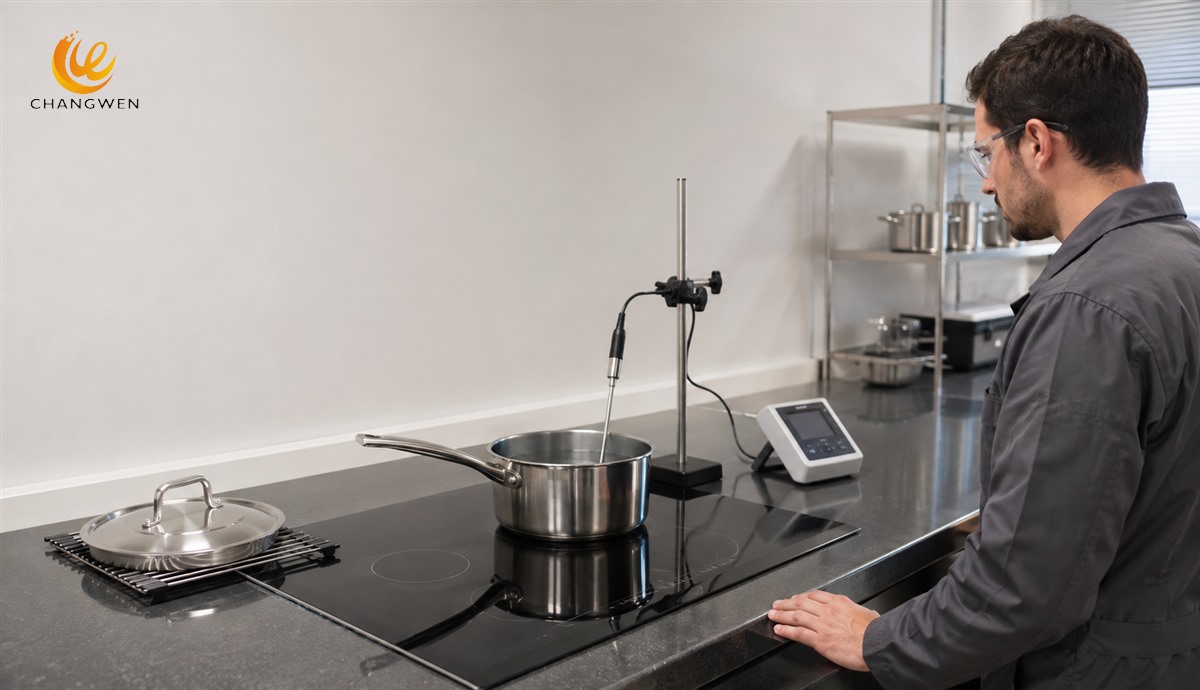
Which functional checks require a defined test protocol?
16. Is hob compatibility demonstrated under relevant conditions?
Verify operation on the heating types claimed for the product using a documented equipment selection and test setup. For induction use, record the hob, cookware size, placement, fill condition, and observed operation. Magnetic attraction alone does not demonstrate compatibility across all cooktops. Keep the approved claim within the evidence available, and investigate detection failures, instability, or abnormal behavior before sign-off.
17. Is cooking performance evaluated reproducibly?
Define the test load, starting conditions, heat input, duration, measurement locations, and pass criteria for the performance being claimed. Compare samples under equivalent conditions rather than relying on an impressive demonstration. Heating speed and temperature uniformity answer different questions, and measurement techniques can introduce error. Record the method and actual results; avoid adopting a universal temperature-difference limit without engineering justification.
18. Are handle strength and thermal behavior verified?
Review the relevant mechanical and thermal test evidence for the complete handle assembly, including its attachments and accessories. Confirm loads, directions, cycles, temperature conditions, and acceptance criteria with competent technical personnel. A comfortable cold grip does not establish safe behavior when cookware is heated. Do not improvise hazardous proof tests during a purchasing meeting; use appropriate facilities and controlled procedures.
19. Do durability results support the care claims?
Match oven, dishwasher, coating, cleaning, and corrosion-related claims to the actual tested configuration and exposure conditions. Document any exclusions involving lids, knobs, removable parts, or detergents. A passing body material does not establish durability of the whole assembly. The dishwasher-claim verification guide explains how controlled exposure and failure criteria make one important care claim more defensible.
20. Are pouring, handling, and cleaning practical?
Evaluate normal handling with representative loads and the protective equipment expected in use. Check pouring behavior, balance, lid removal, access for cleaning, and any nesting or detachable mechanisms. A technically conforming saucepan can still be inconvenient if a handle blocks access or a joint traps residue. Record specific observations and design decisions instead of treating one personal preference as a universal ergonomic standard.
Which packaging and release controls complete the checklist?
21. Is the complete sellable assortment correct?
Lay out every vessel, lid, accessory, insert, and instruction item included in the sellable unit. Match the physical contents to the SKU list, packaging description, and approved assortment. Count lids and accessories explicitly rather than assuming that piece count means cooking vessels. A correct individual pan does not approve a set containing the wrong lid size or a missing component.
22. Does packaging protect the approved product?
Review the actual retail pack, separators, protective materials, carton structure, dimensions, weights, and packing sequence. Validate protection through the agreed distribution test plan where required. A presentation box is not automatically adequate transport packaging. Keep approved packaging linked to the product revision, and use the cookware packaging and shipping guide for wider purchasing implications.
23. Are labels, instructions, and claims consistent?
Reconcile product markings, retail artwork, barcode data, care instructions, language versions, and sales claims with the approved construction and evidence. Scan the actual printed barcode where applicable rather than approving only a digital proof. Packaging that promises unrestricted oven use conflicts with a component-specific limitation. Escalate unsupported or contradictory claims before approval, even when the physical cookware itself passes inspection.
24. Are deviations and open actions formally closed?
List every deviation with its requirement reference, observed condition, risk review, owner, disposition, and expiry or affected quantity. Separate a proposed correction from evidence that the correction was completed. A commercial concession must identify exactly what is accepted and cannot authorize a safety or compliance failure. Require revised samples or targeted verification whenever a change could affect previously accepted characteristics.
25. Are custody, change control, and release authority recorded?
Identify the retained references, their storage locations, custodians, approval signatures, and access arrangements for production and inspection. Where matching buyer and factory samples are retained, verify both against the same approved baseline. State which changes require review and who may authorize production. A signed sample stored without its records, or an untracked replacement sample, loses much of its value as a reference.
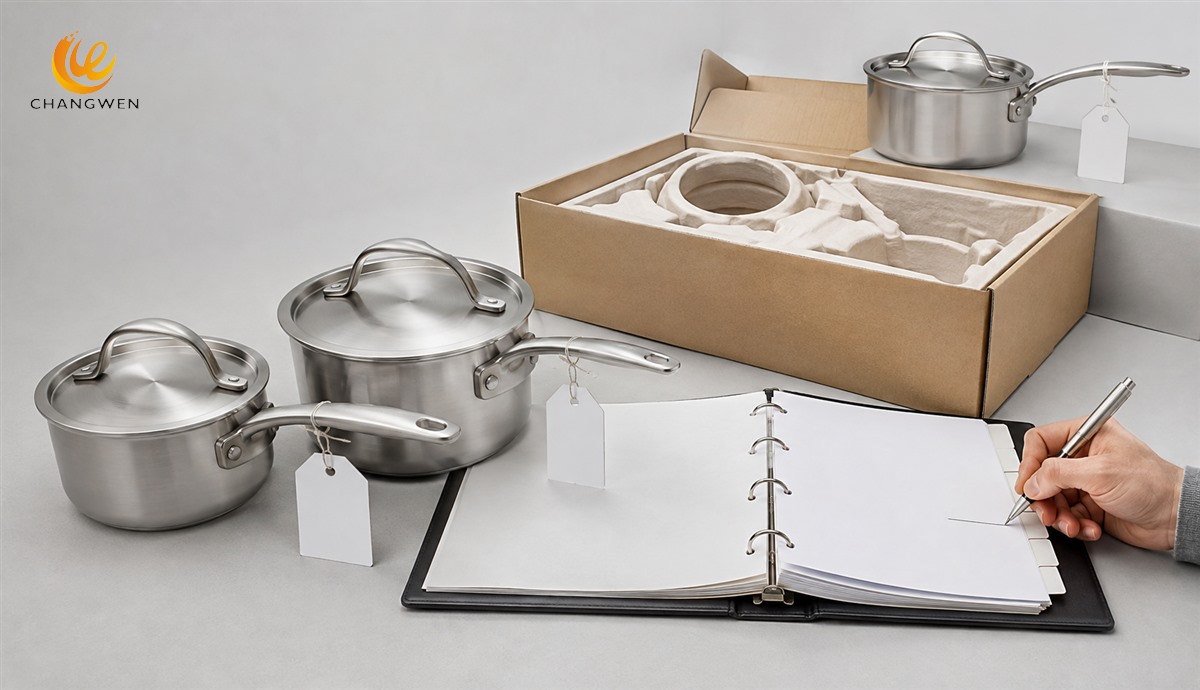
When should the buyer approve, conditionally release, or hold?
Full release is appropriate only when applicable requirements are satisfied and the approval scope is explicit. A conditional decision should authorize a narrowly defined activity, such as a limited pilot, with named restrictions and closure criteria. An unresolved requirement must remain visible; the phrase approved with comments is too ambiguous when production planners cannot tell which work is permitted.
| Decision | Required record | Operational consequence |
|---|---|---|
| Approved for defined scope | Applicable evidence accepted; revision and authority recorded | Only the named configuration and activity are released |
| Conditional limited release | Restrictions, quantity, owner, deadline, and closure evidence | Proceed only within the written limits |
| Hold or reject | Failed requirement or missing evidence and corrective action | Do not start the blocked activity |
For example, an incorrect printed insert might permit separately authorized work on already approved metal components while packaging remains blocked. A loose handle would require technical investigation rather than the same administrative concession. These are illustrative decisions, not default permissions; the responsible team must assess dependencies before releasing any partial activity.
What should the final sign-off statement contain?
A final sign-off statement should identify the approved configuration, evidence package, authorized activity, unresolved restrictions, and change-control rule. A short message can work when it references complete controlled attachments. A lengthy email cannot compensate for missing sample identity or acceptance criteria.
Approval record: [record ID]. Product: [SKU and configuration]. Reference samples: [IDs and revisions]. Controlling documents: [drawing, BOM, artwork, packaging, and specification revisions]. Evidence reviewed: [measurement and test report IDs]. Decision: [approved scope, conditional scope, or hold]. Authorized activity and quantity: [details]. Exceptions and restrictions: [deviation IDs or none]. Required closure evidence: [details]. Buyer approver: [name, role, date]. Supplier acknowledgment: [name, role, date]. Changes to the approved baseline require written review before implementation.
The supplier acknowledgment should confirm receipt of the same documents used by the buyer. Store the approval package in one controlled location and withdraw superseded versions from routine production access. This reduces the risk that an old attachment, rather than the latest decision, becomes the working instruction.
Does golden sample approval replace production inspection?
Golden sample approval does not replace inspection of actual production goods. The approved reference describes the target; production controls and lot inspection evaluate whether manufactured goods meet that target. NIST explains acceptance sampling as a method for deciding whether a lot is acceptable, not as proof that every unit conforms.
Separate reference samples from units consumed or altered by testing, and define how pilot results influence production release. The trial-based manufacturer comparison guide addresses repeatability beyond a presentation sample. Changwen also describes relevant manufacturing checks on its cookware quality-control page; agree the actual project scope rather than assuming every listed check applies automatically.
Frequently asked questions
How long should a golden sample be retained?
Set the retention period around the active product revision, repeat-order cycle, inspection needs, and applicable contractual obligations. Review the physical condition periodically. A damaged, corroded, or altered reference should be assessed for replacement through controlled approval rather than remaining an unquestioned standard indefinitely.
Can the same unit be used for destructive testing and reference storage?
Keep an unchanged reference when testing could cut, deform, abrade, or otherwise alter the product. Identify test units separately and document their relationship to the approved build. A tested specimen can support a report, but its damaged condition may no longer represent acceptable production appearance.
What should buyers remember before requesting sign-off?
Buyers should request a complete approval package before scheduling a sign-off meeting: identified samples, controlled specifications, actual measurements, relevant reports, final packaging, and a deviation log. For a Changwen wholesale, private-label, or OEM cookware project, send the product requirements and sample-review needs to Changwen so the team can confirm the proposed scope and evidence before production planning.
The final decision rule is simple: a cookware golden sample is useful only when another qualified reviewer can identify the same version, reproduce the acceptance decision, and understand exactly what work was authorized. Preserve that connection through production changes, repeat orders, and inspection handovers.
-
Stainless steel cookware 15pcs cooking sets blue marble nonstick fry pan golden plated handles and knobs capsule bottom 3L whistling tea kettle kitchen tools CW-M1501
-
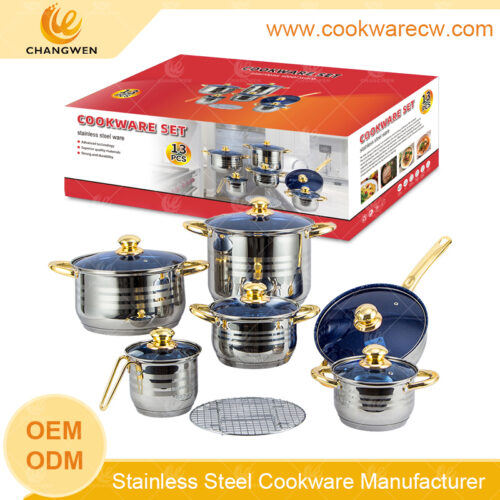
Wholesale price stainless steel pots and pans streamer rack cookware set coating inside golden wire handle milk pot with blue glass lid CW-M1304
-

Honeycomb Structure Stainless Steel Frying Pan CW-ETP014
-
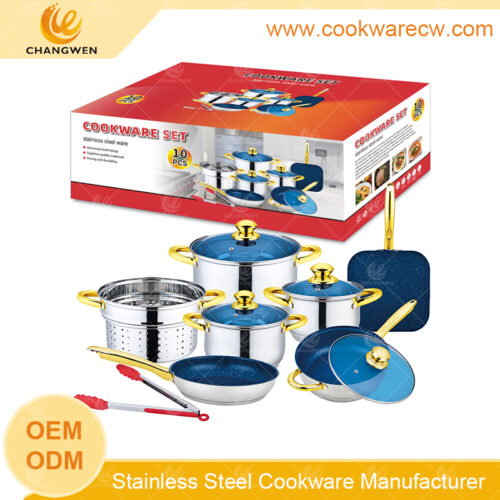
Stainless steel cookware set nonstick pans and pots casserole pot frying pan steamer with glass blue lid and a kitchenware clip CW-M1203
-
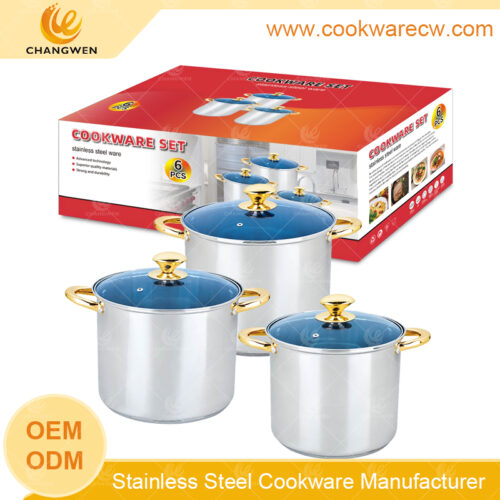
Large Stainless Cook Pot CW-M0607
-
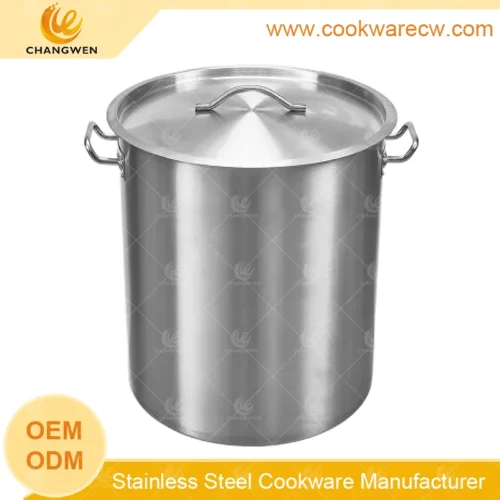
Commercial Stainless Steel Stock Pot CW-SP001
-
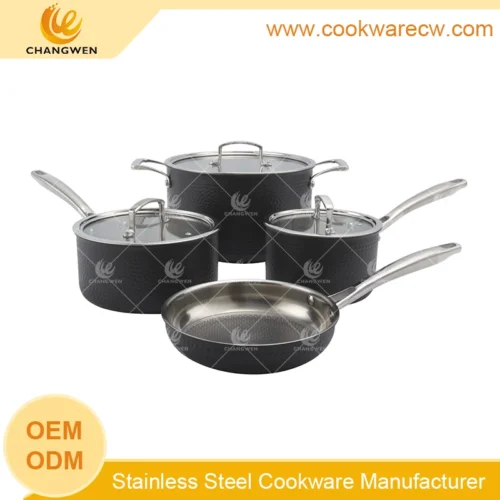
Black Hammered Stainless Steel Cookware Set CW-ETP0702
-
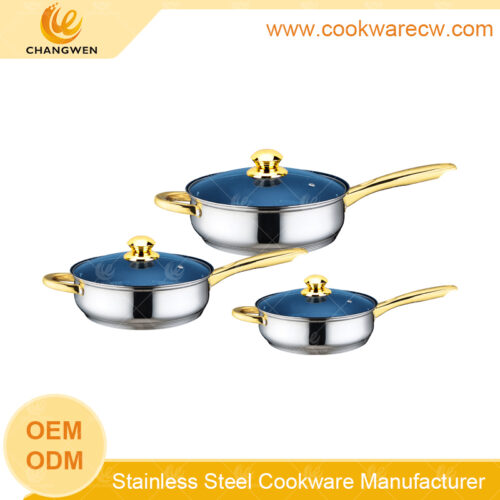
Best Nonstick Stainless Steel Pan