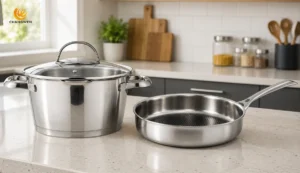
What Is the Difference Between a Pot and a Pan?
What is the difference between a pot and a pan? One rule explains everything — plus saucepan vs pot, skillet vs pan, sauce pot uses, when a pan becomes a pot, and whether you can swap them.

What is the difference between a pot and a pan? One rule explains everything — plus saucepan vs pot, skillet vs pan, sauce pot uses, when a pan becomes a pot, and whether you can swap them.
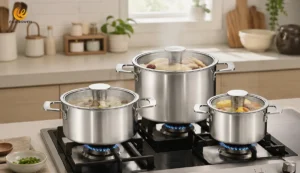
Read time: 11 minutes Introduction Korean cookware has earned a global reputation that goes well beyond its home market. Korean cooking pans, Korean frying pans, and Korean cookware sets have become reference points for a specific aesthetic and performance standard: clean lines, precise heat control, compatibility with induction cooking, and
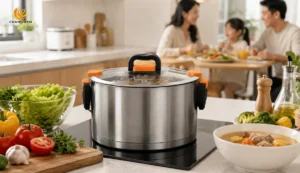
Read time: 11 minutes Introduction There is a quiet engineering revolution happening inside cookware cabinets around the world. Fixed handles used to be the obvious answer. A handle on a pot makes the pot easy to move. End of discussion. But then urban apartments got smaller. RVs got more popular.
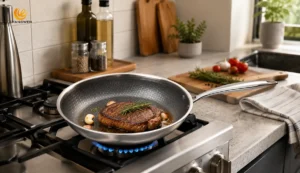
Read time: 10 minutes Introduction There is a quiet revolution happening in the frying pan category. For decades, non-stick cookware meant one thing: a coating applied to a metal surface. PTFE, ceramic, enamel — layers of chemistry between the food and the pan. These coatings work, until they do not.
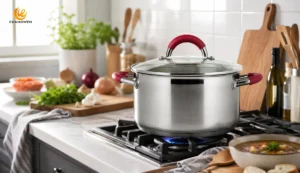
Read time: 9 minutes Introduction You’re standing in a kitchen store, staring at two large pots that look almost identical, both claiming to be essential. One is taller. One is wider. One costs twice as much. The labels say “stock pot” and “soup pot” as if that explains everything. It
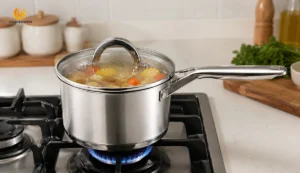
Read time: 11 minutes Introduction There is a comfortable story the cookware industry tells you: spend more, cook better. It is a satisfying narrative. Expensive cookware must be better cookware, because why else would serious cooks pay for it? There is a whole vocabulary built around this story — “professional-grade,”
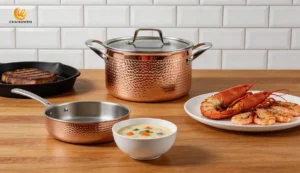
Read time: 11 minutes Introduction Let us have an honest conversation about 5-ply stainless steel cookware. The marketing around it is enthusiastic. “Five bonded layers of superior performance.” “Professional-grade construction used in Michelin kitchens worldwide.” “The last pan you will ever buy.” All of which might be technically accurate —
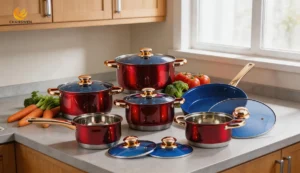
Read time: 10 minutes Introduction If you have been searching for “Mexican stainless steel cookware” and getting either tourist-shop clay pots or nothing useful at all — welcome. You have found the right guide. Here is the deal: Mexico has a serious, growing stainless steel cookware market. The Mexico stainless
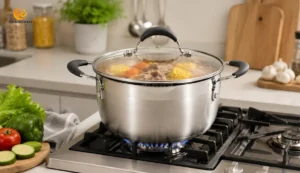
Read time: 12 minutes Introduction This is not a cooking performance guide. This is a business guide. If you are building an OEM cookware brand, the stainless steel vs aluminum question is not primarily about which material heats more evenly or which one lasts longer. It is about which material
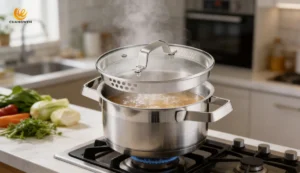
Read time: 11 minutes Introduction Most cookware brands approach customer loyalty backwards. They build the product first, then bolt on a loyalty program — points systems, referral incentives, post-purchase email sequences — and wonder why retention numbers stay flat. The loyalty program is treated as the retention strategy. The product
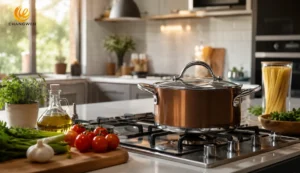
Read time: 11 minutes Introduction Two stainless steel pots leave the same factory on the same day. Same 304 stainless steel. Same tri-ply construction. Same wall thickness. One sells for $35. One sells for $120. The difference is surface treatment. Surface treatment in stainless steel cookware manufacturing is not cosmetic
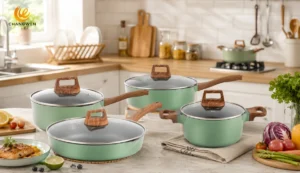
Read time: 12 minutes Introduction Aluminum cookware is everywhere — and misunderstood everywhere. It is the material in most non-stick pans sold globally. It is used in professional kitchens from Paris to São Paulo. It is lighter, heats faster, and costs less than stainless steel. And yet it is also