
Read time: 11 minutes
Introduction
A casserole pot is the one piece of cookware that your grandmother owned, your mother owns, and you will probably own for longer than you expect.
Unlike frying pans — which wear out, get scratched, and need replacing — a well-chosen casserole pot can last 20, 30, or 50 years. Cast iron versions get handed down through generations. Stainless steel ones look as good after 500 uses as they did on the first day. Even a quality ceramic casserole, properly cared for, will outlast several non-stick pan sets.
But “well-chosen” is doing a lot of work in that sentence. Because the casserole pot market in 2026 is genuinely confusing — cast iron, enameled cast iron, stainless steel, ceramic, aluminum, Dutch ovens, braisers, French ovens. Each claims to be ideal. Each is ideal for something specific. And none of them is ideal for everything, regardless of what the product page says.
This guide cuts through the confusion. By the end, you will know exactly which material fits your cooking style, which size fits your household, which shape fits your recipes, and what to look for in quality — whether you are buying for yourself or sourcing as an OEM brand or importer.
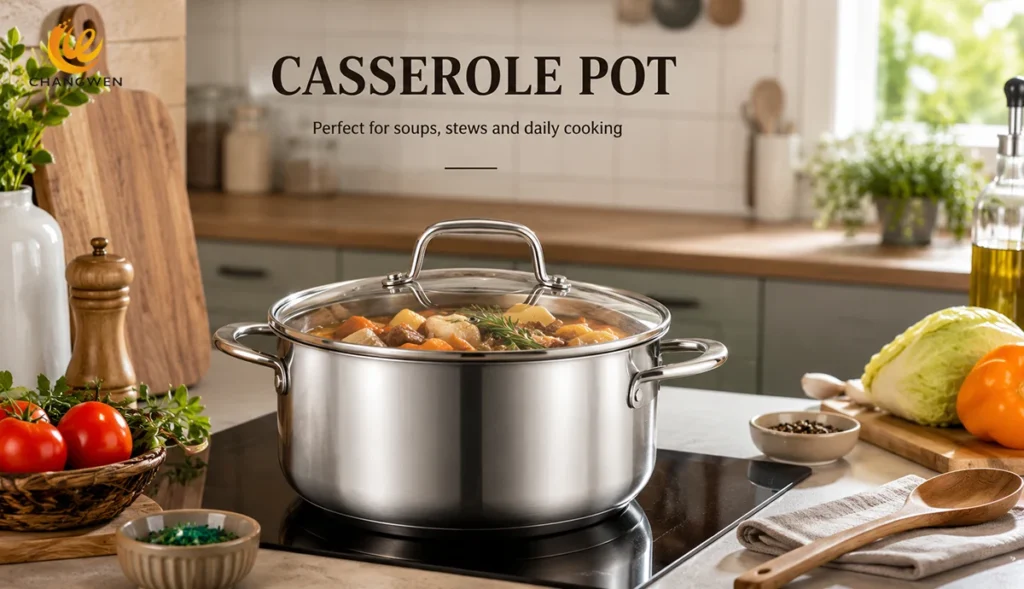
What Is a Casserole Pot, Exactly?
A casserole pot (also called a casserole dish, Dutch oven, or cocotte in French cookware terminology) is a large, deep, heavy cooking vessel with a tight-fitting lid, designed for long, slow cooking methods on the stovetop, in the oven, or both. The defining characteristics are:
- Substantial wall thickness — thicker walls than standard pots, enabling even heat distribution and retention
- Tight-fitting lid — seals in moisture and steam for slow, moist-heat cooking
- Oven-safe construction — the pot itself and the lid can both go in the oven at temperatures up to 200–250°C (390–480°F) depending on material and handle construction
- Two short loop handles — positioned for stability when carrying a heavy vessel full of braised meat or soup
Casserole pots are used for braising (slow cooking protein in liquid), slow-cooked stews, soups made in batches, no-knead bread baking, pasta sauces simmered for hours, and any one-pot recipe where the dish goes from stovetop to oven to table.
The terms “Dutch oven” and “casserole pot” are used interchangeably in most English-speaking markets. “French oven” typically refers to an enameled cast iron casserole pot in the French cooking tradition. They are the same fundamental vessel shape.
Material Comparison: The Decision That Matters Most
The material of a casserole pot determines its heat behavior, weight, maintenance requirements, and lifespan. This is the most important decision in the buying process.
Cast Iron (Bare)
Bare cast iron is the original casserole pot material and still one of the best for specific applications. It heats slowly and unevenly — cast iron has poor thermal conductivity relative to aluminum or copper — but once hot, it retains heat better than any other common cookware material. A hot cast iron pot stays hot when you put the lid on and put it in the oven, maintaining steady temperature through hours of slow cooking.
The seasoning requirement: Bare cast iron requires seasoning — a polymerized layer of oil built up through cooking that prevents rust and reduces sticking. An unseasoned cast iron pot will rust if left wet. A well-seasoned cast iron pot develops an increasingly non-stick, characterful surface over years of use.
Best for: Bread baking (the trapped steam inside a hot cast iron pot creates the crust), campfire cooking, extremely long braises (6+ hours), and cooks who enjoy the maintenance ritual of seasoning.
Disadvantages: Heavy (a 5L cast iron pot can weigh 6–7kg empty), slow to heat and cool, not dishwasher safe, reactive with acidic foods (tomatoes, wine) without seasoning, requires more maintenance than other options.
Enameled Cast Iron
Enameled cast iron is bare cast iron coated with a layer of vitreous enamel — essentially fired glass — on both the interior and exterior. The enamel eliminates the reactivity and maintenance issues of bare cast iron while preserving its heat retention properties.
Enameled cast iron is one of the best materials for casserole cooking because it distributes heat evenly across the cooking surface — whether you are browning meats or simmering a sauce — and excels at retaining that heat once the pot is up to temperature. This means the temperature stays consistent even after you lower the stove temperature or move the pot to the oven, which is exactly what slow-cooked dishes need.
Best for: Red meat braises, wine-based stews, tomato-heavy sauces, bean dishes, anything that benefits from long, even, moist heat.
Disadvantages: Very heavy. Enamel can chip if the pot is dropped or subjected to sudden temperature changes. Premium enameled cast iron is expensive. Not truly non-stick — eggs and delicate proteins still stick without proper oil use.
Stainless Steel
Stainless steel casserole pots are lighter, faster to heat, easier to clean, and more durable against knocks and drops than cast iron alternatives. A quality stainless steel casserole pot with a disc-base or full-clad tri-ply construction distributes heat evenly and is completely non-reactive with all foods including tomatoes, wine, and citrus.
Stainless steel casseroles are generally considered better than ceramic casseroles in terms of durability, as they are highly resistant to stains, corrosion, and rust, and will last longer with proper care.
The key construction variable for stainless steel casseroles is the base. A thick disc-base (encapsulated aluminum disc bonded to the stainless steel bottom) provides good heat distribution at the base — sufficient for most braising and slow cooking applications. A full-clad tri-ply construction (304 stainless steel / aluminum core / 430 stainless steel) runs the conductive core through the base and sidewalls, providing more even heat distribution for anything cooked at the sides of the pot as well as the bottom.
Best for: Everyday casserole cooking, acidic dishes (tomato-based, wine-based), cooks who want low maintenance and dishwasher compatibility, induction cooking (with 430 outer layer).
Disadvantages: Single-layer stainless steel conducts heat poorly — a quality aluminum core is essential. Does not retain heat as long as cast iron after the heat source is removed.
Ceramic (Pure) and Stoneware
Pure ceramic casserole pots are made from clay and minerals fired at high temperatures. They are completely non-reactive with all food types — the most chemically inert casserole material available — and produce outstanding slow-cooked results due to their even, gentle heat distribution.
Clay and stoneware heats very evenly and holds heat well like cast iron, but is far less likely to burn anything. They are most often used for casseroles, stews, and baked pasta dishes.
Best for: Oven-only casserole dishes, health-conscious cooks who want zero chemical interaction with food, dishes that benefit from very gentle, even oven heat.
Disadvantages: Cannot be used on stovetop (no induction or direct heat compatibility). Fragile — chips and cracks from drops or sudden temperature changes. Heavy. Generally not stovetop-to-oven versatile.
Aluminum (Hard-Anodized)
Hard-anodized aluminum casserole pots are lighter than cast iron and stainless steel, heat rapidly, and distribute heat very evenly due to aluminum’s high thermal conductivity. The hard-anodized surface is non-reactive (unlike raw aluminum) and significantly more durable than regular aluminum.
Best for: Lightweight casserole cooking, cooks who find heavy cast iron or stainless pots difficult to handle, everyday braising and stewing where portability matters.
Disadvantages: Less heat retention than cast iron. Not as durable as stainless steel for long-term use. Induction compatibility requires a stainless steel base layer addition.
Casserole Pot Size Guide: How Much Do You Actually Need?
Size is the second most important decision after material — and it is the one most commonly gotten wrong. Too small and the pot is crowded, forcing ingredients to steam rather than braise. Too large and heat distributes inefficiently, the braising liquid covers too shallow a depth, and the dish does not cook properly.
The general rule for casserole sizing is to choose a pot where the ingredients fill it two-thirds full. The top third provides room for liquid expansion and steam circulation without overflow.
Sizing by household and use case:
| Household Size | Recommended Capacity | Typical Dimensions |
|---|---|---|
| 1–2 people | 2–3L (2–3 quarts) | 20–22cm diameter |
| 2–4 people | 4–5L (4–5 quarts) | 24–26cm diameter |
| 4–6 people | 5–7L (5–7 quarts) | 26–28cm diameter |
| 6+ people or batch cooking | 7–9L (7–9 quarts) | 28–30cm diameter |
For a specific meal, here is the practical sizing guide:
- A whole chicken (1.5–2kg): 5–6L pot
- A beef brisket or shoulder (1.5kg): 5–7L pot
- A large batch of soup for 6 people: 6–8L pot
- Bread baking (standard loaf): 5–6L round Dutch oven
- A coq au vin for 4: 4–5L pot
- A lamb stew for 6–8: 6–7L pot
The most versatile single casserole pot for a household of 4 is a 5L (5 quart) round pot — large enough for a whole chicken or a significant batch of stew, small enough to avoid wasted volume for two-person portions.
If you buy only one casserole pot, buy a 5L. If you buy two, add a 3L (for weeknight two-person cooking) and keep the 5L for hosting.
Round vs Oval: Which Shape for Which Food?
Casserole pots come in round and oval configurations. The choice is not aesthetic — it is about what you cook most often.
Round Casserole Pots
Round pots distribute heat most evenly on round stovetop burners. A round pot sits flush over a circular gas flame or induction element, receiving even heat all the way around. Round pots are the most versatile configuration for general casserole cooking — stews, soups, bean dishes, bread baking.
Round pots are also the most common and most widely available shape, which means more size options, wider material range, and generally better value at any given price point.
Choose round if: You cook mostly soups, stews, braises, and bean dishes; you want the most flexible single casserole pot; you bake bread in a pot.
Oval Casserole Pots
Oval pots are designed for elongated ingredients — a whole leg of lamb, a full rack of ribs, a large brisket, a whole fish — that cannot fit flat in a round pot of equivalent volume. An oval pot accommodates these shapes without folding or crowding the ingredient, which affects browning and even heat distribution around the protein.
Oval pots sit less efficiently over round burners than round pots, which can mean slightly uneven heat on the stovetop. For oven cooking (which most long braises transition into), this is irrelevant — oven heat surrounds the pot from all sides.
Choose oval if: You regularly braise whole legs, large joints of meat, whole fish, or full racks; you have an oval burner configuration; oven braising is your primary technique.
Lid Design: The Overlooked Variable
A casserole pot’s lid is not an accessory — it is half the cooking system. A poorly fitting lid loses moisture and steam, which turns a long braise into a dried-out disappointment.
Key lid features to evaluate:
Seal quality. The lid should sit flush on the pot rim with minimal gap. A visible gap around the perimeter means moisture loss throughout a multi-hour braise. To test: place the lid on the pot and listen for a slight resistance when lifting — not vacuum-sealed, but a subtle seal that indicates a good fit.
Self-basting lids. Some cast iron and enamel casserole lids have interior spikes or a textured underside that causes condensation to drip back onto the food in a controlled pattern. This continuous self-basting keeps moisture at the top of the pot even during long cooking times and prevents dry spots on the surface of a braise.
Lid material matching the pot. A cast iron lid on a cast iron pot maintains the heat retention advantage of the material. A glass lid on a stainless pot allows visual monitoring without lifting. Both are valid — glass lids are convenient for timing-sensitive dishes; matched material lids are better for maximum heat retention.
Oven temperature rating of the lid knob. The pot itself may be rated for 250°C. The lid knob — if made from phenolic (Bakelite) or other polymer — may only be rated to 180°C. This is a common specification mismatch that buyers discover when a handle melts in the oven. Confirm that both the pot and the lid are rated to the same oven temperature, or that the lid knob is stainless steel (no temperature limit).
Stovetop Compatibility: The Induction Question
Induction cooking accounts for over 50% of cooktop sales in Western Europe and is growing rapidly in Asia-Pacific and North America. Any casserole pot purchased in 2026 should be induction-compatible unless you have a confirmed non-induction cooktop and intend to keep it.
Induction compatibility by material:
- Stainless steel (with 430 outer layer): Induction-compatible as standard. The 430 stainless steel outer layer is magnetic, which is what induction cooktops require.
- Enameled cast iron: Induction-compatible. Cast iron is inherently magnetic.
- Bare cast iron: Induction-compatible.
- Ceramic / stoneware: Not induction-compatible. Ceramic is not magnetic.
- Aluminum (standard): Not induction-compatible. Aluminum is not magnetic. Hard-anodized aluminum pots require a stainless steel base disc for induction compatibility.
If you have an induction cooktop, this criterion eliminates ceramic casserole pots from stovetop use immediately and makes it a critical confirmation step for aluminum pots.
What to Look for in Quality Construction
Regardless of material, these are the construction variables that determine whether a casserole pot will perform well and last:
Wall and base thickness. Thicker walls retain heat more consistently and resist warping and chipping. For cast iron: minimum 4–5mm wall thickness. For stainless steel: 2.6mm+ total wall for full-clad tri-ply; 4mm+ disc for disc-base construction. For ceramic: heavy, dense clay with no thin spots around the rim.
Handle security. Casserole pot handles carry significant weight — a 5L pot full of stew can weigh 8–10kg. Handles must be either cast integrally with the pot body (ideal for cast iron) or attached with load-rated hardware. Lift the pot empty and feel for any flex or movement at the handle attachment point. There should be none.
Lid fit precision. As described above — a good lid fits snugly without being vacuum-sealed. Poor lid fit is a reliable indicator of imprecise manufacturing tolerances.
Enamel quality (for enameled cast iron and ceramic-interior stainless). Quality enamel is smooth, consistent, and chip-resistant. Thin enamel applied under insufficient kiln temperatures will chip at the rim and edges within months of normal use. Look for enamel that is thick at the base (visible at the interior bottom) and consistent in color without bubbles or thin spots.
Food contact certification. Any casserole pot sold in EU markets should have LFGB certification covering food contact material safety. For ceramic and enameled products specifically, heavy metal migration testing (lead, cadmium) is the most important certification component — these materials historically carried lead in their glazes, and contemporary certification confirms they do not.
Stainless Steel Casserole Pots for OEM and Wholesale Programs
For importers, distributors, and OEM brands building a casserole pot product line, stainless steel is the most commercially practical material for the following reasons:
No enamel chipping liability. Cast iron casseroles carry customer service risk around enamel damage — chips can happen during shipping, retail handling, or customer use. Stainless steel casseroles have no coating to chip.
Dishwasher safe. A significant retail advantage for the consumer segment that values convenience. Stainless steel casseroles can be marketed as fully dishwasher safe; bare cast iron cannot.
Lighter shipping weight. A stainless steel casserole pot weighs 40–60% less than an equivalent enameled cast iron pot. This directly reduces shipping cost and customer handling difficulty.
Induction compatibility as standard. With 430 outer layer construction, stainless steel casseroles work on all stovetops without design modifications or additional components.
Food contact certification is simpler. LFGB and FDA certification for stainless steel casseroles requires standard migration testing. Ceramic and enamel certification requires additional lead and cadmium testing.
For stainless steel casserole pot OEM specifications, the correct construction is: 304 stainless steel inner cooking surface (verified by mill certificate), aluminum disc-base or full-clad tri-ply core, 430 stainless steel outer layer, riveted stainless steel handles, stainless steel domed lid with stainless knob (oven-safe without temperature limit).
FAQ
What size casserole pot do I need for a family of four?
A 4–5L (4–5 quart) casserole pot covers the vast majority of four-person cooking tasks. This accommodates a whole chicken, a substantial beef stew, a large batch of soup, or pasta sauce for the week. If you also cook for guests regularly or do batch meal prep, a 5–7L is a better investment as the primary pot.
What is the difference between a Dutch oven and a casserole pot?
The terms are used interchangeably in most markets. Both describe a large, heavy, deep pot with a tight-fitting lid designed for slow, moist-heat cooking on stovetop and in the oven. “Dutch oven” is more common in North America. “Casserole pot” and “casserole dish” are more common in the UK and Australia. “French oven” or “cocotte” refers specifically to enameled cast iron in the French style. The cooking function is identical across all three terms.
Is cast iron or stainless steel better for a casserole pot?
Both are excellent for different reasons. Cast iron retains heat longer after the heat source is removed and develops a gradually improving cooking surface with use — it is the better choice for very long braises and bread baking. Stainless steel heats faster, is lighter, requires no seasoning, is dishwasher safe, and is fully non-reactive with acidic foods without any surface preparation. For everyday casserole cooking across a range of dishes, stainless steel is more practical. For dedicated slow-cooking enthusiasts, enameled cast iron is the gold standard.
Can I use a casserole pot on an induction cooktop?
Cast iron (bare and enameled) and stainless steel casserole pots with a 430 stainless outer layer are induction-compatible. Ceramic and stoneware casserole dishes are not induction-compatible — oven only. Hard-anodized aluminum casseroles require a stainless steel induction base disc. Always confirm induction compatibility before purchase if you have an induction cooktop.
How do I choose the right casserole pot shape — round or oval?
Choose round for general casserole cooking — soups, stews, bean dishes, bread baking. Round pots distribute heat most evenly on round burners. Choose oval for elongated ingredients that do not fit flat in a round pot: whole legs of lamb, large briskets, whole fish, full racks of ribs. Oval pots are less versatile but necessary for these specific ingredients.
What should I look for in casserole pot quality?
Key quality indicators: wall thickness adequate for the material (4–5mm for cast iron, 2.6mm+ total for stainless tri-ply), handle security with no movement under load, lid that fits snugly with minimal gap, enamel or ceramic coating that is thick and consistent (for coated products), and food contact certification (LFGB for EU, FDA compliance for US). For stainless steel specifically: request material documentation confirming 304-grade inner surface.
Conclusion
The right casserole pot is the one that matches how you cook, not the most expensive one on the shelf.
If you braise regularly and want a lifetime piece that improves with every use, enameled cast iron is worth the weight and price. If you want something lighter, dishwasher safe, non-reactive, and suitable for daily use, a quality stainless steel casserole pot with a tri-ply base delivers excellent results at better practicality.
Choose your material based on cooking habits. Choose your size based on household — most four-person families need a 4–5L pot and nothing larger for daily cooking. Choose round for versatility. Get a tight-fitting lid. Look for documented food contact certification rather than just marketing claims.
A well-chosen casserole pot will still be in your kitchen in 20 years. Choose it accordingly.
About Changwen
Changwen is a stainless steel cookware and casserole pot manufacturer based in Jiangmen, Guangdong, China, with over 22 years of OEM and ODM manufacturing experience. We produce stainless steel casserole pots, stock pots, frying pans, saucepans, steamer pots, and pressure cookers for brands and distributors across South America, Southeast Asia, the Middle East, Europe, and Australia.
-
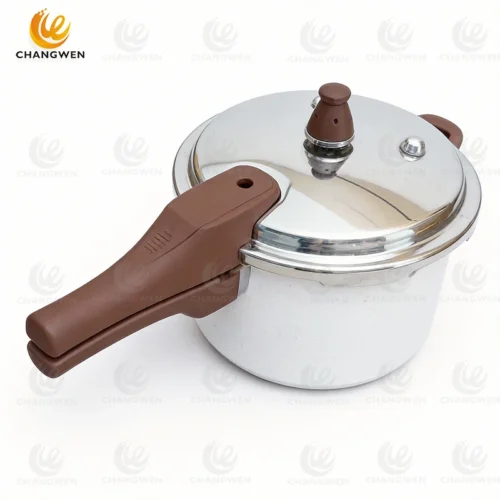
Small Aluminum Pressure Cooker for Fast & Safe Home Cooking
-
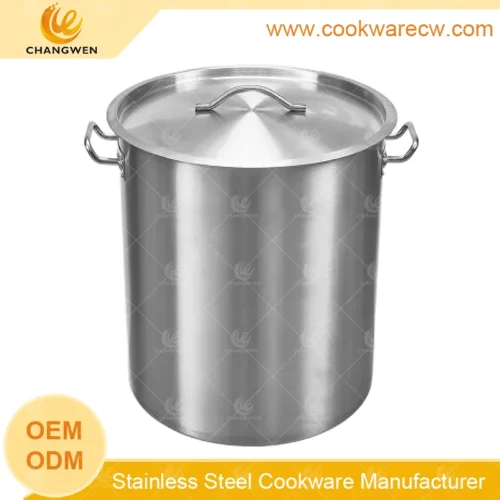
Commercial Stainless Steel Stock Pot CW-SP001
-
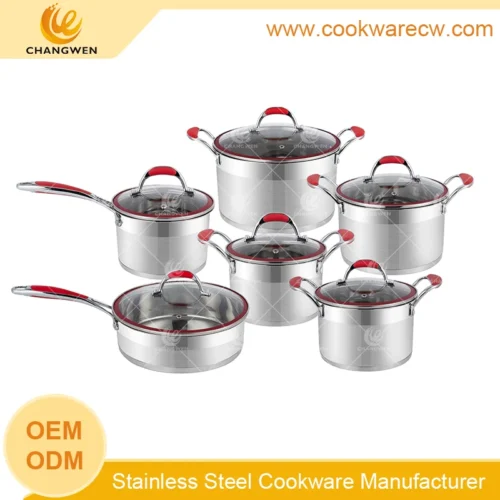
Red Silicone-Handle Stainless Steel Cookware Set CW-ES1202
-

Hotsale 12pcs stainless steel cooking sets soup stock pot kitchen ollas saucepan casserole and milkpot fry pan nonstick CW-M1209
-
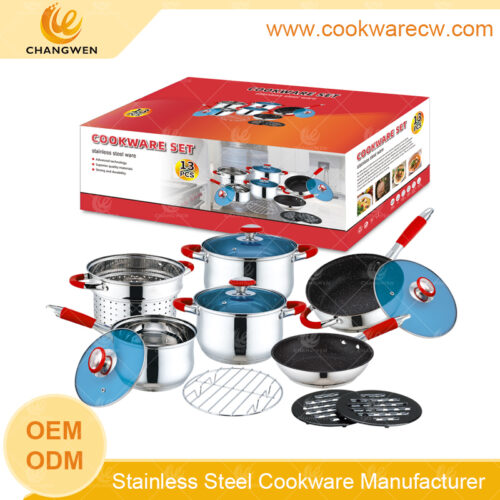
High quality pots wholsesale stainless steel pasta pot fry pan nonstick set saucepan casseroles with red silicone steamer rack heat insulation black mats CW-M1303G
-
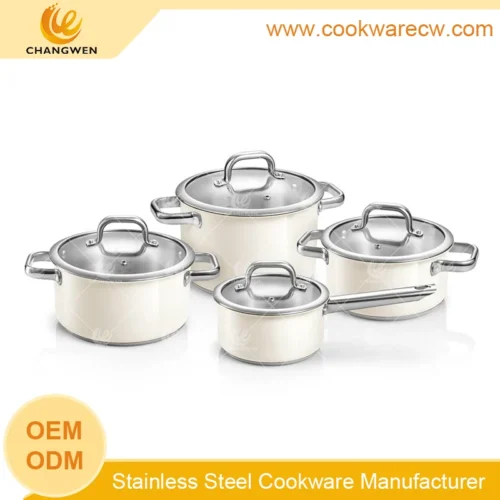
8-Piece Cream White Stainless Steel Cookware Set with Saucepan CW-ES0803
-
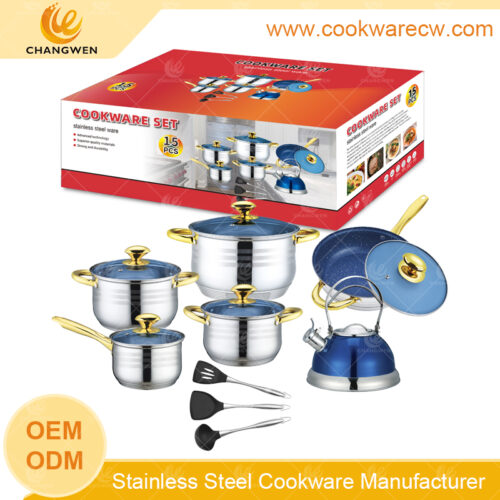
Stainless steel cookware 15pcs cooking sets blue marble nonstick fry pan golden plated handles and knobs capsule bottom 3L whistling tea kettle kitchen tools CW-M1501
-
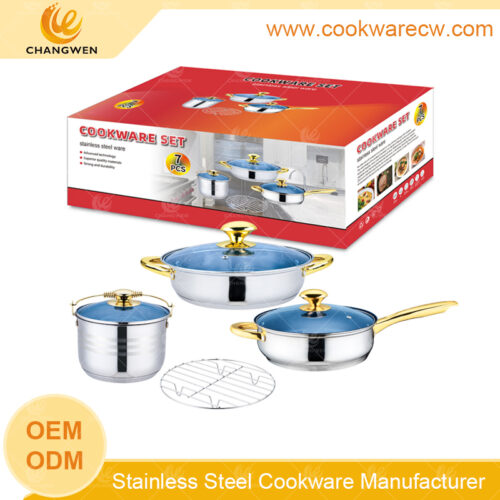
Stainless steel kitchen 7pcs cookware rice cooker with capsule bottom frypan with helper gold plated hollow handle and blue glass wire rack CW-M0701