Reading time: 11 minutes
Introduction
Building a cookware brand — or expanding an existing one — on stainless steel is one of the most commercially durable decisions in the kitchenware industry. Stainless steel cookware sets remain the premium standard in professional and home kitchens globally. They do not degrade, do not require coating replacement, and carry a price positioning that supports healthy retail margins.
But navigating OEM stainless steel cookware manufacturing is more complex than most buyers expect. The difference between a stainless steel cookware manufacturer who will deliver consistent quality across 10,000 units and one who will not comes down to material verification, construction understanding, QC processes, and a clear product specification.
This guide covers everything: what OEM and ODM mean in the cookware context, how stainless steel cookware is manufactured, how to compare stainless steel against aluminum when building a product range, what makes the best stainless steel cookware brand positioning for your market, and what to verify when evaluating OEM cookware manufacturers.
Key Takeaways
- OEM cookware means you specify the product and brand it under your own label. ODM cookware means you select from a manufacturer’s existing designs and add your branding. Most brand programs use a combination.
- The global standard construction for quality stainless steel cookware sets is 304-aluminum-430 tri-ply: food-grade 304 inner surface, aluminum heat-distribution core, magnetic 430 outer layer for induction compatibility.
- Aluminum cookware is lighter, heats faster, and costs less to manufacture. Stainless steel cookware is more durable, non-reactive, and commands higher retail pricing — with the heat-distribution limitation solved by tri-ply construction.
- The best OEM cookware manufacturer is not the one with the lowest price — it is the one whose production capability, certifications, and QC systems match your product specification.
- MOQ for standard OEM stainless steel cookware sets starts at 1,000 units for most established stainless steel cookware manufacturers.
- Certifications required vary by target market: LFGB for EU, FDA compliance for US, ISO 9001 as the baseline quality management standard.
What Is OEM Cookware?
OEM stands for Original Equipment Manufacturer. In the cookware context, OEM means a manufacturer produces a product to your specifications, which you then sell under your own brand name. You own the brand and control the product specification. The manufacturer owns the production process.
ODM stands for Original Design Manufacturer. In ODM, the manufacturer owns the product design, and you select from their existing catalog to brand as your own. Most cookware brand programs involve elements of both — using a manufacturer’s existing construction and tooling (ODM) while customizing handles, surface finish, logo, and packaging (OEM elements).
OEM vs ODM: What This Means in Practice
| Aspect | OEM | ODM |
|---|---|---|
| Product design | You specify | Manufacturer’s existing design |
| Tooling | You may own or share tooling | Manufacturer owns tooling |
| Customization | Full — shape, material, construction | Limited — branding, color, finish |
| MOQ | Higher for full custom | Lower for catalog products |
| Lead time | Longer (tooling development) | Shorter (existing molds) |
| IP protection | You own the design | Manufacturer retains design rights |
| Best for | Established brands with unique products | New brands building product range |
For most cookware brand launches, the practical starting point is ODM with OEM branding — select a manufacturer’s proven construction and tooling, add your brand identity, and launch. As the brand grows, invest in proprietary designs that build genuine product differentiation.
How Stainless Steel Cookware Is Manufactured
Understanding the manufacturing process helps you specify products correctly and evaluate whether a manufacturer’s capability matches your requirements.
Step 1: Raw Material Preparation
Quality stainless steel cookware starts with certified raw material. The standard for cookware inner surfaces is 304 stainless steel (18/8 or 18/10 — containing 18% chromium and 8–10% nickel). The outer layer uses 430 stainless steel (ferritic, magnetic — required for induction compatibility). The core layer is aluminum alloy for heat distribution.
Material test reports (MTRs) from the steel mill should be available for every production batch. This is the document that confirms the actual chemical composition — chromium, nickel, and other alloy content — of the steel being used. Reliable stainless steel cookware manufacturers maintain traceable material documentation.
Step 2: Blanking and Deep Drawing
Steel sheets are cut into circular blanks of the required diameter. These blanks are then pressed into shape through a process called deep drawing — the flat disc is gradually formed into a pot or pan shape by pressing it through a die. Multiple drawing passes may be required for deeper vessels.
The quality of the steel used directly affects formability. 304 stainless steel has good ductility for deep drawing. Lower-grade steels like 201 are more prone to cracking during the drawing process, which is one reason why substituting 201 for 304 creates quality risks beyond just corrosion performance.
Step 3: Cladding (for Tri-Ply and Multi-Ply)
For full-clad tri-ply cookware sets, the three-layer sandwich (304-aluminum-430) is bonded together before forming. The bonding process uses high pressure and heat to create a metallurgical bond between the layers — they cannot be separated.
This is a critical distinction: full-clad construction has layers running continuously from base through the sidewalls. Composite base (disc-bottom) construction has a single-layer stainless body with a separate aluminum disc bonded to the base only. Both are legitimate constructions for different market segments — but they are not interchangeable, and the terminology is sometimes used loosely by suppliers.
Step 4: Base Formation
The base is where heat distribution performance is primarily determined. For composite-base cookware, a multi-layer disc (typically 201 stainless + aluminum + 430 stainless) is hydraulically bonded to the base of the pot. Base thickness is a key specification — thicker bases distribute heat more evenly and are less prone to warping.
Standard composite base thickness ranges from 3mm to 6mm. For tri-ply, total wall thickness typically runs 2.4mm to 3.0mm.
Step 5: Surface Finishing
Surface finish affects both appearance and corrosion resistance. The main finish options for stainless steel cookware are:
- Mirror polish — high-shine, reflective surface. Requires multi-stage polishing. Premium appearance.
- Brushed/satin finish — directional texture. More fingerprint-resistant than mirror polish. Most common for mid-to-premium cookware.
- Matte/sandblast finish — low-gloss. Distinctive appearance, increasingly popular in contemporary kitchen aesthetics.
- PVD color coating — physical vapor deposition applies a thin, hard color layer. Enables gold, black, rose gold, and other finishes while maintaining stainless steel performance.
- Hammered texture — decorative surface treatment that adds visual interest. Popular in certain market segments.
Step 6: Handle and Lid Attachment
Handle design is one of the most visible brand differentiation opportunities in OEM cookware. Handles are attached by riveting or welding. Riveted handles are standard for consumer cookware and durable for household use. Welded handles offer a cleaner aesthetic with no rivet heads on the interior.
Handle materials include stainless steel (oven-safe, premium appearance), Bakelite (heat-resistant, matte finish), and silicone-coated Bakelite (soft-touch, premium feel).
Lids are produced separately — glass lids with stainless steel rims are standard, stainless steel lids are available for fully metal cookware sets.
Step 7: Quality Control and Testing
A reliable OEM cookware manufacturer has documented quality control processes at three stages: incoming material inspection (IQC), in-process inspection (IPQC), and outgoing inspection (OQC).
Key tests for stainless steel cookware include:
- XRF material analysis (confirming 304 vs 201 or other grades)
- Base flatness measurement
- Handle pull-test (confirming attachment strength)
- Salt spray test (corrosion resistance)
- Thermal shock test
- Heavy metal migration testing (for LFGB/FDA certification)
Aluminum vs Stainless Steel Cookware: Complete Comparison
For OEM buyers building a product range, understanding the material comparison is essential for market positioning decisions.
Construction and Materials
Aluminum cookware uses aluminum as the primary material — either pressed/stamped, forged, or die-cast. Because aluminum reacts with acidic foods, almost all aluminum cookware has either a hard-anodized surface treatment or a non-stick coating (PTFE or ceramic) applied to the cooking surface.
Stainless steel cookware uses stainless steel for both cooking and exterior surfaces. To address stainless steel’s relatively poor heat conductivity, quality stainless cookware uses an aluminum (or copper) core bonded between steel layers — this is the tri-ply construction.
The solution to aluminum’s reactivity problem and stainless steel’s heat conductivity problem is actually the same answer: tri-ply stainless steel, which uses an aluminum core between steel layers. This construction delivers the heat conductivity of aluminum with the non-reactive, durable surface of stainless steel.
Heat Distribution
Aluminum is a significantly better heat conductor than stainless steel — aluminum’s thermal conductivity is approximately 237 W/m·K versus approximately 16 W/m·K for stainless steel. This means:
- Aluminum heats faster from cold
- Aluminum distributes heat more evenly across a flat surface
- Single-layer stainless steel develops hot spots
However, tri-ply stainless steel solves the hot spot problem by placing an aluminum core inside — the aluminum distributes the heat before it reaches the cooking surface. Quality tri-ply stainless steel cookware sets heat as evenly as quality aluminum cookware.
Durability and Longevity
This is where stainless steel has a clear advantage. Stainless steel cookware:
- Has no coating to scratch, chip, or degrade
- Can withstand metal utensils without surface damage
- Handles high heat without warping (especially tri-ply full-clad)
- Can last 20+ years with normal use
Aluminum cookware with non-stick coatings:
- Coating wears over time — typically 3–7 years with careful use, less with rough handling
- Scratched coatings should be replaced
- Aluminum substrate can warp at high heat
- Requires replacement more frequently than stainless
For OEM brand positioning: Stainless steel cookware sets carry higher perceived value and can be marketed on longevity. Aluminum non-stick is positioned on ease of use and low price point.
Reactivity and Food Safety
Stainless steel is fully non-reactive — it does not interact with acidic foods, alkaline foods, or any standard cooking ingredient. Tomatoes, citrus, wine, vinegar — none of these will cause leaching from a quality 304 stainless cooking surface.
Standard aluminum is reactive with acidic foods, which is why almost all aluminum cookware has a coating. Hard-anodized aluminum is non-reactive, but the anodization process must be intact.
Weight
Aluminum is significantly lighter than stainless steel. For a given pot size, an aluminum pan may be 30–40% lighter than a comparable stainless steel pan. For some market segments (elderly consumers, camping equipment, everyday lightweight cooking), this matters.
Induction Compatibility
Standard aluminum is not induction-compatible — aluminum is not magnetic. Aluminum cookware needs a magnetic stainless steel base disc added for induction use, and not all aluminum cookware includes this.
304 stainless steel is also not magnetic — but tri-ply cookware with a 430 stainless outer layer is induction-ready by design. This is the standard construction (304 inner, aluminum core, 430 outer) that makes quality stainless steel cookware sets universally compatible with all stovetop types.
Price Positioning
| Construction | Relative Price | Market Positioning |
|---|---|---|
| Single-layer aluminum (coated) | $ | Budget / entry-level |
| Single-layer stainless + composite base | $$ | Mid-range |
| Hard-anodized aluminum | $$ | Mid-range / non-stick premium |
| Tri-ply stainless steel (304-Al-430) | $$$ | Premium |
| 5-ply stainless steel | $$$$ | Ultra-premium |
For OEM buyers: the tri-ply stainless steel cookware set occupies the most commercially interesting price tier — premium enough to support strong retail margins, accessible enough to reach a broad premium market.
What Makes the Best Stainless Steel Cookware Brand?
The best stainless steel cookware brand positioning is built on four pillars:
1. Verified Material Specification
The foundation of any credible stainless steel cookware brand is a genuine 304 stainless steel inner surface, confirmed by material test certificates. The most common quality fraud in this category is substituting 201-grade steel, which looks identical but has lower corrosion resistance and lower nickel content. Brands that can verify and communicate their material specification have a genuine differentiator.
2. Construction Transparency
Full-clad tri-ply is genuinely better than composite base for cooking performance. Brands that communicate this clearly — and can demonstrate the layers in marketing materials — command premium positioning credibly. “Full-clad” versus “disc base” is a meaningful quality distinction that informed buyers understand and value.
3. Certifications That Match the Market
- EU market: LFGB certification is the food safety standard buyers and retailers expect
- US market: FDA compliance documentation
- Both markets: ISO 9001 from the manufacturing partner
These are not just regulatory checkboxes — they are brand trust signals that premium positioning requires.
4. Consistent OEM Execution
The best stainless steel cookware brand is only as good as the OEM manufacturer behind it. Consistent quality across production batches, responsive communication, transparent documentation, and willingness to support factory audits are the characteristics of manufacturing partners that enable brand reputation to compound over time.
Evaluating OEM Cookware Manufacturers: Key Criteria
When selecting a stainless steel cookware manufacturer for an OEM program, evaluate against these criteria:
Material traceability: Can they provide mill certificates confirming the steel grade for every production batch? If not, material grade claims are unverifiable.
Construction capability: Does the factory have full-clad cladding equipment? Not all stainless steel pot manufacturers produce full-clad — confirm the factory can make what you are specifying.
Certifications: Request original documents — LFGB test reports from accredited laboratories (SGS, TÜV, Intertek, Bureau Veritas), ISO 9001 certificate, FDA compliance documentation. Verify validity dates.
Sample before order: Always request production samples and test them before confirming a purchase order. Test heat distribution, warp resistance, handle security, and surface finish consistency.
QC documentation: Ask to see a recent QC inspection report. A factory with a real QC system can produce this. A factory that cannot is telling you something important.
MOQ and lead time: Standard for most established stainless steel cookware manufacturers is 1,000 units MOQ for catalog products, 40 days lead time. Factories claiming much lower MOQs without price premium may be trading companies, not factories.
Communication responsiveness: How a supplier handles your technical questions before the order is a reliable predictor of how they will handle issues during production.
OEM Stainless Steel Cookware Sets: What to Specify
A complete OEM specification for stainless steel cookware sets should include:
Material specification
- Inner layer: 304 stainless steel (confirm grade and test report requirement)
- Core: aluminum alloy (confirm thickness in mm)
- Outer layer: 430 stainless steel (confirm for induction compatibility)
Construction type
- Full-clad tri-ply (layers run through base and sidewalls)
- Or composite base (disc-base, specify disc composition and thickness)
Total wall thickness
- Recommended minimum: 2.6mm for tri-ply quality positioning
Set composition
- Specify each piece: saucepan sizes, stock pot, frying pan, steamer insert, lids
- Confirm lid material: glass, stainless, or both options
Handle specification
- Material: stainless steel, Bakelite, or silicone-coated Bakelite
- Attachment: riveted or welded
- Oven-safe temperature rating (if applicable)
Surface finish
- Mirror polish, brushed, matte, PVD color, or hammered
Branding
- Logo placement and application method (laser engraving, embossing, etching)
- Packaging: inner box design, master carton specification
Certifications required
- LFGB, FDA, ISO 9001 — specify which are required for your market
MOQ, pricing, and lead time
- Confirm per item and per set
- Confirm lead time for standard production and for any custom tooling
FAQ
What is the difference between OEM and ODM cookware?
OEM (Original Equipment Manufacturer) means you specify the product design and the factory manufactures it under your brand. ODM (Original Design Manufacturer) means you select from the manufacturer’s existing designs and brand them. Most cookware brand programs combine both: using existing construction tooling (ODM) with custom handles, finishes, and packaging (OEM elements).
What is the best construction for OEM stainless steel cookware sets?
Tri-ply full-clad (304-aluminum-430) is the industry standard for quality stainless steel cookware. The 304 inner layer provides a food-grade, non-reactive cooking surface. The aluminum core distributes heat evenly. The 430 outer layer enables induction compatibility. This construction is the correct specification for mid-to-premium market positioning.
How do I verify that an OEM cookware manufacturer is using 304 stainless steel?
Request material test reports (mill certificates) showing the chemical composition of the steel batch. Verify with XRF testing during factory inspection or third-party audit. Visual inspection and the magnet test cannot distinguish 304 from lower-grade steels like 201.
What is the typical MOQ for OEM stainless steel cookware?
For standard catalog products with OEM branding (logo, custom packaging), most established stainless steel cookware manufacturers work with MOQ from 1,000 units per item. Custom designs requiring new tooling (proprietary handle shapes, non-standard sizes) carry higher MOQs to recover tooling investment.
What certifications do I need for OEM cookware sold in the EU and US?
For EU market: LFGB certification (food contact safety, including heavy metal migration testing) is the key standard. For US market: FDA compliance documentation. Both markets also expect ISO 9001 from the manufacturer as a baseline quality management certification. Request original documents — not just verbal confirmation.
How does aluminum cookware compare to stainless steel for OEM brand positioning?
Aluminum cookware positions at lower price points and is better for non-stick product lines and lightweight cooking sets. Stainless steel cookware positions at mid-to-premium prices, carries stronger longevity marketing claims, and is non-reactive with all foods. Tri-ply stainless steel solves aluminum’s main advantage (heat conductivity) by including an aluminum core — making it the most versatile premium positioning. Most successful cookware brands carry both categories.
What is the lead time for OEM stainless steel cookware from China?
Standard catalog products with OEM branding: approximately 40 days from order confirmation. Custom handle designs or shapes requiring new molds: add 4–6 weeks for tooling development. Plan inventory accordingly — peak season (Q3–Q4) can extend lead times at high-volume factories.
Conclusion
OEM stainless steel cookware is one of the most commercially resilient product categories in the kitchenware industry. The material is genuinely premium, the retail positioning is well-established globally, and the manufacturing infrastructure in China is mature and accessible to brands at every scale.
Building a successful stainless steel cookware brand on OEM manufacturing requires getting three things right: a clear product specification (material grade, construction type, certifications), a manufacturing partner whose production capability and QC systems match that specification, and a brand identity that communicates the quality of what you have built.
The comparison with aluminum cookware is not one of superiority — both materials serve genuine market needs. But for brands targeting mid-to-premium positioning, tri-ply stainless steel cookware sets offer the most defensible combination of performance, durability, retail price, and brand story.
Work With Changwen for Your OEM Stainless Steel Cookware Program
Changwen is a stainless steel cookware manufacturer based in Jiangmen, Guangdong, China, with over 22 years of OEM and ODM manufacturing experience. We produce tri-ply 304 stainless steel cookware sets, frying pans, stock pots, steamer pots, pressure cookers for brands and distributors across South America, Southeast Asia, the Middle East, and Europe.
All production uses verified food-grade 304 stainless steel with material test reports available for every batch. ISO 9001:2015 certified. LFGB and FDA compliant. Factory audits welcome.
📧 changwen@cwcooking.com 📞 0086-18022963948 🌐 www.cookwarecw.com/contact-us

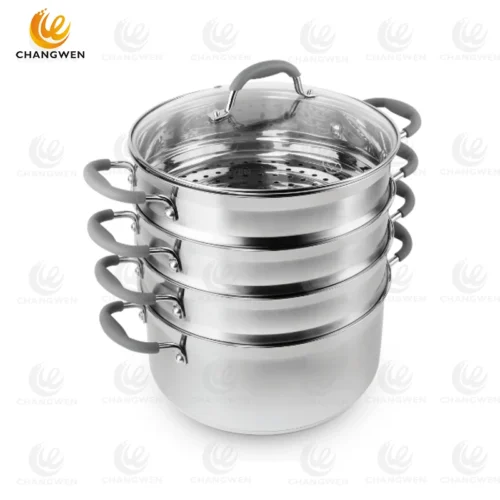
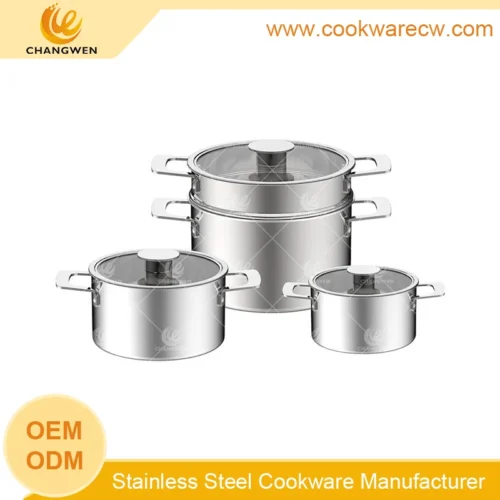
Stainless Steel Steamer Pot for Home and Commercial Kitchens CW-ES034
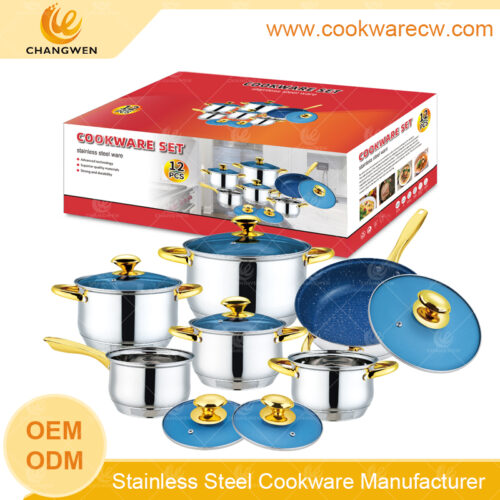
China manufacturer stainless steel 12pcs cookware set non-stick frying pan blue glass lid golden handles & knobs CW-M1209N
5 Ply Stainless Steel Cookware CW-M1401G
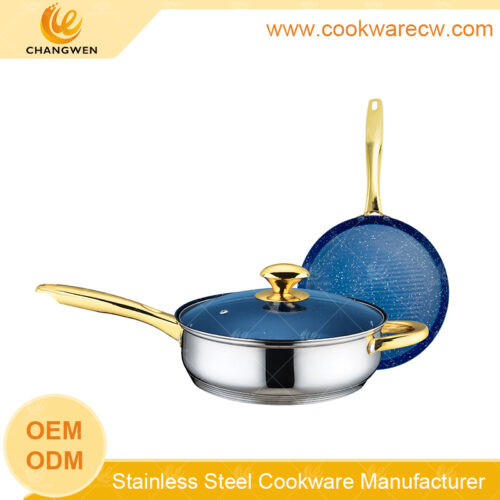
Best Quality Stainless Steel Pans
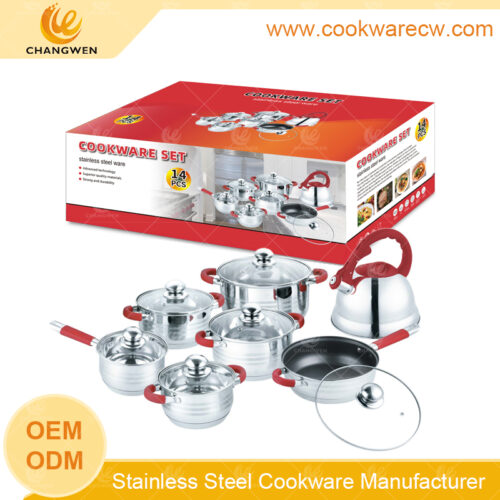
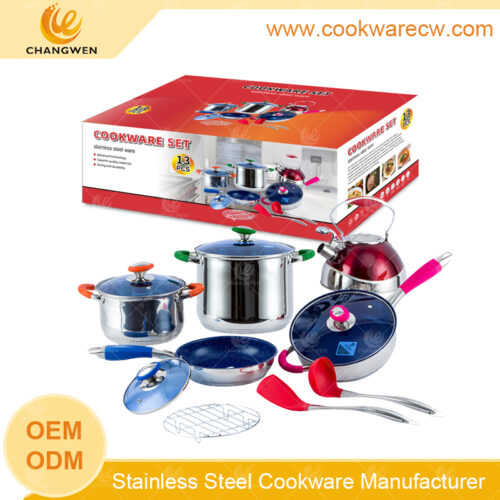
Heavy weight pots wholesale 13pcs stainless steel cookware colored silicone pots nonstick grilled frypan set with 5 steps capsule bottom 3L whistling tea kettle with frying basket kitchen tools spatula ladle CW-M1302G
Commercial-Grade Stainless Steel Pot Set for Chefs CW-TP0705
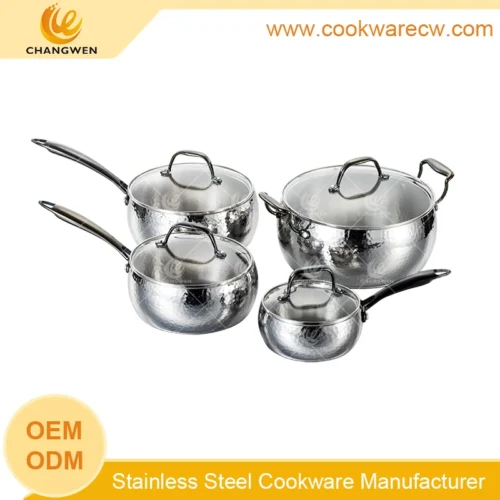
Apple-Shaped Hammered Stainless Steel Cookware Set CW-TP0802
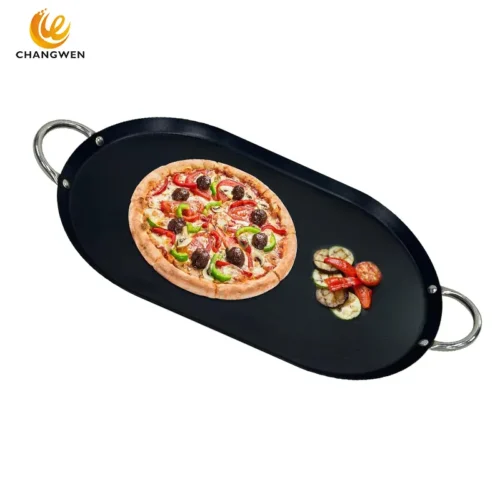
Stainless Steel Griddle For BBQ Grills