
Read time: 12 minutes
Introduction
Aluminum cookware is everywhere — and misunderstood everywhere.
It is the material in most non-stick pans sold globally. It is used in professional kitchens from Paris to São Paulo. It is lighter, heats faster, and costs less than stainless steel. And yet it is also surrounded by persistent health concerns, regulatory debates in Europe, and questions about whether it is genuinely safe for everyday cooking.
The answers are more nuanced than most guides let on. Aluminum cookware is not simply safe or unsafe. The safety depends entirely on the type — raw aluminum, hard-anodized, coated, die-cast, forged — and the condition it is in. The health risks are real under specific conditions and negligible under others.
This guide gives you a complete, scientifically grounded answer to every question about aluminum cookware: types and their differences, what the research actually says about health risks, the truth about the European regulations, how aluminum compares to stainless steel, and how to buy the right type for your specific needs.

Key Takeaways
- Raw (uncoated) aluminum is reactive with acidic foods. It can leach aluminum into food, particularly when cooking tomatoes, citrus, or vinegar-based dishes in worn or scratched pots.
- Hard-anodized aluminum is electrochemically treated to create a dense oxide layer that is non-reactive. It is the safest form of aluminum cookware for everyday use.
- Coated aluminum (PTFE or ceramic non-stick over an aluminum base) is safe when the coating is intact. The aluminum core has zero food contact when the coating is undamaged.
- The Alzheimer’s-aluminum link has been investigated extensively and not confirmed by mainstream science. The Alzheimer’s Association and WHO do not list aluminum cookware as a risk factor for dementia.
- Aluminum cookware is not banned in Europe. Plain uncoated aluminum faces migration limits under EU Regulation (EC) 1935/2004 — not a ban. Anodized and coated aluminum cookware is widely available and legally sold across all EU markets.
- Stainless steel is a non-reactive, no-maintenance alternative to aluminum for cooks who prefer not to manage coating care or anodization considerations.
- For importers and OEM buyers: aluminum cookware manufacturing uses three distinct production methods — die casting, forging, and stamping — each producing a different product with different performance characteristics.
The Four Types of Aluminum Cookware
Type 1: Raw (Uncoated) Aluminum
The simplest form. Aluminum sheet or plate, shaped into a pot or pan, with no surface treatment. Standard in mass-market baking pans, commercial sheet pans, and entry-level cookware.
Performance: Excellent heat conductor — aluminum’s thermal conductivity is 237 W/m·K, approximately 15 times better than stainless steel. Heats quickly and evenly. Lightweight.
The problem: Aluminum is a reactive metal. In contact with acidic foods (tomatoes, citrus, vinegar, wine), raw aluminum can leach into the food. The amount varies significantly with food acidity, cooking temperature, cooking time, and the condition of the pan surface — worn, scratched, or pitted surfaces leach more than new, smooth ones.
Plain uncoated aluminum can also impart a metallic taste to acidic dishes. Long-term use of worn uncoated aluminum pots for acidic cooking is the scenario that generates the most legitimate safety concern.
Best for: Baking applications where the food does not contact the pan directly (baking sheets with parchment), dry-heat applications, short-duration cooking of non-acidic foods.
Type 2: Hard-Anodized Aluminum Cookware
Hard anodizing is an electrochemical process that thickens and hardens aluminum’s natural oxide layer. The result is a surface that is:
- Approximately twice as hard as stainless steel
- Non-porous (the oxide layer seals the surface)
- Non-reactive with acidic foods
- More scratch-resistant than raw aluminum or standard coatings
Hard-anodized aluminum is the form of aluminum cookware that is genuinely safe for all foods, including acidic preparations. The dense anodized layer is a complete barrier between the aluminum substrate and the food. Aluminum migration from hard-anodized cookware is significantly lower than from plain aluminum — in compliance with EU migration limits even for acidic foods under normal cooking conditions.
What anodized aluminum cookware is: A dark grey or black surface (the oxide layer is naturally dark), smooth but slightly matte finish, significantly heavier-feeling than raw aluminum due to the hardened surface.
What it is not: A non-stick coating. Hard-anodized aluminum reduces sticking compared to raw aluminum but is not a non-stick surface. Food will stick without proper oil use and technique.
Best for: Everyday home cooking, professional kitchens, cooks who want aluminum’s heat performance without the reactivity risk.
Type 3: Coated Aluminum Cookware (Non-Stick)
This is the largest single category of aluminum cookware sold globally. An aluminum body (raw, hard-anodized, or forged) serves as the base, with a non-stick coating applied to the cooking surface. The coating is either PTFE (polytetrafluoroethylene — commonly called Teflon-type) or ceramic.
The safety question for coated aluminum:
When the coating is intact, the aluminum core has zero contact with food. Safety depends entirely on the coating, not the aluminum.
For PTFE coatings: PFOA-free since 2013 in major markets. Current PFOA-free PTFE is stable under normal cooking temperatures. Degradation begins above approximately 260°C — overheating an empty non-stick pan should be avoided. When the coating chips, peels, or is heavily scratched, replace the pan.
For ceramic coatings: No PTFE or PFAS. Degrades faster under high heat and aggressive cleaning than PTFE. The non-stick performance diminishes over 1–3 years of regular use.
Best for: Egg cooking, delicate fish, pancakes, any application where effortless food release with minimal oil is the priority.
Type 4: Cast, Die-Cast, and Forged Aluminum Cookware
These are manufacturing method distinctions that significantly affect the final product’s performance and characteristics.
Die-cast aluminum cookware: Molten aluminum is injected into a steel mold under high pressure. Produces complex shapes with consistent, thick walls (typically 4–6mm). The high-pressure casting creates a dense microstructure with minimal porosity — stronger and more uniform than stamped aluminum.
Die-cast aluminum cookware is heavier than stamped pans but lighter than cast iron. Walls are thicker, which improves heat retention and reduces hot spots. Most quality non-stick frying pans in the mid-premium consumer segment use die-cast aluminum as their base.
Cast aluminum cookware: A broader term that includes die-casting but also gravity casting (molten aluminum poured into molds). Cast aluminum generally produces thicker, more substantial pieces than stamped aluminum, though the precise method affects density and porosity.
Forged aluminum cookware: Solid aluminum is pressed or hammered under high pressure while solid (not molten) into the final shape. Forging aligns the metal’s grain structure, producing a denser, stronger material than casting. Forged aluminum cookware has superior structural integrity — it is harder, less prone to warping, and more durable under thermal cycling.
Is forged aluminum cookware safe? Yes — the forging process does not affect the material’s food safety characteristics. Safety depends on the surface treatment (raw, anodized, or coated), not the manufacturing method. Forged aluminum with hard anodizing is one of the safest and most durable forms of aluminum cookware available.
Aluminum Cookware Health Risks: What the Science Actually Says
This is the most searched topic about aluminum cookware, and it deserves a precise answer rather than reassurance or alarm.
The Alzheimer’s Question
In the 1970s, researchers found elevated aluminum concentrations in the brain tissue of some Alzheimer’s patients. This finding generated decades of concern about aluminum exposure from cookware, antacids, deodorants, and food packaging.
The current scientific consensus, after extensive research: there is no established causal link between aluminum from cookware and Alzheimer’s disease. The Alzheimer’s Association, the World Health Organization, and the Alzheimer’s Society UK do not list aluminum cookware as a risk factor for dementia. The elevated aluminum found in some Alzheimer’s patients is considered by mainstream researchers to be a consequence of the disease process, not a cause.
This does not mean aluminum is completely without risk at high exposure levels — it means the exposure from normal cookware use is not a mechanism for Alzheimer’s.
Actual Risk Factors: Who Should Be Cautious
The real health risks from aluminum cookware are specific and manageable:
High-acid food + raw uncoated + worn pan: The scenario generating the highest aluminum migration. Simmering tomato sauce for hours in a worn, uncoated aluminum pot can leach measurable amounts of aluminum. In controlled studies, plain uncoated aluminum pots have shown leaching rates that, under prolonged acidic cooking, can approach or exceed WHO’s Provisional Tolerable Weekly Intake (PTWI) thresholds.
People with kidney disease: Healthy kidneys excrete aluminum efficiently. People with chronic kidney disease have impaired excretion — aluminum can accumulate in their bodies. This population should avoid raw uncoated aluminum cookware, particularly for acidic cooking.
Children: As a general precaution, limiting aluminum exposure in young children is reasonable — not because cookware is the primary exposure route, but as part of overall minimizing unnecessary exposure.
Worn or damaged pans: A six-year-old uncoated or damaged aluminum pot leaches significantly more aluminum than a new one, according to research comparing aged versus new cookware. Replace worn aluminum pans rather than continuing to use visibly degraded surfaces.
The Risk in Context
The average daily dietary aluminum intake from all sources (food, water, medications, cookware combined) ranges from 5–50mg/day. WHO’s PTWI for aluminum is 2mg/kg body weight per week — approximately 140mg/week for a 70kg adult. Cookware contributes a fraction of total dietary aluminum for most people using modern, intact cookware.
Hard-anodized and properly maintained coated aluminum cookware contribute negligible aluminum to food under normal use conditions. Raw uncoated aluminum contributes more, particularly with acidic foods — but for most cooking uses, even raw aluminum’s contribution stays well within dietary context.
Is Aluminum Cookware Banned in Europe? The Actual Answer
This question appears constantly online, often with misleading answers in both directions.
The direct answer: No. Aluminum cookware is not banned in Europe.
The accurate picture:
EU Regulation (EC) 1935/2004 governs all food contact materials in the EU, including cookware. It requires that food contact materials not transfer substances to food at levels that endanger health. This regulation applies to all cookware materials — stainless steel, aluminum, ceramic, plastic — not just aluminum.
For aluminum specifically, the EU applies aluminum migration limits under food contact material safety assessments. Cookware that meets these migration limits is legally sold throughout the EU. Anodized and coated aluminum cookware from reputable manufacturers routinely meets these limits and is widely sold across all EU markets.
What is true: uncoated plain aluminum cookware that does not meet EU migration limits for aluminum transfer into acidic foods may not be legally sold in the EU. Some very cheap imported uncoated aluminum products fail these tests and are removed from shelves. This is not a ban on aluminum cookware — it is a quality and safety standard that compliant products meet.
France, Belgium, and the Netherlands have historically maintained stricter national standards for aluminum cookware than the EU baseline. These national regulations have been the source of reports that “aluminum is banned in Europe” — but they apply to non-compliant uncoated products, not to aluminum cookware as a category.
Stainless Steel vs Aluminum Cookware: When to Choose Which
This is not a question with a universal answer. Both materials have genuine advantages for specific applications.
| Factor | Aluminum | Stainless Steel |
|---|---|---|
| Heat conductivity | Excellent (heats fast, even) | Moderate (requires core for even heat) |
| Heat retention | Moderate | Better (holds heat longer) |
| Food reactivity | Raw aluminum is reactive; anodized is not | Non-reactive (all grades) |
| Non-stick option | Yes (PTFE or ceramic coating) | No coating (requires technique) |
| Durability | Good (anodized); moderate (coated) | Excellent (no coating to degrade) |
| Weight | Light to medium | Medium to heavy |
| Induction compatible | No (unless steel base added) | Yes (with 430 outer layer) |
| Oven-safe (no coating) | Yes | Yes |
| Dishwasher safe | No (anodized); check coating | Yes |
| Price | Lower | Higher |
| Maintenance | Coat care required | Low maintenance |
Choose aluminum when:
- Weight matters (camping, high-volume professional kitchens where staff carry pans all day)
- You need maximum heat responsiveness for temperature-sensitive cooking
- Non-stick cooking (coated aluminum) is your primary requirement
- Budget is a constraint
Choose stainless steel when:
- You want cookware that does not require coating care or replacement
- You cook acidic foods regularly and want no reactivity concerns
- You need induction compatibility without special base additions
- Long-term durability is the priority
- You cook techniques that benefit from the fond (browned bits for pan sauces)
The practical answer for most home kitchens: Both. Coated aluminum frying pan for eggs and delicate proteins. Stainless steel or hard-anodized aluminum for everything else.
Is Aluminum Cookware Safe for Microwave?
Plain aluminum — including aluminum foil and all-metal aluminum pans — must never be used in a microwave. Metal in microwaves causes arcing (electrical discharge), which can damage the microwave and create a fire risk.
This is true for all aluminum cookware, regardless of whether it is raw, anodized, or coated. If the base material is aluminum, it cannot go in a microwave.
For cookware marketed as microwave-safe: these products use materials other than metal for the body — glass, ceramic, or plastic — and are not aluminum.
Aluminum Cookware Manufacturing: Die-Cast vs Forged vs Stamped
For importers, OEM buyers, and anyone evaluating cookware quality at the manufacturing level, understanding the production method explains why products with the same material specification perform differently.
Stamped Aluminum
The most cost-effective manufacturing method. Aluminum sheet is stamped into shape by presses. Produces lightweight pans with relatively thin walls (0.8–2.0mm). Fast and economical to manufacture. Standard for budget-to-mid-range pans.
Performance: Good heat distribution due to aluminum’s conductivity, but thinner walls mean less heat retention and higher warp risk under high heat. Shorter service life than die-cast or forged.
Die-Cast Aluminum Cookware
Molten aluminum injected into precision steel molds under high pressure. Typical wall thickness: 4–6mm. The high-pressure casting eliminates most porosity, creating a denser structure than stamped or gravity-cast aluminum.
Die-cast pans are significantly more dimensionally consistent than stamped pans — the mold controls the exact shape. Heavier than stamped, lighter than cast iron. The thicker walls improve heat retention and reduce warping.
Most quality non-stick frying pans in the $30–$80 retail range use die-cast aluminum bases.
Forged Aluminum Cookware
Solid aluminum billet pressed under high pressure while solid. The forging process compresses the grain structure, creating the densest, hardest aluminum cookware available. Harder than die-cast. Harder than some steels.
Is forged aluminum cookware safe? Yes. The forging process does not create any new food safety concerns. Safety depends on the surface treatment — hard-anodized forged aluminum is one of the most durable and food-safe forms of aluminum cookware made.
Forged aluminum cookware is the premium tier of aluminum cookware. More expensive to manufacture than die-cast, but superior in structural integrity, warp resistance, and longevity.
How to Buy the Right Aluminum Cookware
For Home Cooks
If you primarily want non-stick performance: Hard-anodized aluminum with PTFE or ceramic non-stick coating. Prioritize: PFOA-free certification on the coating, wall thickness (thicker is better — specify die-cast or forged rather than stamped), and handle ergonomics. Replace when coating shows significant wear, scratching, or peeling.
If you cook acidic foods regularly: Hard-anodized aluminum without coating — or switch to stainless steel. Avoid raw uncoated aluminum for tomato-based or vinegar-heavy cooking.
For a complete kitchen setup: Hard-anodized aluminum non-stick frying pan (24–28cm) for eggs and delicate proteins. Stainless steel or hard-anodized aluminum saucepan and stockpot for all other cooking.
For Commercial and Foodservice
Heavy-gauge hard-anodized aluminum pans (3.5mm+ wall thickness) are the standard in professional kitchen aluminum cookware. Weight, heat responsiveness, and service durability are the decision variables.
For commercial baking: heavy-gauge raw aluminum sheet pans are appropriate — the parchment paper used in baking prevents direct food-aluminum contact.
For Importers and OEM Buyers
Specification checklist for aluminum cookware OEM programs:
- Manufacturing method: Die-cast or forged for mid-premium tier; stamped for budget tier. Specify explicitly — “die-cast aluminum base” vs “stamped aluminum” is a critical specification.
- Wall thickness: Specify in mm. Minimum 3.0mm for die-cast non-stick pans; 4.0mm+ for premium.
- Surface treatment: Hard-anodized (food-safe without coating), or raw aluminum with PTFE/ceramic coating.
- Coating certification: PFOA-free (essential), PFAS-free for sensitive markets, LFGB food contact test for EU.
- Induction base: Stainless steel induction base disc for induction compatibility — specify magnetic steel grade and disc diameter.
- Handle: Riveted for durability. Bakelite or silicone for heat resistance. Cast stainless for oven-safe programs.
- Certifications: LFGB (EU), FDA (US), ISO 9001 from manufacturer.
FAQ
Is aluminum cookware safe?
Modern aluminum cookware is safe for everyday cooking with appropriate surface treatment. Hard-anodized aluminum is non-reactive and safe for all foods. Coated aluminum is safe when the coating is intact. Raw uncoated aluminum is reactive with acidic foods — avoid prolonged cooking of tomatoes, citrus, or vinegar in uncoated aluminum pans, particularly old or worn ones. People with kidney disease should be especially cautious with raw uncoated aluminum.
Is aluminum cookware safe or stainless steel — which is better?
Neither is categorically better. Aluminum heats faster and more evenly; stainless steel is non-reactive, more durable long-term, and requires no coating care. Most practical kitchens benefit from having both: aluminum (coated or hard-anodized) for non-stick applications and lightweight cooking, stainless steel for searing, sauce work, and acidic food cooking.
What is anodized aluminum cookware?
Anodized aluminum cookware has been electrochemically treated to thicken and harden the natural aluminum oxide layer on the surface. This creates a dense, non-porous, non-reactive surface that is approximately twice as hard as stainless steel. Hard-anodized aluminum does not leach aluminum into food under normal cooking conditions and is safe for all foods including acidic preparations.
Is aluminum cookware banned in Europe?
No. Aluminum cookware is not banned in Europe. EU Regulation (EC) 1935/2004 sets migration limits for food contact materials, including aluminum. Anodized and coated aluminum cookware that meets these migration limits is legally sold throughout Europe. Some cheap uncoated aluminum imports that fail migration testing may be removed from sale, but this is a product quality enforcement action, not a category ban.
Is forged aluminum cookware safe?
Yes. Forged aluminum cookware is safe. The forging process compresses the aluminum grain structure for superior strength and durability — it does not create any new food safety concerns. As with all aluminum cookware, safety depends on the surface treatment (anodized or coated) rather than the manufacturing method.
What are the health risks of aluminum cookware?
The primary risk is aluminum migration into acidic foods from raw uncoated aluminum pans, particularly worn or damaged ones. People with kidney disease face elevated risk because their bodies cannot excrete excess aluminum as effectively. The Alzheimer’s link has been extensively researched and not confirmed by mainstream science. Modern hard-anodized or properly coated aluminum cookware poses negligible aluminum migration risk under normal cooking conditions.
Is aluminum cookware safe for microwave use?
No. All metal cookware — including all forms of aluminum — cannot be used in a microwave. Metal in microwaves causes arcing, which can damage the appliance and create fire risk. If a product is labeled microwave-safe, it is not metal.
What is die-cast aluminum cookware?
Die-cast aluminum cookware is made by injecting molten aluminum into a precision steel mold under high pressure. This produces cookware with thick, uniform walls (typically 4–6mm), dense microstructure, and consistent dimensions. Die-cast aluminum pans are heavier and more durable than stamped aluminum, with better heat retention and lower warp risk. Most mid-premium non-stick frying pans use die-cast aluminum as their base.
Conclusion
Aluminum cookware covers a wider performance and safety spectrum than any other cookware material. Raw uncoated aluminum has genuine reactivity concerns for acidic cooking. Hard-anodized aluminum is one of the safest, most durable cooking surfaces available. Coated aluminum is the global standard for non-stick performance when the coating is intact.
The questions that matter are not “is aluminum safe?” but “which type of aluminum, in what condition, for which cooking applications?”
Hard-anodized or properly coated aluminum cookware used for its intended purpose, maintained in good condition, and replaced when the surface shows wear: safe and practical for most kitchens.
Raw uncoated aluminum used for prolonged cooking of highly acidic foods in worn, old pans: a genuine risk that is easily avoided by choosing the right product.
Get the type right and aluminum cookware earns its place in any kitchen.
About Changwen
Changwen is a professional aluminum cookware manufacturer based in Jiangmen, Guangdong, China, with over 22 years of OEM and ODM experience. We specialize in the full range of aluminum cookware production — die-cast aluminum, forged aluminum, and drawn (stamped) series — with granite non-stick coating and premium non-stick cookware sets across a wide variety of product styles.
Our aluminum cookware range includes:
- Die-cast aluminum cookware — thick-wall construction (4–6mm), superior heat retention, ideal base for granite and non-stick coating programs
- Forged aluminum cookware — highest-density aluminum construction, superior warp resistance and durability, premium product tier
- Drawn (stamped) aluminum series — lightweight, versatile, wide range of sizes for mid-range programs
- Granite non-stick coating — mineral-reinforced non-stick surface, PFOA-free and PFAS-free, scratch-resistant and durable
- Non-stick cookware sets — complete matched sets with lids, handles, and full retail packaging options
Product styles available: soup pots, casserole pots, frying pans, woks, grill pans, sauté pans, and more — all available for OEM and ODM programs with custom logo, surface color, handle design, and branded packaging.
-
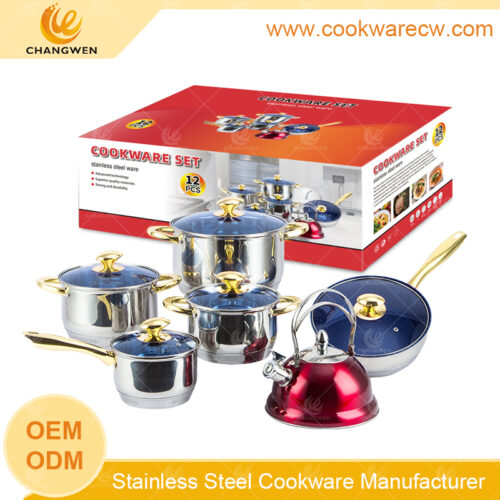
hot sales cookware supplier 12pcs cooking pots and pans stainless steel cookware set fry pan saucepan coating tea kettle CW-M1223
-
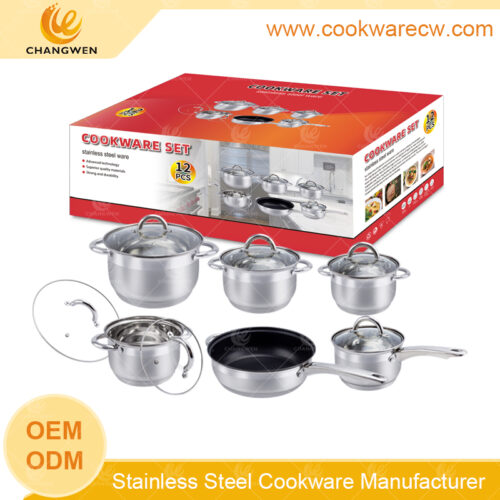
Stainless Steel Cookware Sets 10-Piece CW-M1228
-
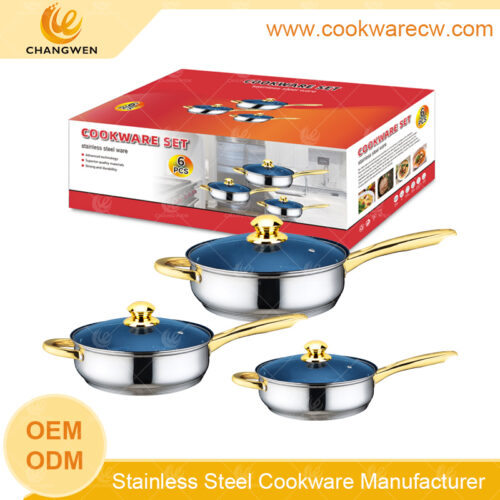
Wholesale new design stainless steel cookware 3pcs blue marble coating nonstick frypan set golden handles and knobs adjustable size CW-M0614
-
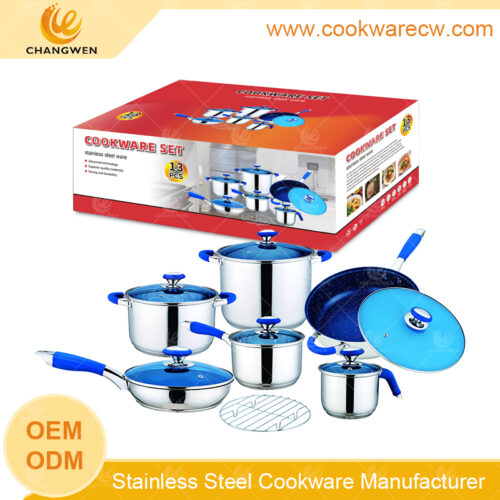
Newly Launched 13pcs stainless steel cookware set with iron wire rack nonstick fry pan with helper mirror polished soup stock pot saucepan and casserole CW-M1306G-02
-
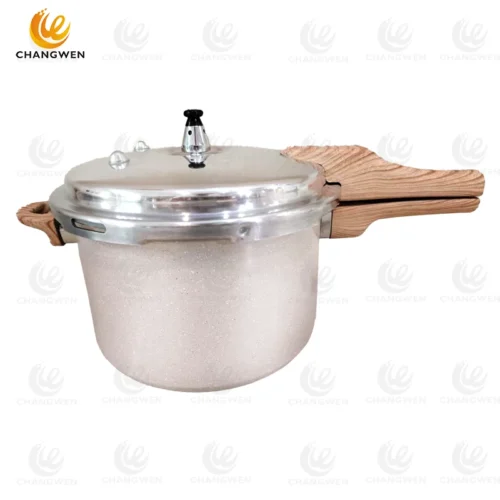
Custom Small Aluminum Pressure Cooker – Compact & Durable
-
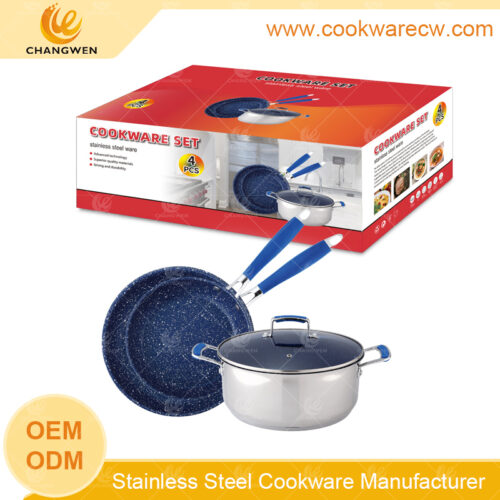
Customized color box 4pcs stainless steel blue marble coating nonstick frypan set silicone cover wholesale kitchenware CW-M0401G
-
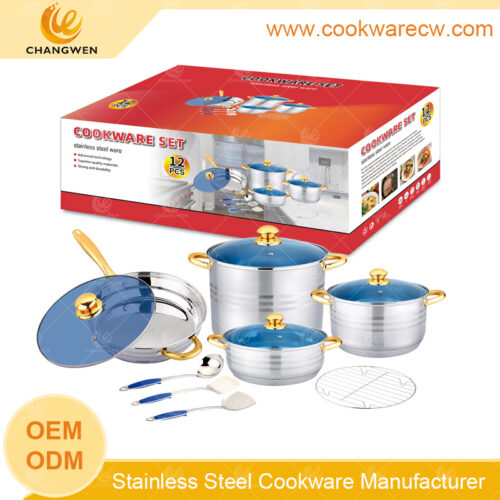
popular stainless steel 12pcs cookware set pots and pans casserole fry pan with kitchenware tools and wire reack CW-M1208
-
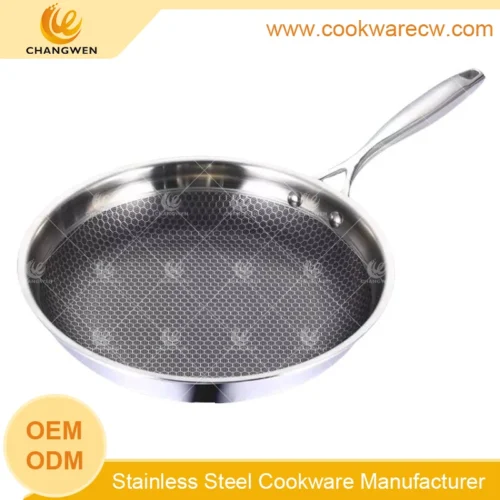
Honeycomb Stainless Steel Frying Pan for Even Cooking CW-TP011