
Stainless Steel Skillet Buying Guide: What Should Buyers Know Before Purchasing?
A stainless steel skillet is one of the most versatile cookware products used in professional kitchens and households worldwide. However, choosing the right skillet requires more than selecting a polished surface or attractive design.
For wholesalers, importers, and cookware brands, the quality of a stainless steel skillet depends on multiple factors, including stainless steel grade, material thickness, construction method, heat performance, handle design, and manufacturing standards.
A well-designed stainless steel skillet should provide excellent durability, stable heating performance, resistance to corrosion, and long service life. Understanding these factors helps buyers select products that meet customer expectations while reducing quality risks.

Why Is Stainless Steel a Popular Material for Skillets?
Stainless steel is widely used for skillets because it combines durability, hygiene, and professional cooking performance.
Unlike some cookware materials that rely heavily on surface coatings, stainless steel cookware achieves long-term performance through its strong metal structure and corrosion-resistant properties.
The advantages of stainless steel skillets include:
- Excellent resistance to rust and corrosion
- High-temperature cooking capability
- Durable surface suitable for frequent use
- Easy cleaning and maintenance
- Suitable for professional and home kitchens
- Compatible with different cooking environments
For wholesale buyers, stainless steel skillets are attractive because they offer strong market demand and can be positioned across different price segments.
Which Stainless Steel Grade Is Best for Skillets?
The stainless steel grade directly affects the performance, durability, and price of a skillet.
The most common stainless steel materials used in cookware include:
304 Stainless Steel
304 stainless steel is one of the most popular choices for high-quality cookware because it provides excellent corrosion resistance and durability.
Its advantages include:
- Higher nickel content
- Better resistance to oxidation
- Strong performance with acidic foods
- Longer service life
For premium stainless steel skillets, 304 stainless steel is often preferred because it provides reliable performance for daily cooking.
201 Stainless Steel
201 stainless steel is a more economical stainless steel option with lower nickel content.
Its advantages include:
- Lower material cost
- Good strength
- Attractive polished appearance
- Suitable for budget-focused cookware lines
However, compared with 304 stainless steel, 201 stainless steel has lower corrosion resistance, making it more suitable for markets where price competitiveness is a priority.
430 Stainless Steel
430 stainless steel is commonly used for magnetic layers because it contains higher chromium and has good magnetic properties.
It is often applied in:
- Induction-compatible cookware bases
- Multi-layer stainless steel structures
- Cost-effective cookware solutions
For skillet manufacturing, different stainless steel grades may be combined to achieve better performance and cost balance.
What Thickness Should a Quality Stainless Steel Skillet Have?
Thickness is one of the most important factors affecting skillet performance.
A thicker stainless steel body generally provides:
- Better heat retention
- More stable temperature control
- Improved resistance to deformation
- Longer product lifespan
Common stainless steel skillet thickness ranges include:
| Thickness | Performance | Suitable Application |
| 0.5–0.7 mm | Lightweight, economical | Entry-level cookware |
| 0.8–1.0 mm | Balanced performance | Household cookware |
| 1.0–1.2 mm | Strong durability | Premium cookware |
| 1.2 mm+ | Heavy-duty performance | Professional kitchens |
For wholesale buyers, choosing the correct thickness depends on the target market. Lightweight skillets may be attractive for price-sensitive customers, while thicker construction creates stronger perceived value.
Is a Thicker Stainless Steel Skillet Always Better?
A thicker skillet is not always better because cookware performance depends on overall construction.
A high-quality skillet requires a balance between:
- Stainless steel thickness
- Heat distribution design
- Bottom structure
- Handle connection
- Manufacturing precision
An extremely thick skillet may become heavy and inconvenient for everyday users.
The ideal stainless steel skillet should provide sufficient thickness for durability while maintaining comfortable handling and practical usability.
What Is the Difference Between Single Layer and Multi-Layer Stainless Steel Skillets?
The construction method has a major impact on cooking performance.
Single Layer Stainless Steel Skillet
A single-layer skillet uses one stainless steel material throughout the body.
Advantages:
- Lower production cost
- Lightweight design
- Good durability
Limitations:
- Slower heat distribution
- Possible uneven heating
Single-layer skillets are suitable for basic cookware categories.
Multi-Layer Stainless Steel Skillet
Multi-layer construction combines different metals to improve heat conductivity.
Common structures include:
- Stainless steel + aluminum + stainless steel
- Three-layer construction
- Five-layer construction
The aluminum layer improves heat transfer, while stainless steel provides durability and food safety.
For premium cookware products, multi-layer stainless steel skillets offer better temperature control and cooking consistency.
How Does the Bottom Design Affect Stainless Steel Skillet Performance?
The bottom structure determines how efficiently heat transfers from the cooking surface to the food.
A quality stainless steel skillet may feature:
Encapsulated Bottom
An aluminum core is enclosed inside stainless steel layers.
Benefits:
- Faster heating
- Better heat distribution
- Suitable for induction cooking
Full Multi-Ply Construction
Multiple metal layers extend through the entire cookware body.
Benefits:
- More consistent heating
- Better temperature control
- Professional cooking performance
For wholesale buyers targeting premium markets, multi-layer construction provides stronger product differentiation.
What Quality Standards Should Stainless Steel Skillets Meet?
Quality standards help ensure that stainless steel skillets are safe, durable, and suitable for international markets.
Important quality factors include:
Material Safety
The stainless steel material should meet food-contact requirements and maintain stability during cooking.
Surface Quality
A high-quality skillet should have:
- Smooth polishing
- No sharp edges
- Uniform finishing
- No visible manufacturing defects
Structural Strength
Quality inspection should check:
- Handle attachment strength
- Body deformation resistance
- Lid compatibility if included
- Welding quality
Heat Performance Testing
Professional manufacturers evaluate:
- Heating uniformity
- Thermal stability
- Induction compatibility
For importers, selecting a supplier with a complete quality control process reduces product returns and customer complaints.
How Should Wholesale Buyers Evaluate Stainless Steel Skillet Quality?
Wholesale buyers should evaluate more than appearance when selecting stainless steel skillets.
A professional evaluation process should include:
Check Material Specifications
Confirm:
- Stainless steel grade
- Thickness
- Construction method
- Surface treatment
Review Manufacturing Capability
A reliable manufacturer should have:
- Experienced production teams
- Quality inspection procedures
- OEM customization ability
- Export experience
Request Samples Before Bulk Orders
Testing samples allows buyers to evaluate:
- Cooking performance
- Weight balance
- Handle comfort
- Surface finishing
- Packaging quality
This process helps avoid quality issues after large-scale purchasing.
What Features Should a Professional Stainless Steel Skillet Have?
A high-quality stainless steel skillet usually includes several important design features:
Comfortable Handle Design
The handle should provide:
- Secure attachment
- Comfortable grip
- Heat resistance
- Good balance
Proper Edge Design
A well-designed pouring edge helps users transfer sauces and liquids easily.
Suitable Weight Distribution
A good skillet should feel stable without becoming difficult to handle.
Compatible Cooking Performance
Modern stainless steel skillets should support:
- Gas stoves
- Electric cooktops
- Induction cooking
These features improve product competitiveness in global markets.
How Can Importers Choose the Right Stainless Steel Skillet Supplier?
Choosing the right supplier is critical for building a successful cookware product line.
Importers should consider:
- Factory production experience
- Stainless steel processing capability
- Quality control system
- OEM and ODM services
- Production capacity
- International export experience
A professional stainless steel cookware manufacturer can help buyers select suitable materials, optimize product designs, and develop products that match different markets.
Stainless Steel Skillet Buying Checklist for Wholesale Buyers
Before placing an order, buyers should confirm:
☑ Stainless steel grade meets product requirements
☑ Material thickness is clearly specified
☑ Construction method matches market positioning
☑ Handle design passes durability testing
☑ Surface finishing meets quality expectations
☑ Supplier provides quality inspection support
☑ Product complies with target market requirements
A detailed evaluation process helps wholesalers purchase cookware that delivers consistent quality and customer satisfaction.
Why Choose Changwen as Your Stainless Steel Skillet Manufacturer?
Choosing the right stainless steel skillet manufacturer is essential for wholesalers, importers, and private-label brands that need stable quality, competitive pricing, and reliable production capacity.
Changwen is a professional stainless steel cookware manufacturer with over 20 years of manufacturing and export experience, specializing in stainless steel skillets, frying pans, cookware sets, and customized kitchenware solutions.
With extensive expertise in stainless steel processing and cookware production, Changwen provides:
- Wholesale stainless steel skillets for global buyers
- OEM and ODM customization services
- Customized materials, sizes, structures, and surface finishes
- Professional support for private label cookware projects
- Strict quality control throughout production
From material selection and forming to polishing, assembly, and inspection, Changwen focuses on delivering consistent cookware quality for distributors, importers, and brands worldwide.
Whether you need stainless steel skillets for retail channels, professional kitchens, or private-label product lines, Changwen can help develop cookware solutions that match your target market requirements.
Conclusion: How to Choose the Best Stainless Steel Skillet?
Selecting the right stainless steel skillet requires careful consideration of materials, thickness, construction, and quality standards.
304 stainless steel provides excellent corrosion resistance and premium performance, while other stainless steel grades can offer cost-effective solutions for different markets.
Thickness affects durability and heat performance, but overall construction quality is equally important. A well-designed stainless steel skillet should balance strength, cooking efficiency, usability, and price.
For wholesalers, importers, and cookware brands, partnering with an experienced stainless steel cookware manufacturer ensures better product quality, customization options, and long-term business value.
-
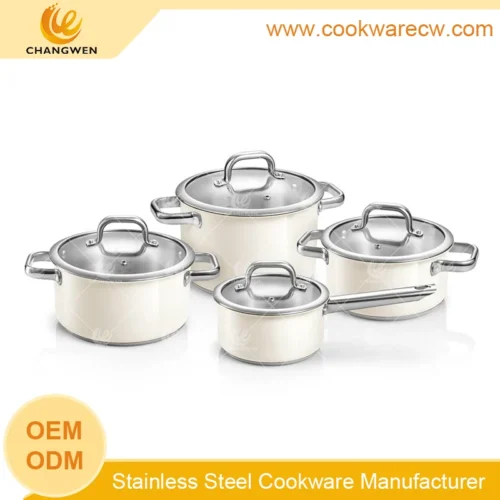
8-Piece Cream White Stainless Steel Cookware Set with Saucepan CW-ES0803
-
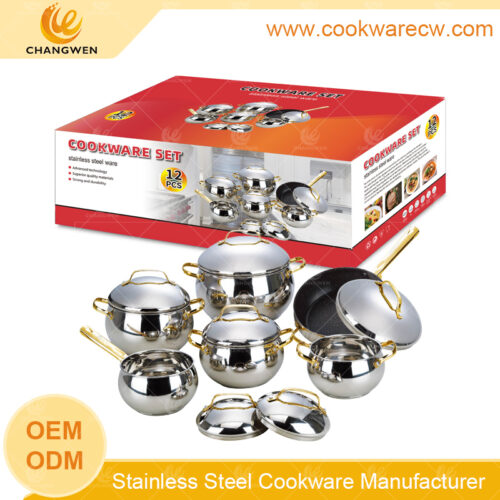
Pots wholesale apple shape cookware set mirror polished stainless steel lids golden wire handles and knobs nonstick frypan CW-M1220
-
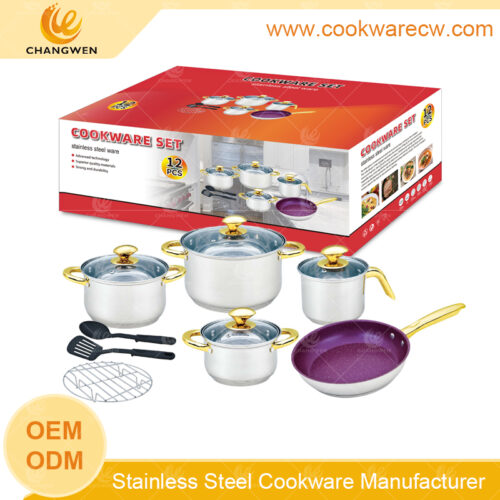
Cookware wholesaler 12pcs pots and pans stainless steel cooking sets kitchenware tools and steamer CW-M1211
-
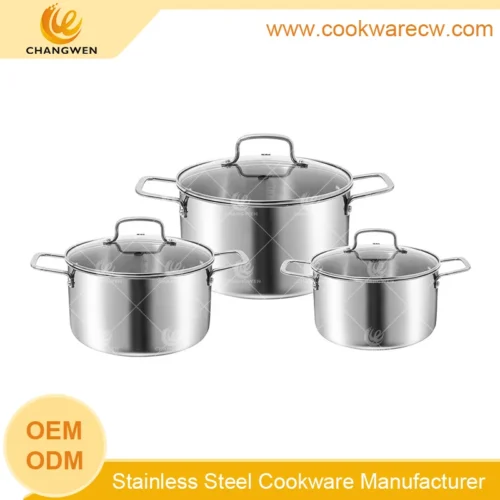
Stainless Steel Pot Set for Professional Cooking Performance CW-TP0605
-
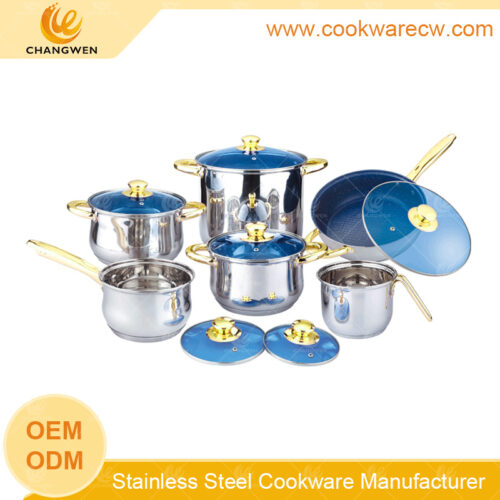
Safest Stainless Steel Cookware
-
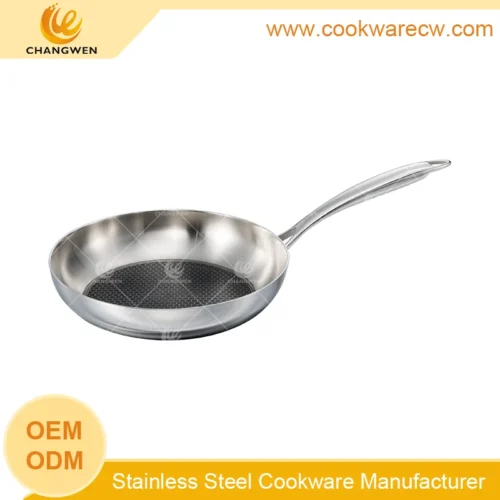
Premium Honeycomb Stainless Steel Nonstick Frying Pan CW-ETP016
-
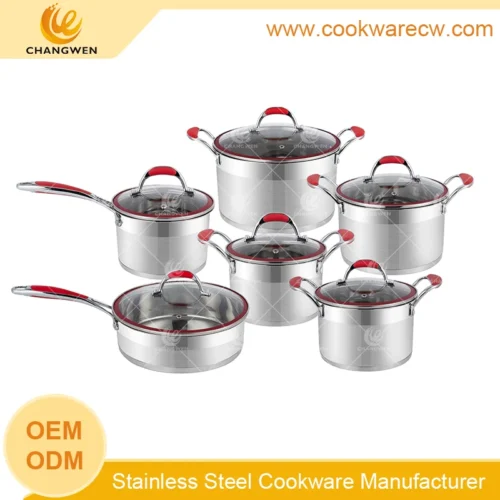
Red Silicone-Handle Stainless Steel Cookware Set CW-ES1202
-
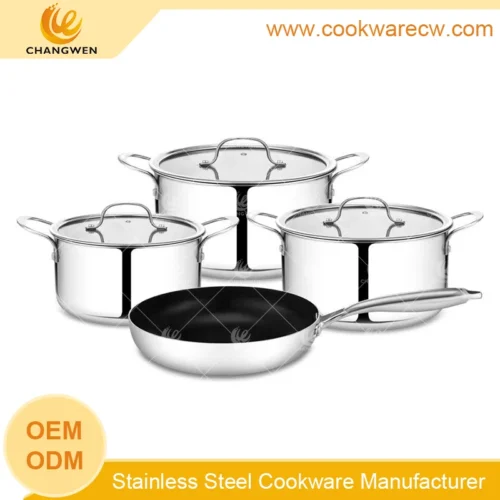
Stainless Steel Cookware Set with Multi-Layer Construction CW-TP0706