
Estimated reading time: 13 minutes.
Honeycomb cookware is cookware with a hexagonal or similar patterned cooking surface. Some products combine exposed metal areas with a nonstick coating; others use textured metal without the same coating system. The pattern alone does not establish food release, coating chemistry, induction compatibility, or service life. A good buying decision separates three questions: what the surface contains, how the body spreads heat, and whether the complete pan performs consistently after normal cooking and cleaning.
For importers, retailers, and private-label brands, the strongest honeycomb cookware purchase starts with a documented specification and a representative sample. Compare food release, cleaning effort, surface wear, flatness, and handling under identical conditions. Approve only the claims that the supplier can support for that exact construction. This guide provides a practical route from a promising product photograph to a defensible buying decision and a repeatable bulk-order standard.
1. Identify what “honeycomb” actually describes
A honeycomb pattern describes surface geometry, while “tri-ply” describes a layered metal body and “nonstick” describes a performance characteristic. These terms are related only when a manufacturer combines those features in the same product. A patterned aluminum pan, a fully clad stainless pan with coating, and an uncoated textured stainless pan can all look similar in a photograph. Ask for separate declarations of body construction, exposed surface materials, coating type, and manufacturing process before comparing prices.
In a coated hybrid design, metal ridges may stand above coated recesses and reduce some direct utensil contact with the coating. The degree of protection depends on ridge height, spacing, coating placement, utensil shape, and pressure. Food can still touch both exposed metal and coated areas. Therefore, a hybrid surface may behave differently from a smooth nonstick coating, especially with delicate foods. Treat improved wear resistance as a claim to test, rather than a guaranteed consequence of a hexagonal pattern.
The supplied product photograph shows a shallow stainless-looking frying pan with a dense patterned interior and a long metal handle. That photograph is useful for shape and visual identity, but it cannot confirm the pictured SKU’s coating formulation, steel grade, layer thickness, or test history. The generated scenes in this article illustrate buying and inspection situations. Actual product claims must come from declarations and tests tied to the production specification.
2. Match the surface to the cooking task
Honeycomb cookware is most useful when its particular balance of release, browning, handling, and cleaning matches everyday meals. A household cooking vegetables, fish, and mixed dishes may value easier cleaning while still wanting a substantial metal pan. A buyer whose customers mainly cook very delicate eggs should compare the hybrid sample directly with a smooth nonstick sample. A customer who prioritizes aggressive searing may prefer uncoated metal with an appropriate heat rating. The right surface follows the task, not the pattern’s appearance.
| Cooking priority | Buying question | Useful sample comparison |
|---|---|---|
| Delicate food release | Does the food release with the stated oil and heat instructions? | Identical eggs or fish portions at matched settings |
| Browning | Can the desired result be achieved within the coating’s operating limits? | Matched protein thickness, moisture, and load |
| Fast cleanup | Does residue remain in the pattern or around rivets? | Same cooling, washing, and wiping sequence |
| Frequent lifting | Is the loaded pan balanced and comfortable? | Same representative food weight in each sample |
| Retail differentiation | Does the feature provide a benefit customers can understand? | Evidence-backed demonstration and clear care instructions |
A complete cookware set does not need a patterned surface on every vessel. A frying pan can make the strongest case because food release and cleanup are visible during shallow cooking. A stockpot used mainly for boiling may gain less from a complex surface. Begin with the vessel that solves the clearest customer problem, then evaluate additional pieces independently. This approach limits unnecessary assortment cost and reduces the number of claims a brand must validate.
3. Confirm coating chemistry before choosing the product story
A honeycomb surface does not tell a buyer whether a coating is PTFE-based, ceramic-type, another formulation, or absent. Request the coating manufacturer’s system identification, layer description, application requirements, and product-specific care limits. The commercial declaration should match the finished pan, including any clear topcoat and decorative treatment. A photograph of dark recesses cannot distinguish these systems, so visual inspection should complement technical documentation rather than replace it.
Claims such as “PFOA-free,” “PTFE-free,” and “PFAS-free” answer different questions and should not be treated as synonyms. A claim about one substance does not automatically cover an entire chemical class. Ask what the claim covers, whether it refers to intentionally added substances or measured limits, and what evidence supports that wording. The FDA’s explanation of PFAS in food-contact applications distinguishes polymerized cookware coatings from other uses; it does not certify an individual pan or approve a supplier’s marketing language.
Temperature and care guidance must follow the specified coating and complete assembly. A metal body may tolerate temperatures beyond those allowed for a coating, handle component, or lid. The German Federal Institute for Risk Assessment advises against overheating empty PTFE-coated cookware. Its discussion of decomposition around 360 C is hazard information, not an operating target. Use the manufacturer’s lower stated limit and cooking instructions for the actual SKU.
4. Inspect the honeycomb surface before testing food
Surface inspection should check pattern continuity, coating coverage, exposed metal consistency, rough edges, pits, contamination, and transitions near the rim and rivets. A regular-looking pattern can hide uneven coating or localized roughness. Examine the same zones under the same lighting on multiple samples, including the center, curved wall, and attachment area. Record defects by location and size so an inspector can repeat the decision during production.
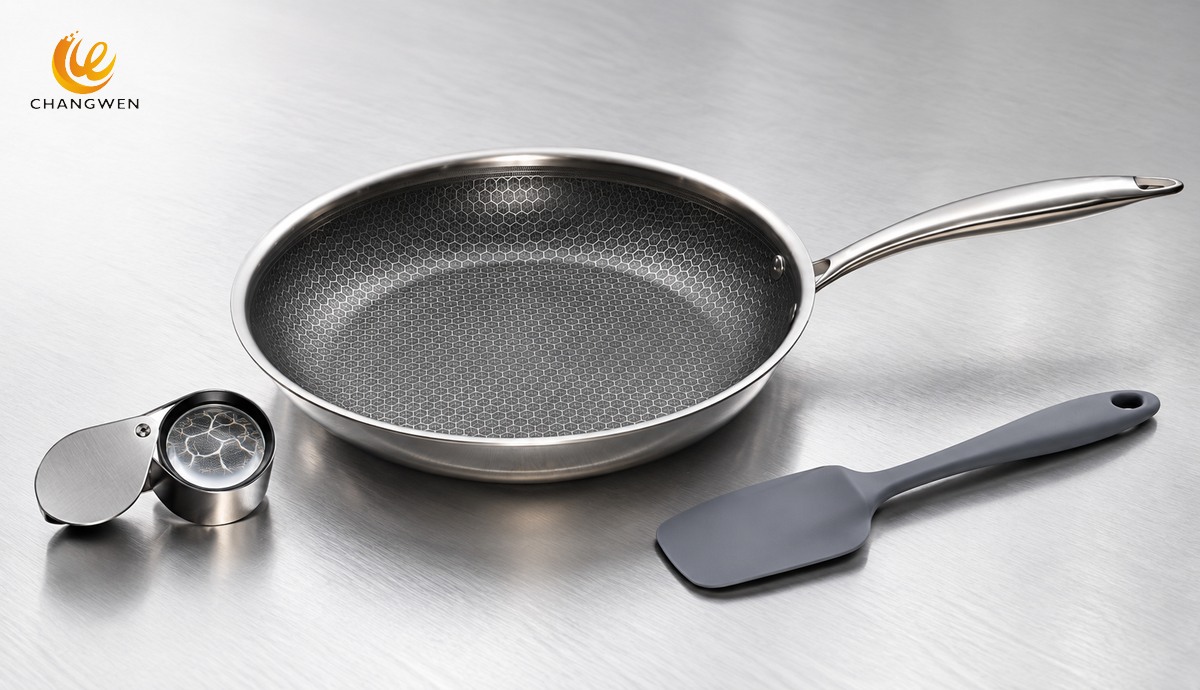
Raised texture deserves a closer check where the bottom curves into the sidewall. Forming, surface processing, and coating application may behave differently in that transition than at the flat center. Inspect whether the pattern remains consistent and whether cleaning cloths or utensils snag on sharp features. A buyer should reject a rough feature that compromises normal use even when its location is less visible in a retail photograph.
A visual acceptance standard should define viewing distance, light source, allowed variation, and defect examples. Separate cosmetic differences from functional failures such as peeling, a loose handle, or a sharp rim. Avoid the instruction “perfect finish,” which leaves every decision subjective. An approved reference sample plus defect photographs is more useful than an adjective, particularly when the buyer and factory inspect in different countries.
5. Evaluate the body beneath the pattern
The cookware body determines much of the heating response; the honeycomb appearance does not eliminate hot spots. An aluminum body can spread heat differently from a stainless body with an attached conductive disc or a continuously clad core. Request a construction drawing and representative cross-section when layer placement is important. The site’s tri-ply stainless steel cookware buying guide explains the body decision in depth; here, the key is keeping body specifications separate from surface specifications.
Thickness comparisons should identify the measurement location and component. Incoming sheet thickness, finished base thickness, sidewall gauge, and conductive-core thickness are not interchangeable. More metal can change heat storage and rigidity but also increases weight and alters response speed. Compare actual heating and handling rather than using one millimeter figure as a universal quality score. Specify the measurement method so different quotations describe the same physical feature.
Induction compatibility depends on the magnetic base and its interaction with the intended hob, not on the cooking-surface pattern. Check vessel detection, low-power stability, and heating on representative cooktops. Measure cold flatness and inspect the base again after controlled heating and cooling. A magnet is a useful screening tool, but an induction icon should be supported by functional results for the actual diameter and construction being sold.
6. Compare usable area, weight, and handle balance
The labeled diameter usually describes an upper dimension, while the flat cooking area determines how much food fits in one layer. Request rim diameter, flat-base diameter, sidewall height, and overall length with handle. A broad-looking pan with steep walls can have less usable space than expected. Check food capacity with representative portions, because crowding changes browning and steaming even when the surface releases food well.
Weight should be judged with a realistic load. A heavy honeycomb pan can feel substantial on a shelf yet become uncomfortable when filled and lifted one-handed. Handle angle, grip shape, attachment location, and length all affect balance. Compare lifting, turning, and pouring with the same food load in each sample. A hollow metal handle should not be described as universally cool; handle temperatures depend on the design, burner, cooking time, and oven use.
Handle security and rim quality belong in the approval plan alongside the surface. Check attachment movement, clearance from the hot wall, and grip comfort. Inspect rivet areas for coating defects and trapped residue. If a lid is included, verify fit and the temperature limits of its glass, knob, and seals. Approve the complete assembled SKU, because an excellent body cannot compensate for an unstable attachment or unclear care instructions.
7. Run a repeatable food-release and cleaning trial
A food-release trial is useful only when the cooking variables remain controlled. Use the same food size and starting temperature, measured oil, burner zone, power setting, cooking duration, and utensil. Follow each coating supplier’s valid preparation instructions, then document any unavoidable difference. Repeat after the pan cools to the same starting condition. Record sticking, breakage during turning, browned residue, and cleanup rather than relying on a single sliding-food demonstration.
An example trial could compare two honeycomb candidates and a smooth nonstick reference using matched eggs and a measured amount of oil. Run three repetitions per candidate and photograph the surface before cooking, after release, and after cleaning. Choose the pass criteria before viewing results, such as intact turning and removal of residue with a defined gentle washing sequence. This is a proposed comparison method, not a claim that the pictured product passed it.
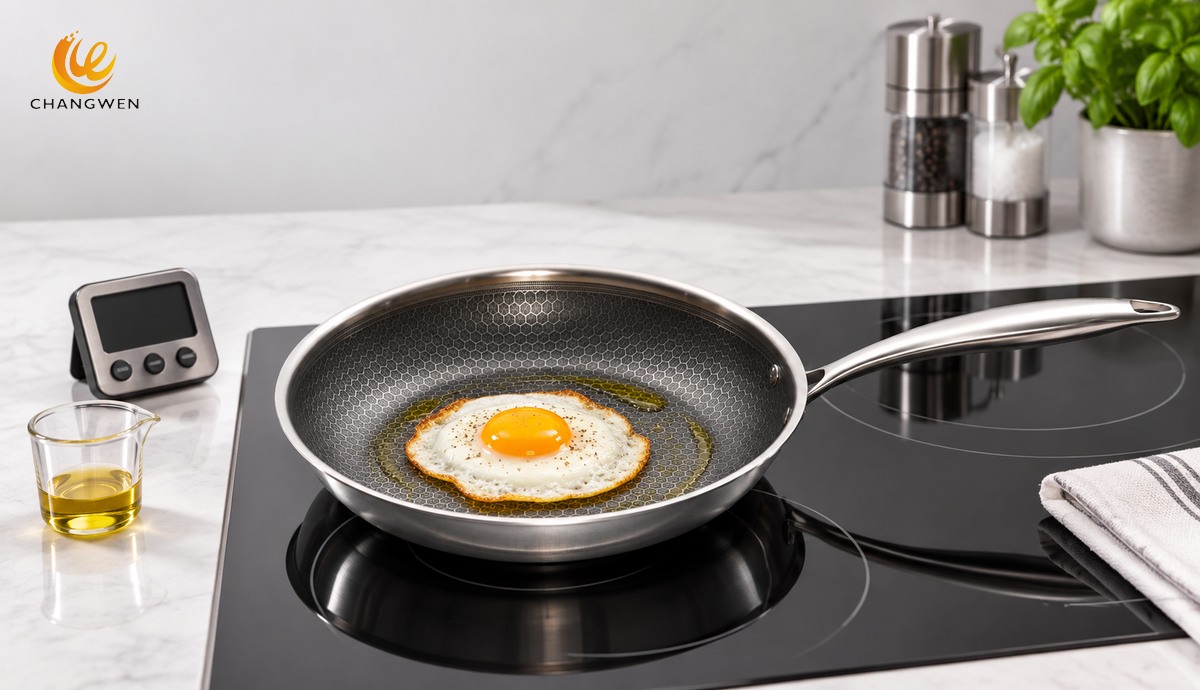
Cleaning should be measured as part of performance because residue can collect between textured features. Let samples cool as instructed, wash with the same mild detergent and soft sponge, and record the effort required. Repeating the cooking trial after cleaning helps distinguish persistent coating change from removable residue. A pan that releases well initially but requires aggressive scrubbing may not deliver the intended everyday benefit.
8. Validate durability claims with relevant conditions
Honeycomb cookware durability depends on coating adhesion, surface geometry, body stability, utensil contact, heat exposure, and maintenance. A ridge can reduce some scraping without making the coating impossible to damage. If a supplier claims metal-utensil compatibility, agree on tool shape, edge condition, pressure, stroke count, and inspection method. Gentle contact with a rounded spatula is a different condition from cutting food or forcefully scraping with a sharp edge.
An accelerated wear test is a comparison between samples under defined laboratory conditions, not a direct conversion into years of household use. Request the method and failure endpoint behind any durability number. Inspect coating loss, exposed areas, changes in release, and cleanability after the agreed sequence. Prefer bounded wording such as “tested under the specified abrasion method” over an unsupported promise that every pan will last a fixed number of years.
Heat distribution requires its own test, separate from coating wear. Hold the cooktop, power, load, measurement positions, and timing constant. Reflective metal and coated patches can complicate infrared readings because their emissivity differs, so a colorful thermal photograph needs an appropriate measurement method. The site’s repeatable hot-spot mapping guide provides further context. Do not attribute even heating to the hexagonal pattern without construction and test evidence.
9. Make supplier quotations comparable
A comparable quotation identifies both the surface system and the vessel underneath it. State body materials, layer placement, dimensions, thickness measurement points, target weight, coating system, pattern coverage, handle construction, finish, and packaging. Add the test scope, document requirements, order quantity, commercial terms, and sample revision. If a supplier proposes an alternative, list the changed fields explicitly. This prevents a cheaper coating or thinner body from being mistaken for the same product at a better price.
For example, two suppliers may quote the same 28 cm honeycomb pan while offering different flat-base diameters, different core thicknesses, and different utensil-use instructions. Those products cannot support an identical consumer promise until the differences are resolved. The site’s cookware guide for importers and private-label brands explains the broader purchasing process. For honeycomb cookware, add the coating identity and claim evidence as mandatory fields rather than optional attachments.
Total buying cost includes sampling, tooling, inspection, packaging, freight, and potential after-sales handling. A low unit price loses value when the delivered surface differs from the sample or the consumer instructions generate avoidable misuse. Evaluate commercial value after technical equivalence has been established. A supplier who clearly documents limitations can be easier to manage than a supplier who offers broad benefits without measurable acceptance criteria.
10. Build an evidence file for retail claims
A claim file links each package statement to evidence for the exact SKU and revision. “Induction compatible” needs a construction basis and representative hob checks; “oven safe” needs limits for the complete assembly; “dishwasher safe” needs a relevant wash-cycle assessment. Food-contact documentation should identify the applicable market, materials, intended use, test conditions, and tested sample. A general factory certificate does not replace a product-specific report.
Use a three-column claim register: proposed wording, supporting document or test, and approved limitations. If the supplier cannot support a statement, remove or narrow it before artwork approval. This process is especially valuable for surface chemistry claims because similarly styled pans can use different formulations. Label instructions should agree with the evidence file, so customers are not told to use high heat or aggressive tools beyond the conditions under which the product was evaluated.
11. Protect the approved sample during bulk production
The approved honeycomb sample should include a signed physical pan, specification revision, surface photos, performance record, packaging reference, and claim register. Identify which changes require buyer approval, including coating substitution, pattern process, layer gauge, handle attachment, and curing conditions where relevant. The site’s golden sample sign-off checklist helps organize the broader approval record. A photograph alone cannot preserve material and process requirements.
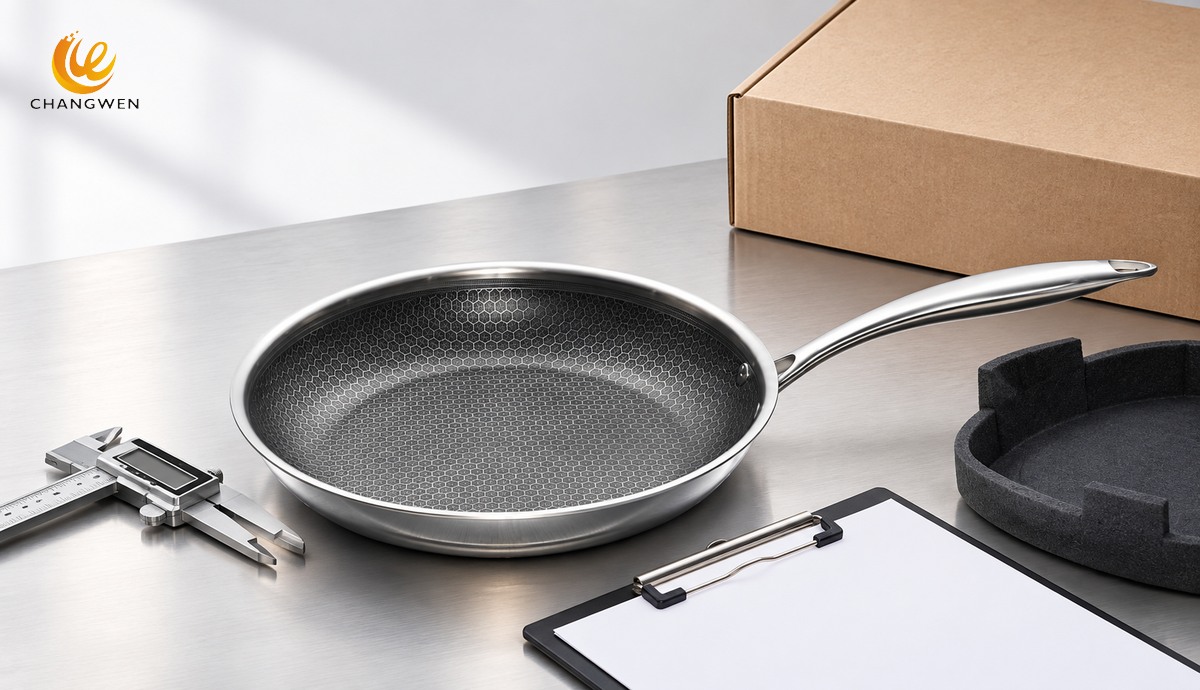
Bulk inspection should combine visual checks across a defined sampling plan with representative functional checks. Inspect pattern consistency, coating defects, rim quality, handle attachment, dimensions, weight, and packing. Reserve appropriate units for agreed cooking, cleaning, or other destructive tests rather than applying those tests to every saleable item. Define defect classes and acceptance rules in advance, including clear rejection of loose handles, sharp edges, and visible coating separation.
12. Publish care instructions that match the specification
Honeycomb cookware care should follow the actual coating and assembly instructions. For a coated pan, avoid prolonged empty heating, use the stated heat range, choose utensils allowed by the manufacturer, and allow the pan to cool before washing. Hand washing with a soft sponge is a practical conservative routine when no stronger validated claim applies. Protect the cooking surface during stacking and explain whether the product needs any first-use preparation; do not automatically prescribe seasoning for every coating.
Customer guidance should also describe when to stop using the pan and request assessment. Peeling coating, significant surface damage, a loose handle, or a base that becomes unstable deserves attention. Poor release alone may result from residue, technique, or coating wear, so troubleshooting should follow the care instructions before a conclusion is made. Clear care and warranty wording makes the retail promise easier to understand and reduces disagreements about expected use.
A simple sample decision record
A sample decision record should name the candidate, specification revision, intended customer, primary recipe, test conditions, and unresolved questions. Keep numerical observations separate from subjective impressions such as appearance and grip comfort. For instance, a candidate may clean easily but feel uncomfortable at the intended loaded weight. Recording both findings prevents an attractive surface from overshadowing a handling problem that the end customer will notice.
Assign each unresolved item an owner and a required document or repeat test. A coating identity question needs a supplier declaration; an unstable induction response needs a controlled cooktop check; a packaging concern needs a representative transport assessment. Close these items before approving artwork and production. This compact record becomes the basis for later comparison when a supplier proposes a revised coating, a lighter body, or a new handle. The buyer can then evaluate the changed feature without restarting the entire product review.
Final buying checklist and recommendation
- Identify the surface materials and coating separately from the body construction.
- Compare usable cooking area, loaded weight, balance, and cooktop fit.
- Test release, cleaning, wear, and heating using documented conditions.
- Support every temperature, utensil, chemical, and compatibility claim with relevant evidence.
- Approve a traceable sample pack and lock changes before bulk production.
Honeycomb cookware is a worthwhile purchase when the actual sample demonstrates a useful balance of cooking performance, cleaning, handling, and price. The strongest product is the one whose documented benefits survive consistent, repeatable evaluation and whose limitations are stated honestly. For a first private-label launch, begin with a small, coherent range and confirm the everyday cooking proposition before adding more vessels. That makes the buying decision easier to defend and the production standard easier to maintain.
Discuss a honeycomb cookware project with Changwen
Changwen provides cookware wholesale and OEM/ODM development for global buyers, with support for product design, sample development, manufacturing, and packaging. Review the company’s custom kitchenware services and send your target market, preferred sizes, body specification, coating requirements, expected volume, and packaging brief. Ask the team to confirm available honeycomb constructions and supporting documents for your project, then contact Changwen for a specification-based quotation. Confirm current quantities and lead times against the final design rather than assuming catalog information applies to every order.
-
8-Piece Stainless Steel Cookware Set with Nonstick Pan & Steamer CW-ES0907
-
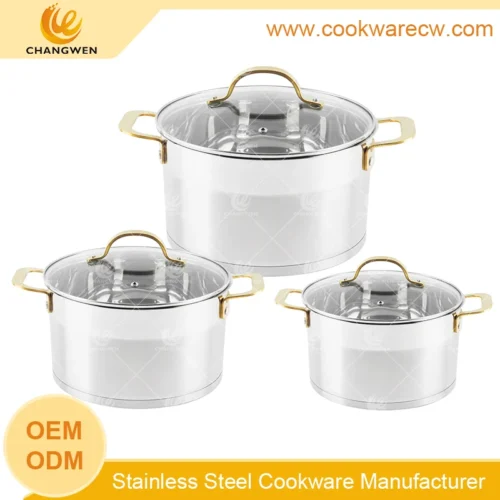
6-Piece Matte Stainless Steel Pot Set with Multi-Color Handles CW-ES0617
-
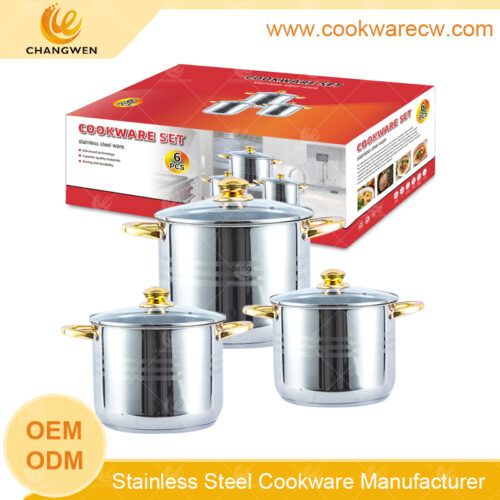
Heavy Duty Stock Pots Stainless Steel CW-M0607
-
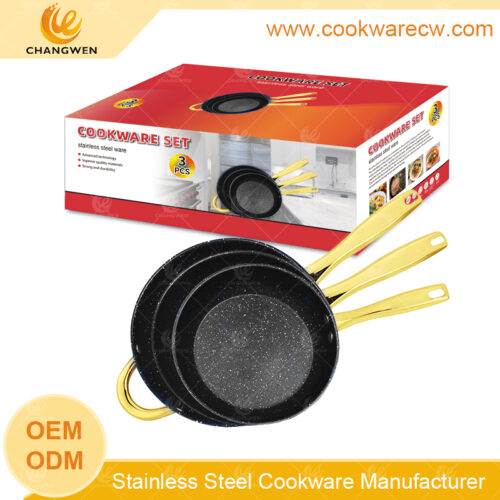
Hot sale 3pcs stainless steel nonstick fry pan set golden plated handles black coating cookware CW-M0301-01
-
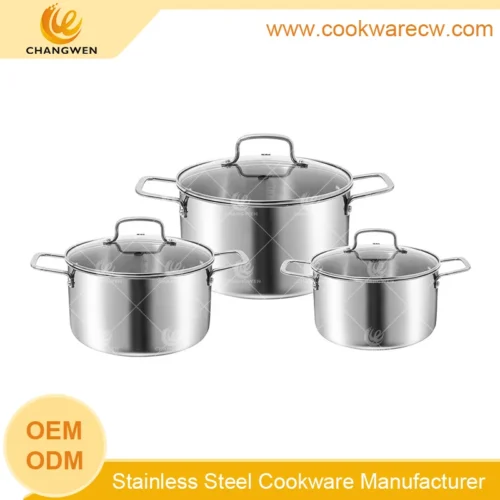
Stainless Steel Pot Set for Professional Cooking Performance CW-TP0605
-
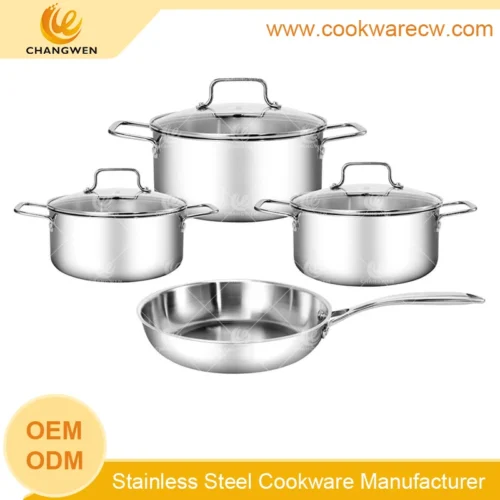
Premium Stainless Steel Cookware Set for Modern Kitchens CW-ETP0703
-
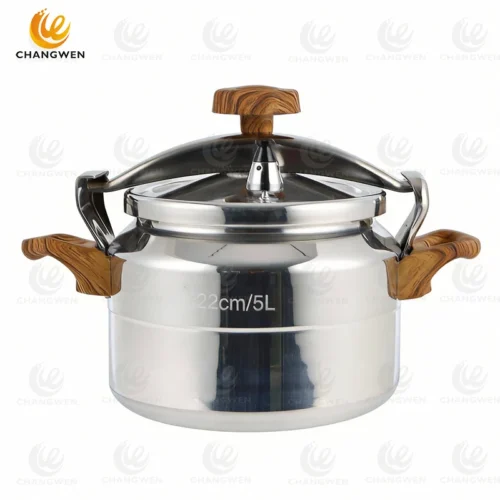
Pressure Cooker Stainless Steel for Healthy Cooking
-
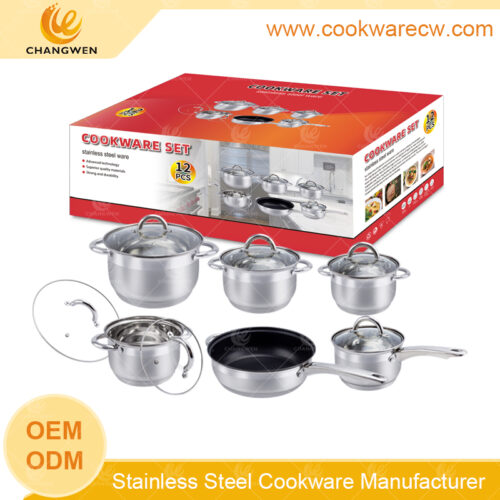
Stainless Steel Cookware Sets 10-Piece CW-M1228