
Estimated reading time: 14 minutes.
Tri-ply stainless steel cookware is worth buying when its three-layer construction solves a defined cooking problem and the finished pan performs consistently. A credible buying decision starts by confirming where the layers extend, what each layer is made of, how thick the finished body is, and whether the pan remains stable and usable on the intended cooktop. The words “tri-ply” alone cannot answer those questions. A buyer comparing retail products or approving an OEM sample should compare the complete vessel, not a layer count on a label.
Quick decision rule: choose a tri-ply design when you need a stainless cooking surface, a conductive core, and a construction that meets your heating, handling, weight, and price requirements. Confirm the build with a component specification and a representative sample. Then run the same cooking and inspection checks on every candidate. A more expensive or heavier pan is not automatically a better pan for every kitchen.
What makes cookware genuinely tri-ply?
Tri-ply cookware has three bonded metal layers in the part of the vessel described as tri-ply. A common arrangement places stainless steel against the food, aluminum in the middle, and another stainless layer outside. The inner steel supplies a durable cooking surface, the aluminum spreads heat more readily than stainless steel, and the exterior supports the vessel and may provide magnetic compatibility. Exact alloys and gauges vary, so a buyer should request the actual layer specification instead of assuming a universal 304-aluminum-430 recipe.
The crucial question is where the three layers are located. Fully clad tri-ply runs from the cooking base through the sidewall to the rim. A tri-ply or composite base may contain three layers only in an attached bottom disc while the sidewall is a different construction. Both can be legitimate products, but they are not interchangeable specifications. The site’s fully clad versus disc-bottom guide explains that terminology in detail; this guide concentrates on deciding whether a particular tri-ply sample is the right purchase.
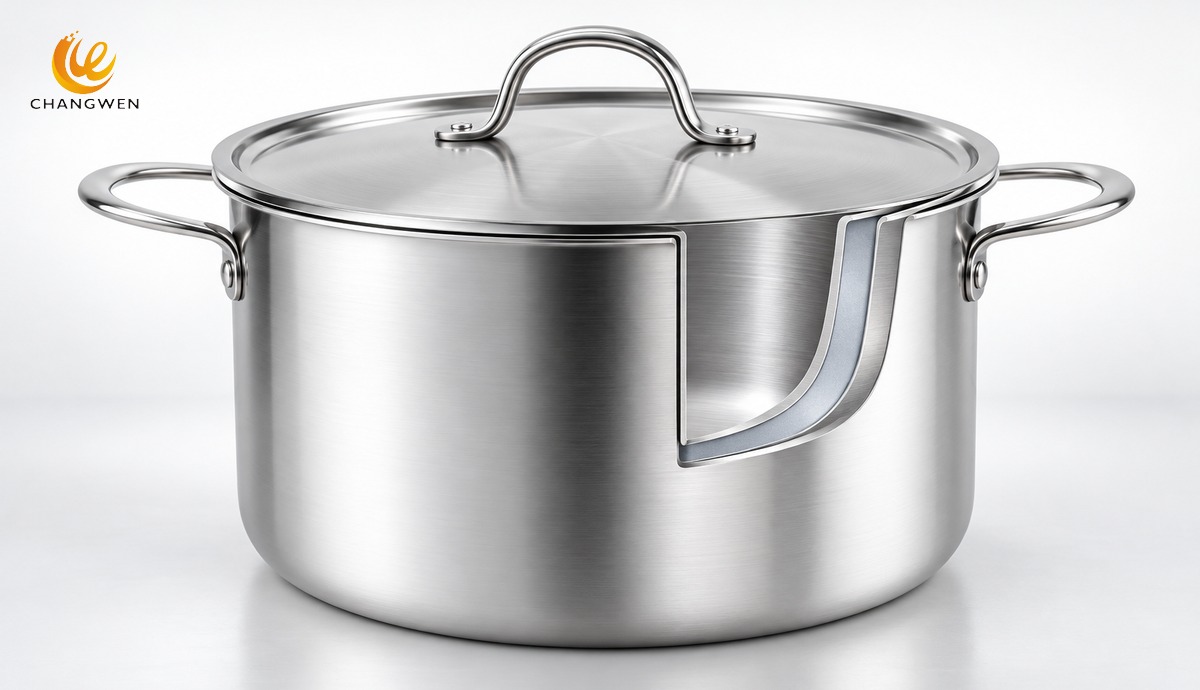
A photograph of a closed pot cannot establish its internal layer structure. The product photograph supplied for this article shows a stainless steel pot set as a visual reference; it is not evidence that a particular pictured SKU is fully clad, has a specified steel grade, or passed any performance test. Obtain a material drawing, a production cross-section or approved sample, and written component declarations before making those claims in a listing.
Should every pot and pan in a set use the same tri-ply construction?
A set should be designed around cooking tasks rather than a promise that every piece has identical material use. A frying pan handles wide, shallow loads and often benefits from predictable heat across its cooking surface. A saucepan used for reduction or a sauté pan used along the sidewall may place more value on heat spreading beyond the base. A large stockpot dominated by boiling water may gain less practical value from a fully clad sidewall than a smaller vessel used for sauces. Those are design hypotheses, not universal rankings; compare samples under the recipes the target buyer actually cooks.
| Vessel | Primary decision | Why it matters | Sample check |
|---|---|---|---|
| Frying pan | Flat usable area and heat pattern | Food spans the base, so uneven zones are noticeable | Compare identical loads across center and edge |
| Saucepan | Sidewall response, pouring, and handle balance | Sauces contact the wall and the vessel is frequently lifted | Observe simmering and pour control with a measured fill |
| Sauté pan | Base area, wall height, and total loaded weight | The pan must both cook broadly and move safely | Check heating and two-hand handling with food |
| Stockpot | Capacity, base stability, lifting, and storage | Large liquid loads make safe handling central | Test a realistic filled load on the intended cooktop |
A buyer should not pay a full-clad premium merely to make every item sound uniform. If a retail line includes three stockpot sizes like the visual reference, ask whether fully clad bodies materially improve the intended recipes, and whether the extra weight remains comfortable at the largest capacity. The correct answer may differ from the answer for a skillet in the same catalog.
How should a buyer read a tri-ply material specification?
A useful tri-ply specification names the material and function of each layer, the finished total thickness, and the thickness or acceptable range of each constituent layer when this is a critical product claim. “Three layers” is incomplete because two pans can have the same layer count and very different aluminum-core thicknesses. The amount and location of conductive material affect how a design responds; the overall wall gauge also affects weight, forming, and rigidity.
Ask the supplier whether measurements refer to the incoming sheet, formed sidewall, or finished base. Forming may change local thickness, and a rim measurement may not represent the cooking surface. When comparing quotations, require both suppliers to report the same point and method. The site’s stainless steel cookware thickness guide explores why figures such as 0.8 mm and 1.0 mm cannot be interpreted without identifying the component being measured.
Material grade belongs in the same component-by-component record. A statement such as “304 stainless cookware” may describe only the inner cooking surface. A magnetic exterior can be a different stainless grade for a functional reason. If a buyer needs a specific grade for the food-contact layer, ask for a documented material declaration and an appropriate verification plan. The site’s XRF testing guide explains what surface analysis can and cannot verify; XRF on an outer surface alone does not reveal the composition or thickness of a buried aluminum core.
Edge construction also deserves a line in the specification. A rolled, sealed, or otherwise finished rim changes how the bonded layers are exposed, how the vessel feels during use, and how it can be cleaned. Inspect the finished edge for burrs and visible separation. Do not assume that a smooth exterior proves perfect bonding throughout the pan; combine visual inspection with supplier process records and relevant performance checks.
Does a thicker tri-ply pan always cook better?
More metal can increase thermal mass and change how the pan reacts when food is added, but it also increases weight and may slow the response to a heat adjustment. A thicker total wall does not reveal whether the extra thickness is in the aluminum core or in stainless steel. Therefore, comparing two pans by total millimeters alone is an incomplete buying method. Compare layer makeup, vessel diameter, weight, and controlled cooking results together.
A light pan may suit frequent lifting and rapid temperature changes; a heavier pan may feel steadier under a demanding load. Neither outcome is guaranteed by a nominal gauge because base shape, bonding, cooktop match, and handle geometry also matter. For a retail assortment, evaluate the weight of the complete item with lid and a representative load, not the empty body alone.
Use thickness as a design variable, not a quality score. If one candidate is 2.5 mm overall and another is 3.0 mm overall, a useful comparison asks where the additional 0.5 mm sits, how much weight it adds, and whether a repeatable test reveals a benefit the customer will notice. Without that information, the thicker number is a marketing claim, not a purchase decision.
Which dimensions affect real cooking capacity?
Nominal diameter can mean the outside rim, opening, or cooking base. A frying pan with a wide upper rim but steeply sloped walls may provide less flat cooking area than a smaller-sounding pan with a broad base. A stockpot’s liter rating may describe brimful volume rather than the safe working fill. Ask for rim diameter, flat-base diameter, internal height, nominal volume definition, and recommended working volume where relevant.
These dimensions connect directly to the heat source. A cooking base much larger than a heating zone can develop a different temperature pattern from a base matched to the zone. A very small vessel may not activate some induction units. The measurement should therefore be paired with the intended burner sizes, not evaluated in isolation. This is especially important when a brand sells the same SKU in markets with different cooktop preferences.
Do not overlook storage and packaging dimensions. Tall handles can prevent efficient nesting, and wide loop handles increase carton width. A three-pot assortment should be checked as a physical stack and as individual kitchen tools. A low landed cost is less attractive if the set requires an unnecessarily large carton or produces a poor shelf fit.
How do you verify induction compatibility?
An induction cooktop needs a suitable magnetic cooking base and adequate contact geometry. The U.S. Department of Energy’s induction overview explains the role of a flat magnetic-bottom vessel. A magnet check is a useful initial screen, but it does not prove that a particular pan performs well on every induction hob. Test the exact diameter and construction on representative equipment for the sales market.
For each candidate, record whether the hob detects the vessel, whether heating remains stable at low and medium settings, and whether the base rocks before and after thermal cycling. Conduct the comparison with the same volume of water, starting temperature, lid condition, and hob zone. If a pan performs poorly, distinguish a pan problem from a mismatch with a particular hob’s detection threshold or zone size.
The exterior stainless layer may be selected to support induction while the inner layer is selected for food contact. That division of roles is normal, but the buyer still needs the actual alloy declaration and an operating test. Avoid promising universal induction compatibility based only on the phrase “tri-ply” or a small induction icon on a draft package.
What is a fair way to compare heat distribution?
A fair heat comparison holds the variables constant and changes one cookware candidate at a time. Use the same cooktop, burner zone, preheat period, starting water or food temperature, load, and measurement points. Record the result at the center, mid-radius, and near the usable edge. Repeat the run after the pan returns to a defined starting condition. A single photograph of browning cannot establish a general performance ranking.
A practical kitchen test can use a controlled food layer, a measured water-heating task, or a surface-temperature map with appropriate instruments. Each method answers a different question. Food browning is easy to understand but sensitive to thickness and moisture; water-heating time reflects the whole setup but says less about edge uniformity; a temperature map describes spatial differences but requires careful probe placement and timing. Use at least one method that represents the product’s main cooking promise.

The site’s repeatable hot-spot mapping method gives a deeper testing framework. In this buying guide, the decision is simpler: define the acceptable result for the intended dish before examining sample data. A pan for delicate sauce should be judged differently from a stockpot used mainly to bring water to a boil.
Which physical defects matter most in a tri-ply sample?
Start with defects that affect safety or function: sharp rims, unstable handles, a lid that does not seat securely, a base that rocks on a flat surface, visible layer separation, and a cooking surface with pits or embedded contamination. Then assess appearance against an approved reference under consistent lighting. A tiny polish variation may be acceptable for one retail tier and unacceptable for another; a loose handle should not be normalized as a cosmetic issue.
Check several points on the same sample. Inspect the rim, body-to-base transition, inside corners, handle attachments, and the bottom after a heating cycle. A defect that appears only after heat exposure matters more than a flawless unheated showroom photograph. For a set, swap lids between units of the same nominal size and compare fit, since a matching lid and pot taken from one hand-picked sample can hide production variability.
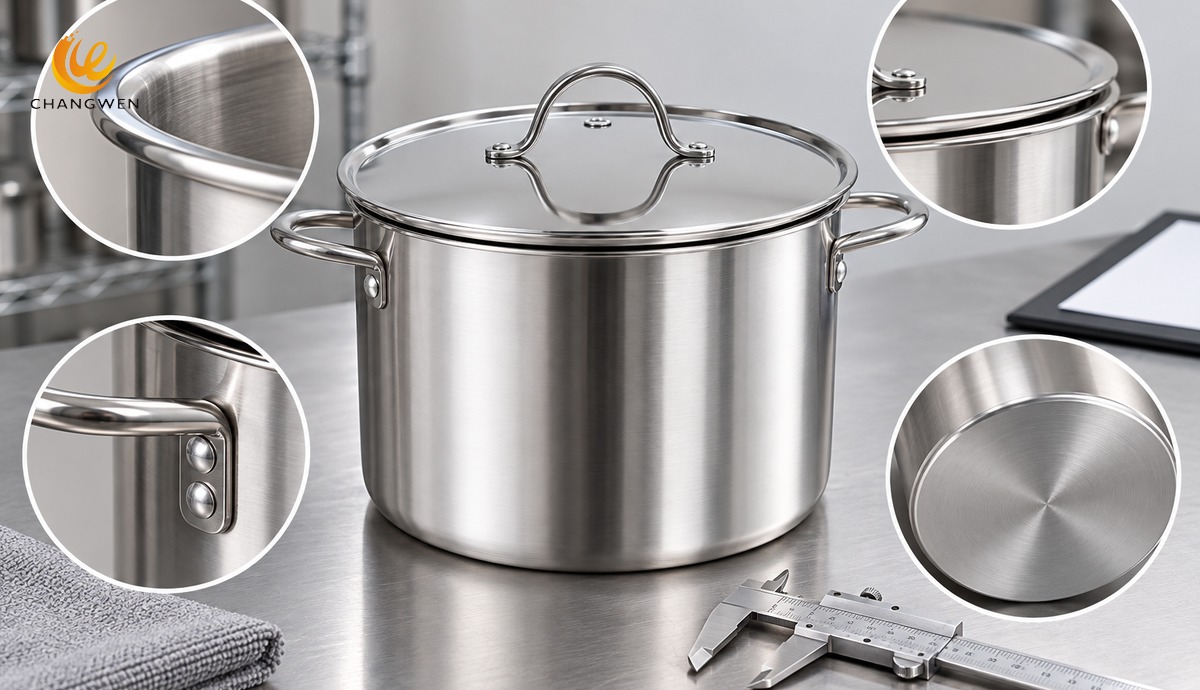
Turn every important observation into a written acceptance criterion. “Good finish” is too vague for an OEM order; a reference photo, allowed defect size, inspection distance, and location are clearer. The site’s golden sample sign-off checklist provides the broader approval process. Here the tri-ply-specific question is whether the production item keeps the same layer specification, geometry, and observed cooking behavior as the approved sample.
How should handles and lids influence a buying decision?
A tri-ply body does not compensate for an uncomfortable or weak handle. Evaluate the grip with the vessel empty and at a realistic working fill. Check clearance from the hot wall, balance while pouring, rivet or weld security, and whether the handle interferes with storage. Metal handles may become hot depending on design, burner, and cooking duration; do not promise “stay cool” without a defined test and conditions.
The lid should match the cooking task. A tight enough fit helps retain heat and manage evaporation, but the vessel is not a pressure cooker. Metal and glass lids have different visibility, breakage, weight, and oven-use considerations. A buyer should specify the lid material and any temperature claim by complete SKU, including knobs and gaskets, rather than extending the metal body’s rating to every accessory.
Handle-temperature claims should be validated with repeatable placement, load, burner, and time conditions. The site’s handle temperature test guide describes a more detailed method. A simple hands-on impression during a brief demonstration is not enough to support a safety-related label.
What should a buyer request before approving a tri-ply order?
The most useful request is a structured evidence packet tied to a specific SKU revision. Ask for a component drawing, layer declaration, measured finished thickness at named locations, key dimensions, weight, handle and lid materials, induction claim basis, packaging plan, and sample identification. State which fields are mandatory and which are open to the manufacturer’s proposal. This makes alternative quotations comparable without pretending that all suppliers use the same factory process.
| Purchase question | Evidence to request | Why it changes the decision |
|---|---|---|
| Where are the layers? | Cross-section or construction drawing | Separates full-body cladding from a layered base |
| What is each layer? | Material declaration by component | Supports honest food-contact and induction claims |
| How thick is the finished pan? | Measurement points and tolerance | Prevents comparison of unlike gauge figures |
| How does it cook? | Controlled sample results under stated conditions | Tests the benefit the end user may notice |
| Will the lot match? | Approved sample and inspection criteria | Turns a prototype into a repeatable product |
Product photographs are useful for appearance approval but weak evidence for hidden construction. The three-pot product photograph in this article is suitable for discussing silhouette, handles, lid style, and assortment. It cannot establish core thickness or bonding quality. Keep aesthetic approval and technical approval as separate sign-offs to avoid treating an attractive sample as a complete specification.
How do you judge value without relying on layer count?
Value is the relationship between the intended cooking benefit and the total burden of the product: purchase cost, weight, packaging, durability, and the likelihood of consistent supply. A fully clad pan may justify a higher price for a use case that benefits from its construction. A less expensive alternative may be more appropriate for a stockpot whose primary job is boiling. The right question is not “Is tri-ply premium?” but “Which observable benefit does this specification buy for this customer?”
Compare samples by a weighted decision sheet. Give functional defects and safety-related failures a pass/fail status, then score heating, handling, appearance, storage, and price according to the market. Do not allow a low price to offset a failed handle or an unsupported material claim. Conversely, do not reject a sound, lighter pan solely because a competitor uses a larger thickness number.
For an OEM assortment, consider whether customers can understand the step-up. A premium tri-ply SKU should have a defensible reason to exist beside an entry SKU: a cooking task, a measurable construction difference, or a better handling experience. Adding more pieces to a set or an expensive finish does not automatically create a meaningful tier.
What are the most common tri-ply buying mistakes?
Buying by label: “tri-ply” may describe the whole body or only the base. Require a construction drawing. Buying by total thickness: one number cannot explain where the metal is located. Require layer and measurement definitions. Buying by an empty-pan demonstration: a sample that looks stable unloaded may be awkward at working capacity. Repeat the handling check with a realistic load.
Buying by one cooktop: a pan that works on one induction unit may behave differently on another zone. Define the target equipment. Buying by a single perfect sample: one hand-selected item does not establish production consistency. Approve measurable tolerances and inspect the lot. Buying by generic set size: a nominal set count may include lids, inserts, or duplicate sizes that add little utility. List every physical component and its role.
Frequently asked questions
Is tri-ply the same as fully clad?
No. Tri-ply states that three layers exist in a specified part of the vessel; fully clad states that the bonded construction continues through the body to the rim. Some products are both, while others have a three-layer base and a different sidewall. Request a drawing or cross-section rather than inferring one term from the other.
Does tri-ply always work on induction?
No. Induction compatibility depends on the magnetic and geometric properties of the cooking base and the intended hob. A magnet can screen for a magnetic base, but an operating test on representative equipment is the better purchase check.
Can an XRF test prove a tri-ply aluminum core?
No. Surface XRF can help identify exposed metal chemistry, but an inner core covered by stainless layers requires other evidence such as an approved cross-section, manufacturing records, or an appropriate destructive examination. Do not use a surface reading as proof of the hidden stack.
Is a heavier tri-ply pan always better?
No. Higher mass can change heat storage and stability, but it can also make lifting, pouring, and shipping harder. Compare core makeup, vessel geometry, complete loaded weight, and controlled cooking results against the intended use.
What should a first sample order contain?
Request the exact SKU revision, material and layer declaration, dimensioned drawing, sample packaging, and a proposed test plan. Ask for more than one sample when fit or consistency between units matters. Approve the construction and cooking result before approving logo placement or retail artwork.
What is the final buying rule?
The best tri-ply stainless steel cookware is the design that passes a defined use case, not the one with the most impressive label. Establish the cooking task, verify the layer location and materials, compare finished dimensions and loaded handling, run a repeatable heat test, and freeze an approved sample with measurable acceptance criteria. That sequence turns “tri-ply” from a marketing term into a purchase specification.
Changwen supports wholesale and OEM cookware projects, including custom product and packaging decisions. If your team is developing a tri-ply range, send the intended market, vessel list, target cooktops, drawings or reference samples, expected order quantities, and required tests through the site’s contact page. The custom kitchenware service can then be discussed against a clear specification rather than an unverified product label.
-
4 Quart Aluminum Pressure Cooker – Safe & Explodable-Proof Design
-
hot sales 12pcs stainless steel cookware set cooking pots set 16cm saucepan 24cm casserole & non-stick frypan with induction usage bottom CW-M1214
-
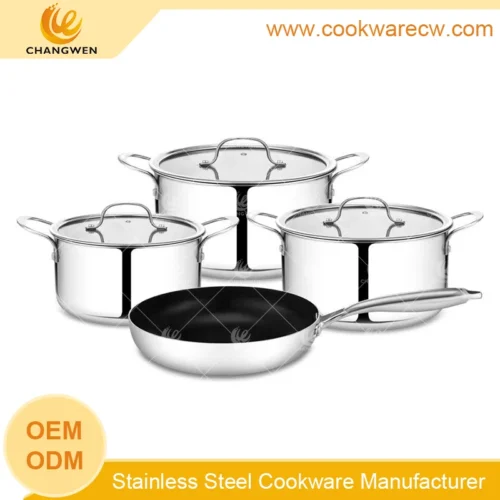
Stainless Steel Cookware Set with Multi-Layer Construction CW-TP0706
-
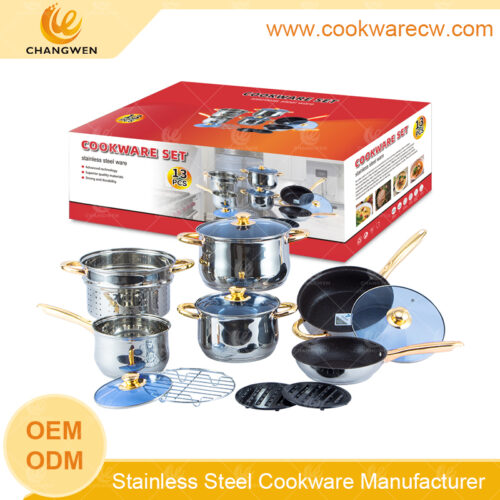
Factory Wholesaler 13 pcs nonstick stainless steel cookware set fry pan saucepan casserole steamer rack black mats CW-M1301
-
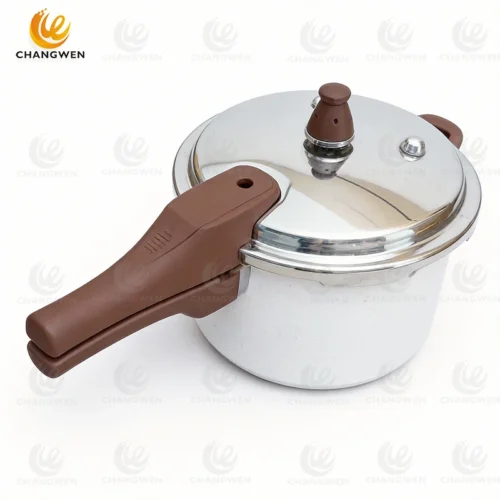
Small Aluminum Pressure Cooker for Fast & Safe Home Cooking
-
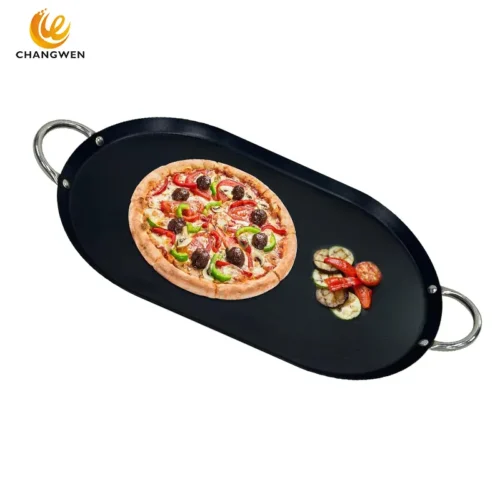
Stainless Steel Griddle For BBQ Grills
-
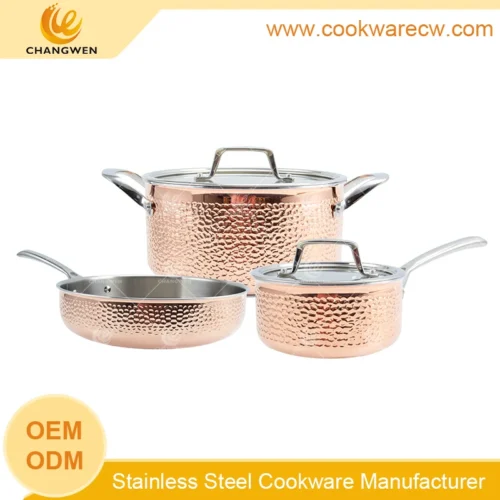
Gold Hammered Stainless Steel Cookware for Luxury Kitchens CW-ETP0501
-
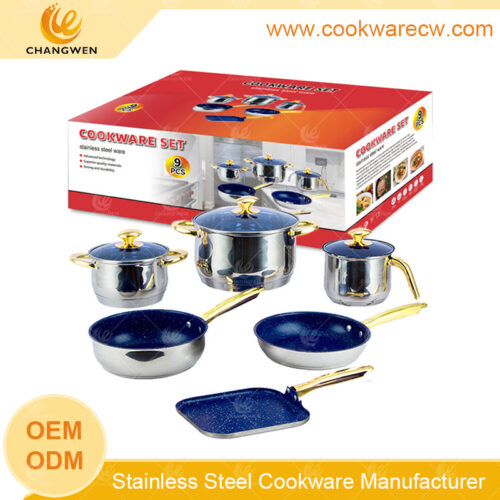
9pcs stainless steel cookware set pots and pans with non-stick coating golden hollow handle and knob with rivets wholesaler factory CW-M0901