When shopping for cookware, water bottles, or kitchen equipment, you’ve likely encountered terms like “18-8 stainless steel,” “201 stainless steel,” or “304 stainless steel.” Understanding these designations is crucial for making informed purchasing decisions, especially when food safety and durability are at stake.
This comprehensive guide breaks down the differences between the most common stainless steel grades used in kitchenware and drinkware, helping you choose the right material for your needs.
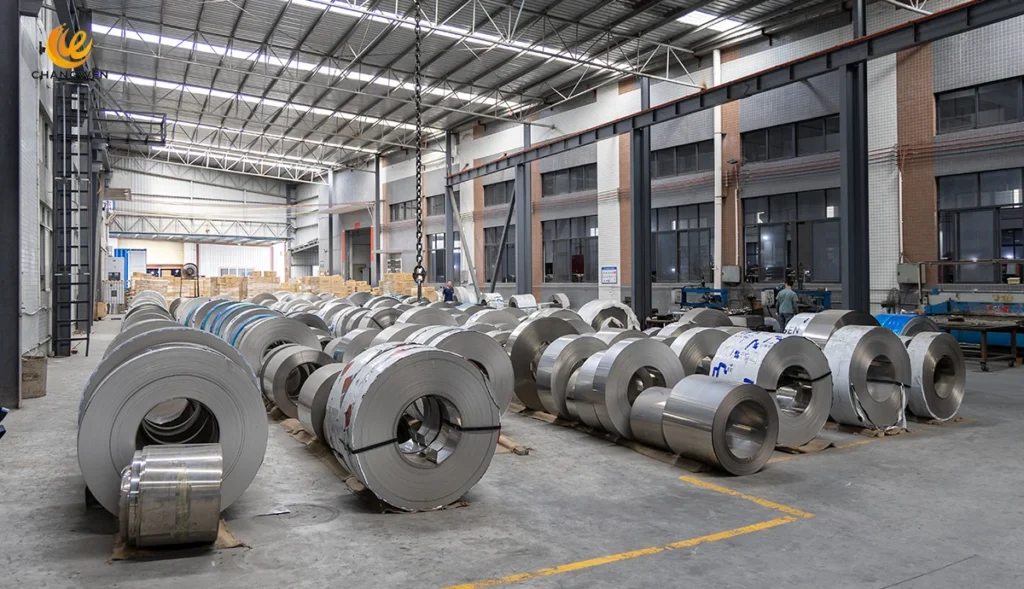
What Does 18-8 Stainless Steel Mean?
18-8 stainless steel refers to a type of austenitic stainless steel containing approximately 18% chromium and 8% nickel. This designation is actually another name for 304 stainless steel, one of the most widely used and trusted grades in the food service industry.
The chromium content provides excellent corrosion resistance, while nickel enhances the material’s durability and gives it a lustrous, appealing finish. This combination makes 18-8 stainless steel ideal for applications where the material comes into direct contact with food and beverages.
Key Characteristics of 18-8 Stainless Steel:
- Contains 18% chromium and 8% nickel (minimum)
- Non-magnetic or weakly magnetic
- Excellent corrosion resistance
- Food-grade certified
- Easy to clean and maintain
- Resistant to rust and staining
Understanding 18/10 Stainless Steel
18/10 stainless steel is a premium variation that contains 18% chromium and 10% nickel. The higher nickel content (compared to 18-8) provides even better corrosion resistance and a more lustrous appearance. This grade is commonly found in high-end cookware and flatware.
While both 18-8 and 18/10 are excellent choices for food-contact applications, 18/10 typically commands a higher price due to its enhanced properties and superior finish. The difference in performance, however, is relatively minimal for most everyday uses.
Complete Stainless Steel Grades Comparison
201 Stainless Steel: The Budget Alternative
201 stainless steel is an austenitic grade designed as a more economical alternative to 304. It achieves cost savings by reducing nickel content and substituting manganese.
201 Stainless Steel Composition:
- Chromium: 16-18%
- Nickel: 3.5-5.5% (significantly lower than 304)
- Manganese: 5.5-7.5% (used to replace some nickel)
- Carbon: Maximum 0.15%
201 Stainless Steel Properties:
- Corrosion Resistance: Moderate, suitable for indoor or low-humidity environments
- Strength: Higher tensile strength than 304
- Cost: 20-30% less expensive than 304
- Magnetic Properties: Non-magnetic in annealed state, may become slightly magnetic after cold working
- Durability: Good for dry environments, but prone to rust in humid or chloride-rich conditions
Is 201 Stainless Steel Food Safe?
201 stainless steel is generally not recommended for direct food contact applications. While it doesn’t pose immediate health risks, its lower corrosion resistance means it can develop rust spots or discoloration when exposed to acidic foods, salt, or moisture over extended periods. This makes it unsuitable for food-grade applications according to most international standards.
Many manufacturers use 201 stainless steel for the outer walls of double-walled drinkware or for decorative trim where it doesn’t contact food or beverages directly.
201 Stainless Steel vs 430
Compared to 430 stainless steel (a ferritic grade), 201 offers:
- Better formability and workability
- Similar corrosion resistance in mild conditions
- Non-magnetic properties (unlike 430, which is magnetic)
- Higher cost but better aesthetic appeal
304 Stainless Steel: The Industry Standard
304 stainless steel (also known as 18-8 or 18/8 stainless steel) is the most popular grade for food-contact applications worldwide. It’s recognized as true food-grade stainless steel and is the benchmark against which other grades are measured.
304 Stainless Steel Composition:
- Chromium: 18-20%
- Nickel: 8-10.5%
- Carbon: Maximum 0.08%
- Manganese: Maximum 2%
304 Stainless Steel Properties:
- Corrosion Resistance: Excellent resistance to oxidation, rust, and most corrosive environments
- Durability: Exceptional long-term performance, maintaining integrity for decades
- Temperature Resistance: Maintains properties from -196°C to 870°C (-321°F to 1598°F)
- Non-reactive: Won’t interact with acidic or alkaline foods
- Hygiene: Smooth surface inhibits bacterial growth
Is 304 Stainless Steel Food Grade?
Yes, 304 stainless steel is universally recognized as food-grade material. It’s approved by the FDA, EU food safety regulations, and meets international standards for food contact. This makes it the preferred choice for:
- Cookware (pots, pans, utensils)
- Water bottles and tumblers
- Food processing equipment
- Restaurant kitchen equipment
- Medical instruments
- Brewing equipment
304 Stainless Steel Cookware Benefits
304 stainless steel cookware offers numerous advantages:
- Even heat distribution: Prevents hot spots when cooking
- Non-reactive surface: Safe for all foods, including acidic ingredients
- Durability: Resistant to warping, denting, and scratching
- Easy maintenance: Dishwasher safe and simple to clean
- Versatility: Suitable for all cooking methods (stovetop, oven, induction)
304 Stainless Steel Density
The density of 304 stainless steel is approximately 8.0 g/cm³ (0.29 lb/in³), making it slightly heavier than aluminum but lighter than carbon steel. This density contributes to its substantial feel and durability.
Is 304 Stainless Steel Magnetic?
304 stainless steel is generally non-magnetic or weakly magnetic in its annealed (heat-treated) state. However, it may develop slight magnetic properties after cold working, such as deep drawing or stamping. This is normal and doesn’t affect its food-grade status or corrosion resistance.
304 Stainless Steel vs 18/10: What’s the Difference?
304 stainless steel and 18/10 stainless steel are essentially the same material. The term “18/10” specifically refers to 304 stainless steel with nickel content closer to 10% (the upper range of the specification). Some manufacturers prefer the “18/10” designation for marketing purposes, as it emphasizes the premium nickel content.
In practical terms, there’s no significant performance difference between products labeled as 304 or 18/10—both offer the same excellent corrosion resistance and food safety properties.
304 Stainless Steel vs 316: Marine-Grade Protection
316 stainless steel includes 2-3% molybdenum in addition to chromium and nickel, making it even more resistant to corrosion, particularly from chlorides and saltwater. Key differences:
| Feature | 304 Stainless Steel | 316 Stainless Steel |
| Corrosion Resistance | Excellent for most environments | Superior, especially for coastal/marine |
| Chemical Resistance | Good | Excellent |
| Cost | Standard | 15-20% more expensive |
| Best For | General food service | Coastal areas, pools, marine applications |
For most home kitchens and drinkware, 304 is more than adequate. Choose 316 only if you’re in a harsh coastal environment or need extreme chemical resistance.
430 Stainless Steel: The Magnetic Alternative
430 stainless steel is a ferritic grade with different properties from the austenitic 304 and 201 grades.
430 Stainless Steel Composition:
- Chromium: 16-18%
- Nickel: None (which makes it more affordable)
- Carbon: Maximum 0.12%
430 Stainless Steel Properties:
- Magnetic: Strongly magnetic, which can be advantageous for magnetic cookware holders
- Corrosion Resistance: Good in mildly corrosive environments, but inferior to 304
- Cost: Generally less expensive than 304
- Formability: More difficult to form and weld than 304
Is 430 Stainless Steel Food Grade?
Yes, 430 stainless steel is considered food-grade and is commonly used in kitchen applications. However, it’s typically used for items with less exposure to moisture or acids, such as:
- Refrigerator panels
- Dishwasher interiors
- Oven linings
- Decorative trim
430 Stainless Steel Cookware
430 stainless steel cookware is less common than 304 but is used in budget-friendly cookware lines. Its magnetic properties make it compatible with induction cooktops, which is an advantage. However, its lower corrosion resistance means it requires more careful maintenance to prevent rust.
430 Stainless Steel vs 18/10 (304)
| Feature | 430 Stainless Steel | 18/10 (304) Stainless Steel |
| Nickel Content | None | 8-10% |
| Magnetic | Yes (strongly) | No (weakly) |
| Corrosion Resistance | Good | Excellent |
| Durability | Moderate | Superior |
| Price | Lower | Higher |
| Food Safety | Good | Excellent |
430 Stainless Steel vs 316
316 stainless steel is significantly superior to 430 in terms of corrosion resistance and durability. While 430 may rust in humid environments, 316 maintains its integrity even in saltwater conditions. The price difference reflects this performance gap.
Detailed Comparison: 18-8 Stainless Steel vs 201
This is one of the most important comparisons for consumers, as these two grades are often used in similar products but offer vastly different performance.
| Property | 18-8 (304) Stainless Steel | 201 Stainless Steel |
| Nickel Content | 8-10% | 3.5-5.5% |
| Chromium Content | 18-20% | 16-18% |
| Corrosion Resistance | Excellent | Moderate |
| Food Safety | Yes (food-grade certified) | Not recommended |
| Durability | Exceptional | Good in dry conditions |
| Rust Resistance | Superior | Prone to rust in humid conditions |
| Price | Higher (standard for quality) | Lower (budget option) |
| Best Applications | Food contact surfaces, cookware, drinkware | Decorative elements, outer shells |
Why Choose 18-8 Over 201?
If you’re purchasing items for food or beverage use, always choose 18-8 (304) stainless steel over 201. The higher nickel content provides:
- Better protection against corrosion and rust
- Safe, non-reactive surface for all foods
- Longer product lifespan
- Maintained appearance over time
- Peace of mind regarding food safety
201 Stainless Steel vs 304 Stainless Steel: Critical Differences
Corrosion Resistance Test Results
When exposed to salt spray for 48 hours:
- 304 stainless steel: No visible corrosion
- 201 stainless steel: Light rust spots appeared after 24 hours
Cost vs. Value Analysis
While 201 stainless steel costs 20-30% less initially, this savings can be misleading:
- 201: May need replacement every 2-3 years in humid conditions
- 304: Can last 20+ years with minimal maintenance
Over a 10-year period, 304 stainless steel typically offers better value despite the higher upfront cost.
Real-World Applications
Use 201 stainless steel for:
- Decorative trim
- Outer layers of insulated drinkware (not touching contents)
- Indoor fixtures in dry environments
- Low-humidity applications
Use 304 stainless steel for:
- Inner walls of water bottles and tumblers
- Cookware surfaces
- Food preparation surfaces
- Restaurant equipment
- Any application involving food or beverage contact
18/8 Stainless Steel vs 304: Are They Different?
No, 18/8 stainless steel and 304 stainless steel are the same material. The confusion arises from different naming conventions:
- 18/8refers to the chromium/nickel content (18% chromium, 8% nickel)
- 304is the AISI (American Iron and Steel Institute) designation
Both terms describe the exact same austenitic stainless steel grade. When you see “18/8 stainless steel” on a product label, you’re getting 304 stainless steel.
201 Stainless Steel Exhaust Systems
While this guide focuses on food-grade applications, it’s worth noting that 201 stainless steel is sometimes used for exhaust systems in automotive applications. In this context:
- The higher manganese content provides good high-temperature strength
- It’s more affordable than 304 for non-critical applications
- Corrosion resistance is adequate for exhaust gases
- However, 304 remains preferable for longevity in exhaust systems
How to Identify Different Stainless Steel Grades
Visual Inspection
While all stainless steel grades look similar, subtle differences exist:
- 304/18-8: Brighter, more lustrous appearance
- 201: Slightly duller finish
- 430: Can have a different grain structure
Magnet Test
The simplest field test:
- 304 (18-8): Non-magnetic or very weakly magnetic
- 201: Non-magnetic in annealed state
- 430: Strongly magnetic
Note: This test isn’t definitive, as cold-working can make 304 slightly magnetic.
Chemical Testing
For definitive identification, use a stainless steel testing solution:
Nickel Test: Drop testing liquid on the surface
- Red color indicates high nickel (304)
- No color change indicates low nickel (201 or 430)
Acid Test: Apply mild acid
- Little reaction: 304 (high chromium)
- Some reaction: 201 (lower corrosion resistance)
Professional Testing
For commercial applications, consider professional XRF (X-ray fluorescence) testing, which provides exact elemental composition.
Making the Right Choice: Decision Framework
For Cookware:
Choose 304 stainless steel (18-8 or 18/10). The superior corrosion resistance, non-reactive surface, and durability make it worth the investment.
For Water Bottles and Tumblers:
Insist on 304 stainless steel for inner walls. This ensures:
- No metallic taste
- No interaction with beverages
- Long-term safety
The outer wall can be 201 in budget products, but the inner surface should always be 304.
For Budget-Conscious Buyers:
If cost is a primary concern:
- Priority: Choose 304 for items touching food/drinks
- Compromise: Accept 201 for decorative or non-contact elements
- Avoid: Don’t compromise on food safety by choosing all-201 products
For Coastal Environments:
Consider 316 stainless steel for ultimate corrosion protection, especially for:
- Outdoor kitchen equipment
- Items near pools or salt water
- Areas with high humidity
Maintenance Tips by Grade
304 Stainless Steel Maintenance:
- Wash with mild soap and water
- Dry thoroughly to prevent water spots
- For stubborn stains, use baking soda paste
- Avoid chlorine bleach
- Dishwasher safe for most items
201 Stainless Steel Maintenance:
- Hand wash and dry immediately
- Store in dry environment
- Polish regularly to maintain appearance
- Avoid prolonged contact with moisture
- Not recommended for dishwasher
430 Stainless Steel Maintenance:
- Clean and dry after each use
- Use stainless steel cleaner periodically
- Watch for rust in humid conditions
- Apply mineral oil for extra protection
Environmental and Health Considerations
Food Safety Regulations
304 stainless steel meets food safety standards from:
- FDA (United States)
- EFSA (European Union)
- NSF International
- ISO standards for food contact
201 stainless steel generally does not meet food-grade certifications due to:
- Lower corrosion resistance
- Potential for leaching in acidic conditions
- Rust formation affecting hygiene
Sustainability
All stainless steel grades are:
- 100% recyclable
- Highly durable (reducing replacement needs)
- Energy-efficient to manufacture when recycled
- Non-toxic and safe for the environment
However, 304 stainless steel’s longer lifespan makes it more sustainable in the long run despite higher initial cost.
Common Myths and Misconceptions
Myth 1: “All stainless steel is rust-proof”
False. While stainless steel resists rust better than ordinary steel, only high-nickel grades like 304 provide excellent long-term rust resistance. Lower grades like 201 and 430 can rust in challenging conditions.
Myth 2: “201 stainless steel is just as good for food”
False. 201’s lower corrosion resistance makes it unsuitable for food-grade applications. Always choose 304 for food contact.
Myth 3: “Magnetic means it’s not real stainless steel”
False. 430 stainless steel is magnetic but is genuine stainless steel. However, for food-grade applications, non-magnetic 304 is preferred.
Myth 4: “18/10 is better than 18/8”
Mostly false. While 18/10 has slightly more nickel, the practical difference in performance is negligible for most applications. Both are excellent choices.
Frequently Asked Questions
What is 201 stainless steel food grade?
201 stainless steel is NOT considered food-grade. It lacks sufficient corrosion resistance for safe, long-term food contact and doesn’t meet FDA or international food safety standards.
Is 201 stainless steel magnetic?
201 stainless steel is non-magnetic or weakly magnetic in its annealed state. It may become slightly magnetic after cold working or forming processes.
Is 304 stainless steel magnetic?
304 stainless steel (18-8) is generally non-magnetic or only weakly magnetic. Some magnetic attraction may develop after cold working, but this doesn’t affect its properties.
What’s better: 18/8 or 18/10 stainless steel?
Both are excellent, with 18/10 containing slightly more nickel for marginally better corrosion resistance and luster. For practical purposes, they’re nearly identical in performance.
Can I use 201 stainless steel cookware?
While some manufacturers produce 201 cookware, it’s not recommended. The lower corrosion resistance can lead to rust, discoloration, and potential interaction with acidic foods.
What is 430 stainless steel used for?
430 stainless steel is commonly used for refrigerator panels, dishwasher interiors, decorative trim, and some budget cookware. Its magnetic properties make it suitable for induction cooking.
Conclusion: Choosing the Right Stainless Steel Grade
When it comes to kitchenware and drinkware, 304 stainless steel (18-8 or 18/10) remains the gold standard. Its superior corrosion resistance, food-grade certification, and long-term durability make it the best choice for items that contact food or beverages.
201 stainless steel offers cost savings but comes with compromises in corrosion resistance and food safety. It’s suitable only for non-food-contact applications or outer shells of insulated products.
430 stainless steel provides a budget-friendly, magnetic alternative suitable for specific applications but falls short of 304’s versatility and performance.
Final Recommendations:
For Premium Quality: Choose 304 stainless steel (18-8 or 18/10) for all food-contact applications.
For Budget Products: Ensure at least the inner surfaces are 304, even if outer components are 201.
For Coastal Areas: Consider 316 stainless steel for maximum corrosion protection.
For Value: Invest in 304 stainless steel—it will last decades and provide the best long-term value.
By understanding these differences, you can make informed decisions that balance quality, safety, and budget for your specific needs.

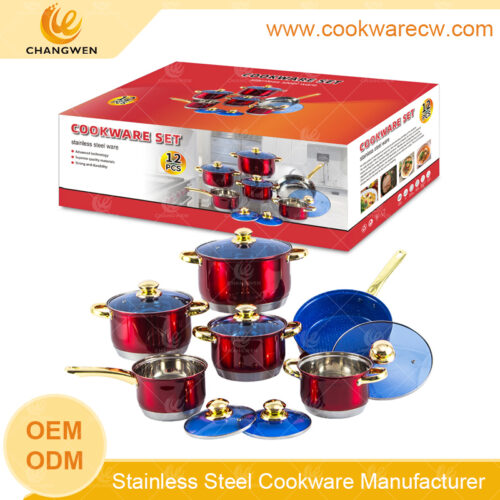
pots wholesale red color outside coating cookware pots non-stick fry pan with stainless steel 430 5-stepped bottom CW-M1225
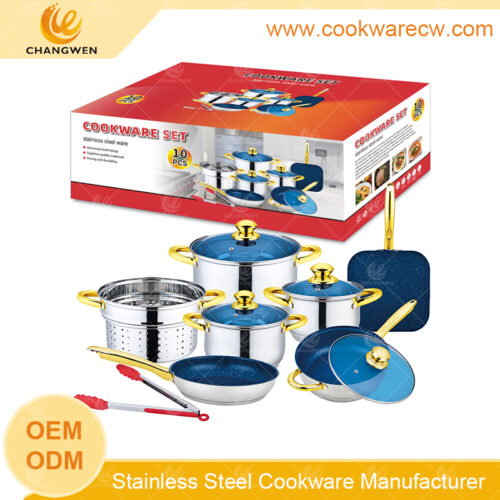
Stainless steel cookware set nonstick pans and pots casserole pot frying pan steamer with glass blue lid and a kitchenware clip CW-M1203
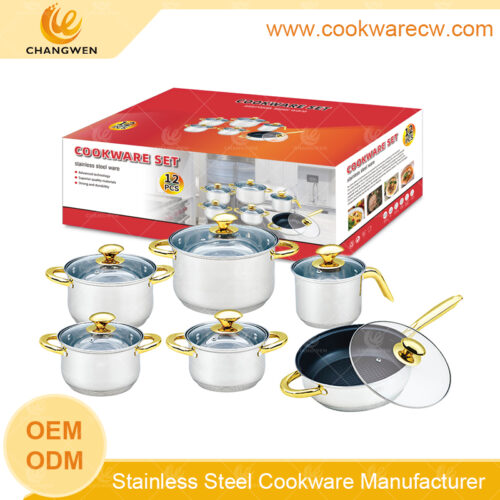
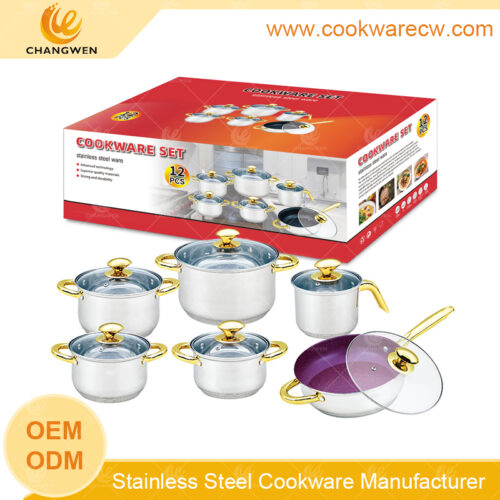
high quality stainless steel pots and pans 12pcs cookware set nonstick fry pans with 5-9 steps capsule bottom CW-M1212
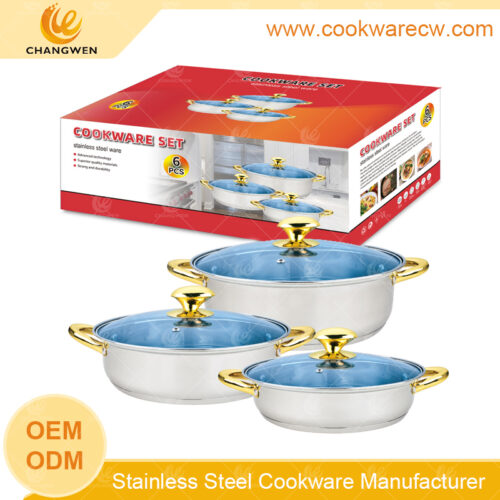
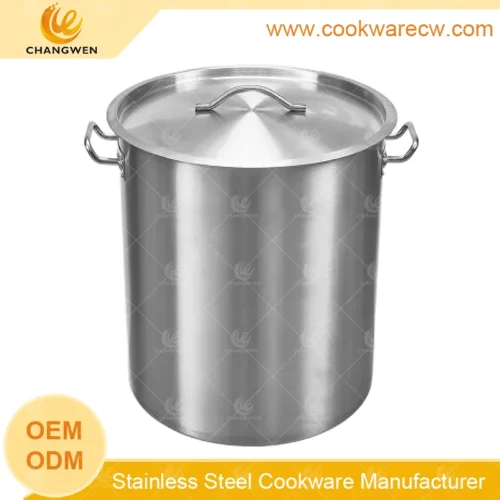
Cook Stainless Steel Stock Pot CW-M0606
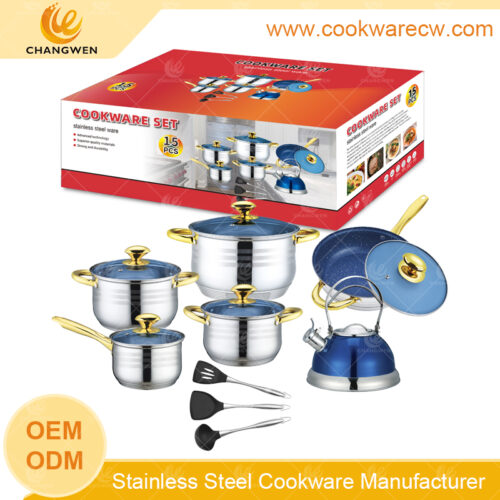
Stainless steel cookware 15pcs cooking sets blue marble nonstick fry pan golden plated handles and knobs capsule bottom 3L whistling tea kettle kitchen tools CW-M1501
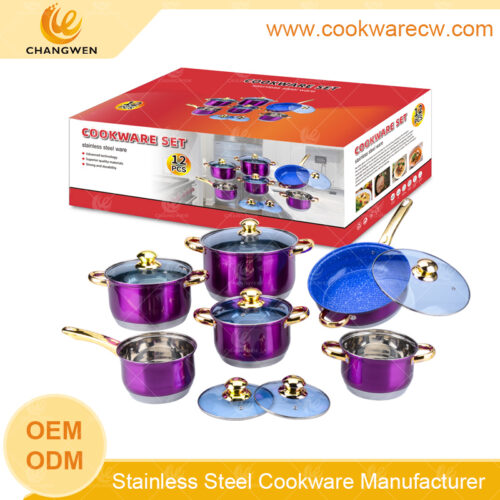
Factory pots wholesale cooking pot set mirror polished stainless steel pots nonstick frypan blue marble coating frying pan golden plated handles and knobs capsule bottom CW-M1212
Commercial Stainless Steel Stock Pot CW-SP001
color coating surface stainless steel pots non-stick frypan golden S/S handles and knobs 430 protector for induction CW-M1225