
Read time: 11 minutes
Quick answer: Importers should not assume that stainless steel cookware meets dishwasher safety standards solely based on a “machine washable” claim. Such cookware should be evaluated according to a written procedure that clearly specifies the dishwasher program, water quality conditions, detergent type, loading location, number of washes, inspection intervals, and pass/fail criteria. Testing must examine the entire finished product, not just the stainless steel body, checking for issues such as corrosion, exposed core material, loose handles, damaged coatings, deformed bottoms, cloudy glass, faded markings, and residue buildup.
What does “machine washable” mean for kitchenware importers?
For importers, “machine washable” should mean that certain models of cookware can remain safe, functional, easy to clean, and aesthetically pleasing after being cleaned in a specified mechanical dishwasher.. The claim is incomplete until the buyer and supplier agree on the exposure conditions and acceptance criteria. Without those details, two laboratories can test the same pan under different programs and reach different conclusions.
A dishwasher claim applies to the complete stock-keeping unit. Stainless steel may tolerate repeated washing while an exposed aluminum edge corrodes, a decorative finish fades, a bonded base changes appearance, a handle joint traps detergent, or a lid knob loosens. Importers should therefore map every material and connection in the assembly before designing the test.
Why Can Stainless Steel Cookware Fail in a Dishwasher?
Stainless steel resists corrosion because chromium forms a thin passive oxide layer on the surface. Repeated exposure to alkaline detergent, chlorides, heat, moisture, and contact with dissimilar metals can challenge that protective system. Poor surface finishing, embedded iron contamination, narrow crevices, and prolonged wet storage can make localized staining or pitting more likely even when the nominal steel grade is suitable.
Multi-layer cookware introduces additional failure paths. A pan may combine a stainless cooking surface, an aluminum heat-spreading core, a magnetic outer layer, rivets, welds, polymer handle parts, silicone seals, glass, printed markings, and decorative coatings. This is why importers evaluating multi-ply stainless steel cookware should test the finished construction rather than rely on a raw-material certificate.
Which Standard Should Importers Use?
EN 12875-1 provides a reference test method for the mechanical dishwashing resistance of domestic articles, including categories relevant to cookware and utensils. The standard can provide a common technical language for exposure, but the importer still needs product-specific inspection criteria and a decision rule. A test method describes how to expose the item; a product specification defines what counts as acceptable afterward.
Importers should confirm the current edition, target-market requirements, retailer protocols, and laboratory scope before placing an order. Standards for cutlery, ceramics, coatings, food-contact migration, or handle performance may address different risks and should not be treated as automatic substitutes for a finished-cookware dishwasher-resistance assessment.
A buyer sourcing for several markets should create a requirement matrix instead of using one vague global claim. Each row should identify the destination, applicable standard or customer method, claim wording, test sample, laboratory, required report, and acceptance limits. This approach prevents a report prepared for one product category or market from being reused beyond its scope.
What Should a Dishwasher Test Protocol Specify?
A reproducible protocol should control the variables that influence degradation. If the detergent, water hardness, temperature, drying stage, rack position, or cycle count changes, the result may no longer be comparable. Importers should freeze these variables in the purchase specification before approving a golden sample.
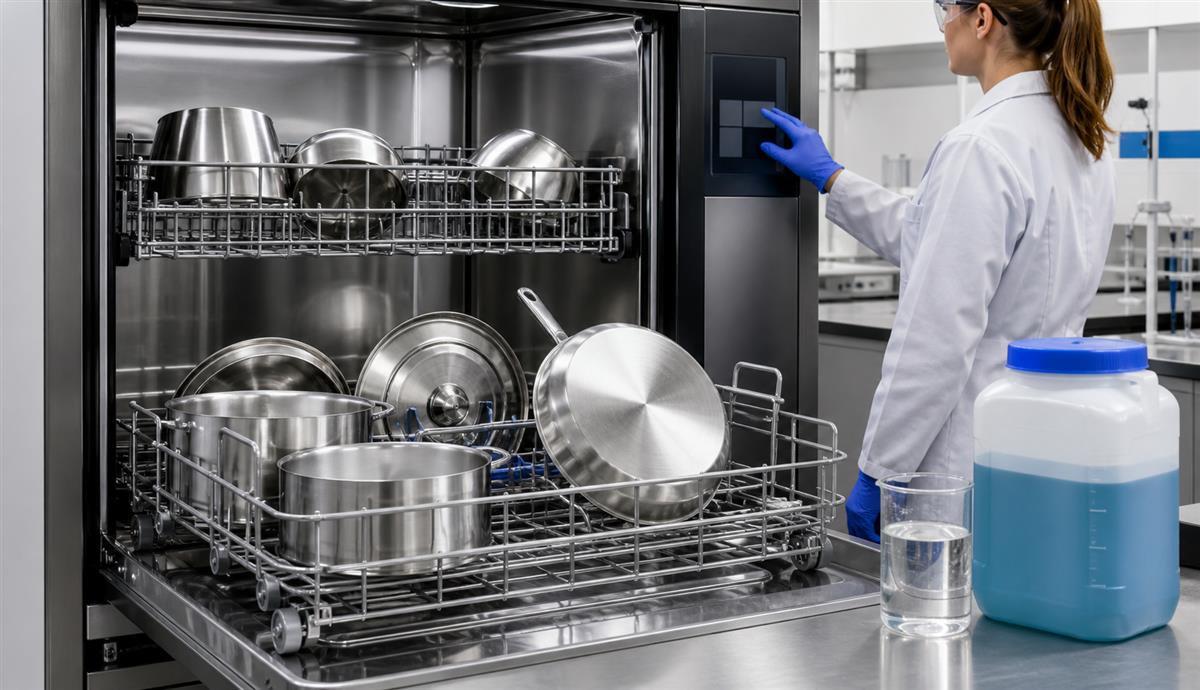
| Protocol element | What the importer should define | Why it matters |
|---|---|---|
| Product identity | Model, size, material stack, finish, lid, handle, and production lot | Prevents testing a sample that does not match the order |
| Dishwasher program | Cycle stages, temperature profile, duration, rinse, and drying | Controls thermal and chemical exposure |
| Water | Hardness, mineral content, inlet temperature, and renewal method | Affects spotting, scale, detergent action, and corrosion |
| Detergent and rinse aid | Type, composition reference, dose, and dosing method | Changes alkalinity and surface attack |
| Loading | Rack location, angle, spacing, and contact with other items | Changes drainage, spray impact, and galvanic contact |
| Exposure | Total cycles and defined inspection checkpoints | Connects the test to the intended durability claim |
| Conditioning | Cooling, drying, and time before inspection | Prevents inconsistent visual ratings |
| Acceptance | Objective limits for every relevant failure mode | Turns observations into a sourcing decision |
How Many Dishwasher Cycles Are Enough?
There is no universal cycle count that proves every stainless steel cookware product is dishwasher-safe in every market. The appropriate exposure depends on the referenced standard, customer requirement, claim language, expected use frequency, materials, and commercial risk. An importer should reject an arbitrary cycle number that is not linked to an agreed method and acceptance rule.
A practical qualification plan uses staged checkpoints. Early inspections detect rapid cosmetic or assembly failures, while later checkpoints show whether damage accumulates. The protocol should state whether a sample continues after a minor failure, whether destructive examination occurs at the end, and whether the claim is based on the first failure, an average result, or all samples passing.
What Must Be Recorded Before the First Cycle?
Pre-test records establish the baseline needed to distinguish manufacturing defects from dishwasher damage. Importers should photograph every surface under consistent lighting and record mass, base flatness, key dimensions, handle movement, fastener condition, lid fit, finish gloss or color when relevant, markings, sharp edges, and visible gaps.
The sample identity should be traceable to production. The inspection file should include model code, date code, bill of materials, steel grades, core and base construction, finish specification, handle and lid materials, supplier, factory, lot, and sample selection method. Buyers can integrate these records into a broader custom cookware OEM approval process.
Which Failure Modes Should Importers Inspect?
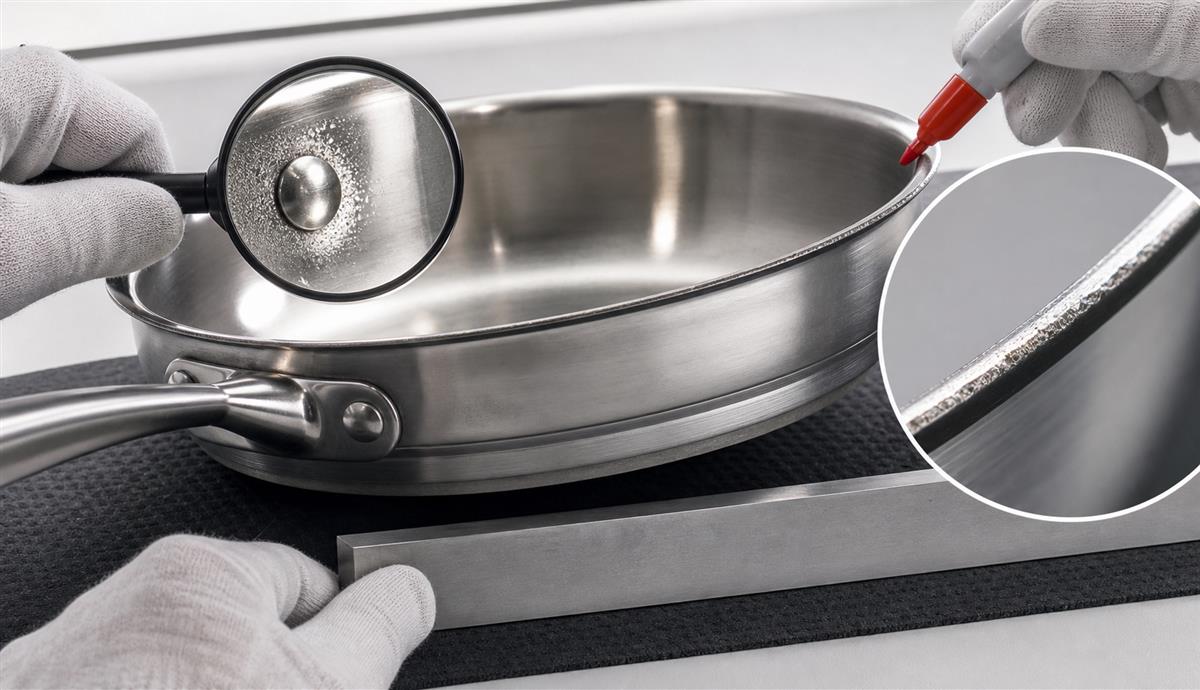
1. Corrosion, Pitting, and Rust-Colored Staining
Inspect the cooking surface, exterior, rim, base edge, rivets, welds, stamped marks, and crevices. Record the number, size, depth, and location of spots rather than writing only 鈥渞ust.鈥?Rust-colored contamination transferred from another steel item is not identical to pitting in the cookware, so questionable marks should be cleaned and examined before classification.
Steel grade and exposure should be considered together. Lower-nickel magnetic steel can be appropriate for induction exteriors, but it may respond differently to chloride-rich conditions than a more corrosion-resistant cooking surface. The material roles described in this 430 stainless steel cookware guide help explain why every layer needs its own acceptance criteria.
2. Exposed Core and Rim Degradation
Inspect the rim of clad cookware for recession, roughness, sharp edges, gaps, and separation. If a conductive core is exposed at the edge, aggressive detergent can attack it faster than the surrounding stainless layers. The result may be cosmetic at first but can become a cleanability, durability, or sharp-edge concern if material loss continues.
A sealed rim should be inspected for continuity before testing and for cracks or openings afterward. 鈥淪ealed鈥?is a construction claim, not proof of durability; welding quality, finishing, and thermal cycling all influence whether the seal survives repeated dishwasher exposure.
3. Handle, Rivet, and Weld Integrity
Check handle movement, fastener rotation, weld condition, grip surfaces, and water retention. A handle can remain attached yet still fail the buyer鈥檚 requirement if it loosens, traps dirty water, develops sharp corrosion products, or becomes difficult to clean. Record torque or deflection with a defined method when the purchase specification includes a measurable limit.
Detachable handles require separate testing in both attached and removed states when both cleaning methods are claimed. Springs, release buttons, internal steel parts, and polymer interfaces may retain detergent or moisture. Importers can compare these risks with the design considerations in the detachable-handle cookware guide.
4. Base Flatness and Layer Separation
Measure base flatness before and after exposure because repeated heating and cooling can reveal residual stress or weak bonding. A pan that rocks after testing may become unstable on a smooth cooktop, and a distorted induction base may heat unevenly or trigger detection problems.
Inspect bonded bases for blisters, gaps, unusual sounds, movement, or visible separation. Dishwasher testing does not replace thermal shock or cooking-performance testing, but a change after washing can identify a construction weakness that deserves further investigation.
5. Glass Lids, Knobs, Seals, and Steam Vents
A glass lid should be checked for cloudiness, trapped water, edge damage, loosened knobs, degraded washers, and residue around the rim. The glass itself may remain intact while a coating, adhesive, seal, or fastener fails. Every lid configuration should therefore appear in the test scope and sample photographs.
6. Finish, Markings, and Appearance
Record loss of gloss, rainbow tint, haze, water spots, discoloration, coating damage, printed-mark fading, and logo degradation with a controlled rating scale. Cosmetic acceptance should match the retail promise. A premium mirror finish may need tighter limits than a utility finish, even when both remain safe and functional.
7. Cleanability and Residue Traps
Inspect rolled rims, hollow handles, rivet heads, lid channels, base seams, and removable parts for trapped soil or detergent. A product should not be called easy to clean when the dishwasher pushes residue into inaccessible cavities. Manual follow-up cleaning should be recorded because it changes the meaning of a dishwasher-safe claim.
How Should Importers Define Pass/Fail Criteria?
Acceptance/non-acceptance criteria should be established before samples enter the machine. Results such as “appears acceptable” are difficult to reproduce and are easily influenced by commercial pressures. Each relevant defect should include the measurement method, rating criteria, limits, and consequences.
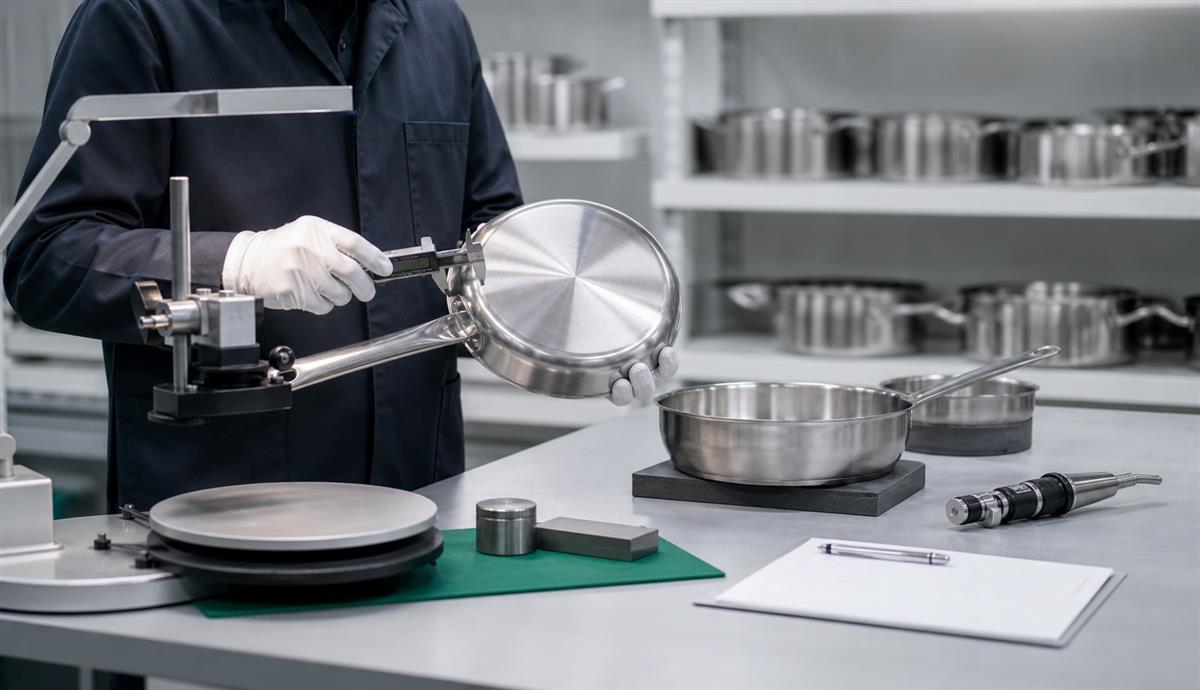
| Inspection category | Example objective evidence | Decision principle |
|---|---|---|
| Safety | No sharp edge, loose handle, cracked component, or hazardous separation | Any critical safety failure rejects the claim |
| Function | Stable base, secure lid, working handle, maintained induction response | Function must remain within the agreed tolerance |
| Corrosion | Mapped spots, pit dimensions, cleaned-surface photographs | Limits must distinguish contamination, staining, and substrate attack |
| Appearance | Controlled photos, gloss/color readings, approved rating scale | Limit should match price position and label promise |
| Cleanability | No retained soil, detergent, odor, or inaccessible water | Finished article must remain hygienically maintainable |
| Markings | Legibility and adhesion after exposure | Required warnings and traceability must remain readable |
How Many Samples Should Be Tested?
One development sample can identify an obvious problem but cannot demonstrate production consistency. The sampling plan should reflect order value, product complexity, supplier history, process variation, and the severity of a potential failure. Importers should define samples across relevant sizes, finishes, handle types, lid types, and production lots rather than testing only the easiest configuration.
Qualification and lot acceptance serve different purposes. Qualification tests whether a design is capable of meeting the claim; pre-shipment or periodic testing checks whether production continues to match the approved design. Changes to steel grade, cladding supplier, rim process, detergent-sensitive finish, welding, fasteners, or polymer formulation should trigger documented review and, when risk warrants, requalification.
What Should a Laboratory Report Contain?
A useful report should identify the tested samples, photographs, test method and edition, deviations, equipment, water, detergent, program, loading, cycle count, inspection checkpoints, results, and acceptance decision. The report should connect the tested model to the order specification through dimensions, materials, markings, and traceable identifiers.
Importers should reject reports that show a different model, omit lids or handles, hide deviations, provide only a pass stamp, or predate a material change. Documentation control should continue through purchase orders, packaging, and shipment; the broader process is explained in the cookware importer guide to MOQ, packaging, and shipping.
Should Testing Be Done at the Factory or a Third-Party Lab?
Factory testing is useful for engineering iteration, routine process control, and rapid comparison. An independent accredited laboratory is more appropriate when a retailer, regulator, contract, high-risk claim, or disputed result requires impartial evidence. Importers can use both: factory screening to eliminate weak designs and third-party testing to confirm the final specification.
The laboratory should be competent for the chosen method and product category. Accreditation scope, equipment control, detergent preparation, water conditioning, photographic consistency, and sample traceability matter more than a familiar laboratory name alone. Importers assessing production capability can also use this guide to essential cookware manufacturing capabilities.
What Are the Most Common Importer Mistakes?
- Testing only the metal: The finished pan includes joints, edges, handles, lids, finishes, and markings that may fail first.
- Accepting an unrelated report: A report for another size, construction, material stack, or factory may not support the ordered product.
- Leaving conditions undefined: “Standard dishwasher”? It does not recognize detergent, water, program, temperature, drying, or loading method.
- Using subjective inspection: Unwritten cosmetic judgments create inconsistent approvals.
- Ignoring the worst-case model: The largest pan, most complex handle, exposed rim, or decorated finish may carry greater risk.
- Skipping change control: A passing prototype does not cover later substitutions in steel, bonding, finishing, fasteners, or polymers.
- Confusing dishwasher-safe with maintenance-free: A product may pass the agreed exposure while hand washing still preserves appearance longer.
Importer Checklist Before Approving a Dishwasher-Safe Claim
- Confirm the exact model, bill of materials, steel grades, layer construction, finish, lid, and handle.
- Select the applicable standard, retailer method, or mutually agreed internal protocol.
- Define dishwasher program, water, detergent, rinse aid, loading, cycles, and inspection intervals.
- Document the pre-test condition with measurements and controlled photographs.
- Set objective safety, function, corrosion, appearance, marking, and cleanability limits.
- Test representative and worst-case configurations with a risk-based sample plan.
- Investigate failures by location and mechanism rather than masking them with cleaning.
- Confirm that the report matches the factory, production specification, and order.
- Control material and process changes after approval.
- Align packaging, instructions, warranty language, and online claims with the verified result.
Frequently Asked Questions
Is all stainless steel cookware dishwasher-safe?
No. Stainless steel grade is only one part of the finished product. Exposed cores, rim construction, surface finish, handles, fasteners, lids, seals, markings, and decorative components can determine whether the complete cookware item tolerates repeated dishwashing.
Does 18/10 stainless steel guarantee dishwasher safety?
No. An 18/10 label describes approximate alloy composition, not the durability of the complete pan. Dishwasher resistance still depends on finishing, contamination control, cladding edges, assembly parts, detergent exposure, and the agreed test conditions.
Can an importer rely on a supplier declaration?
A supplier declaration can support documentation, but it should be backed by a product-specific test method, traceable sample, results, and acceptance criteria when the claim creates commercial or compliance risk. The required evidence depends on the destination and customer contract.
Should importers test cookware with the lid attached?
Importers should test every cleaning configuration claimed in the instructions. Pots, lids, detachable parts, strainers, and removable handles may require separate rack positions or test conditions, and each component should remain traceable to the same model.
Is cosmetic discoloration an automatic failure?
Cosmetic discoloration is a failure only when it exceeds the pre-agreed limit or contradicts the product promise. Safety and function remain critical, but appearance limits should reflect the finish, price position, care instructions, and retailer requirements.
When should dishwasher testing be repeated?
Testing should be reviewed after changes to materials, factory, cladding, exposed edges, welding, polishing, coatings, fasteners, handles, lids, detergents claimed in instructions, or other factors that can change dishwasher resistance. Periodic verification may also be appropriate for high-volume programs.
Final Verdict
Dishwasher-safe stainless steel cookware is not proven by a steel grade, a catalog icon, or one clean sample. Importers need a controlled exposure method, a representative sample plan, and objective acceptance criteria for the entire finished product. The strongest purchasing specification links the claim to traceable construction, measurable failure limits, documented test conditions, and change control after approval.
-
Professional Stainless Steel Cookware Set for Daily Cooking CW-ETP0704
-
8pcs Stretched Aluminum Cookware Set Nonstick Pots and Pans | Aluminum Cookware Wholesale Supplier China
-
Pressure Cooker Stainless Steel for Healthy Cooking
-
Stainless Steel Cook Pot Set CW-M0606
-
Ceramic Non Stick Aluminum Cookware Set
-
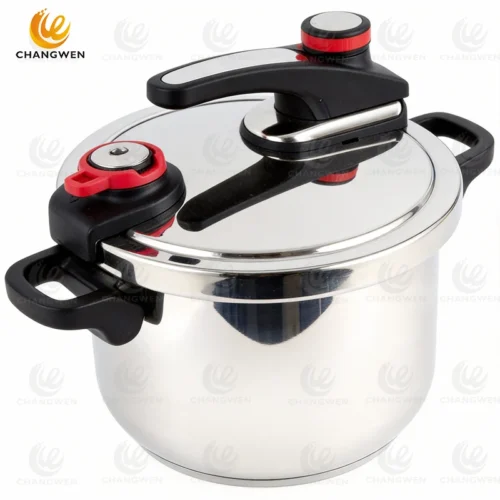
Stainless Pressure Cooker with Secure Locking Lid
-
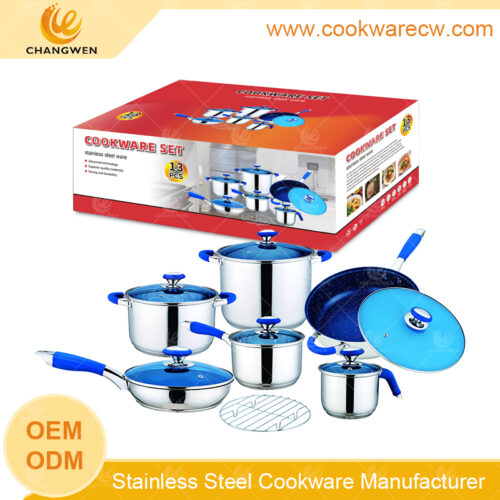
Newly Launched 13pcs stainless steel cookware set with iron wire rack nonstick fry pan with helper mirror polished soup stock pot saucepan and casserole CW-M1306G-02
-
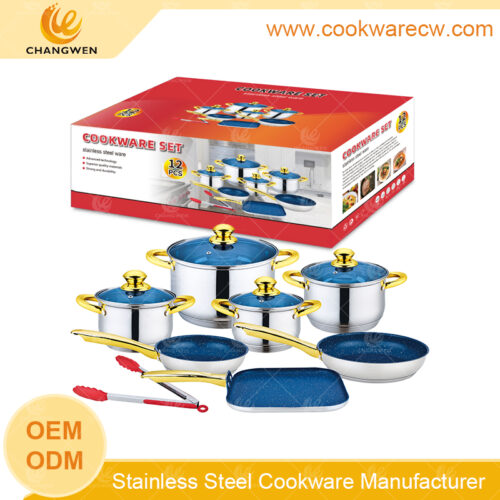
Hot sale SS ollas non-stick coated frying pans and pots stock pot with a kitchenware clip CW-M1204