
Capsule bottom cookware is a strong buying choice when a project needs a durable stainless steel cooking surface, broad base heating, induction compatibility, and a lower cost than fully clad construction. The right product is not defined by the words “capsule bottom” alone. Buyers must specify the conductive core, cap material, core footprint, total base profile, bonding quality, flatness, and performance after repeated heating and cooling.
A capsule bottom is a multilayer base attached to a separately formed cookware body. The typical system places a heat-spreading metal disc between the vessel bottom and an outer stainless steel cap. That design concentrates thermal material where most heat enters the cookware, while the sidewalls remain lighter and less expensive than fully clad walls.
This guide treats the capsule as an engineered system rather than a decorative disc. It explains how to compare construction, identify hidden risks, approve samples, and write a purchase specification that can be verified during production. Buyers seeking a broader overview of vessel shapes, steel grades, handles, and lids can use the separate stainless steel cookware buying guide.
What is the fastest way to evaluate capsule bottom cookware?
Start with five questions. Does the conductive core extend close enough to the usable floor edge? Is the core thick enough for the vessel size and cooking task? Does the outer cap provide the required induction response? Does the bonded base remain flat and secure after thermal cycling? Can the supplier document these answers with measurements, cross sections, and repeatable tests?
A sample that looks heavy and polished can still have an undersized core, excessive decorative cap material, or an inconsistent bond. A magnet can confirm attraction to the outer base, but it cannot prove core coverage, heat distribution, or long-term integrity. The buying decision should therefore combine dimensional inspection, functional testing, and limited destructive verification.
How does capsule bottom cookware compare with single-wall and fully clad cookware?
Single-wall stainless steel is light and economical, but stainless steel alone does not spread heat across a wide base as effectively as a well-designed conductive core. Single-wall vessels can work for water-heavy cooking, steaming inserts, or applications where heat uniformity is less demanding. They are less suitable when the bottom must recover evenly after a large cold load.
Capsule bottom cookware adds thermal mass and lateral heat spreading under the floor without carrying the core up the sidewalls. This construction is often well matched to stockpots, casseroles, saucepots, and other vessels whose cooking task is concentrated at the base. It can deliver a strong price-to-performance balance when the disc footprint and bonding process are properly controlled.
Fully clad cookware extends a conductive layer through the bottom and sidewalls. It can provide more continuous heating around curved transitions and may respond differently during sauce reduction or shallow frying. Fully clad construction normally costs more and can add unnecessary material to tall vessels whose upper walls contribute little to the cooking task.
| Construction | Main advantage | Main limitation | Best-fit use |
|---|---|---|---|
| Single-wall stainless steel | Low weight and cost | Limited lateral heat spreading | Boiling, steaming, inserts, light-duty vessels |
| Capsule bottom | Efficient heat-spreading material under the floor | Sidewalls are not core-heated | Stockpots, casseroles, saucepots, value-focused sets |
| Fully clad | Conductive core continues through the walls | Higher cost and often higher weight | Frying pans, saute pans, responsive sauce work |
The table describes design tendencies, not automatic quality levels. A well-engineered capsule base can outperform a poorly specified clad product for a base-dominant task. A general layer count is not enough; buyers should compare the location, material, thickness, and integrity of each functional layer.
Which layers form a capsule bottom?
The first functional layer is the vessel body, which also forms the food-contact surface. The second layer is a conductive core, commonly aluminum or another specified heat-spreading material. The third layer is an outer cap, often selected for durability, appearance, and induction response. Some designs add or combine materials, so the approved cross section should define the actual product rather than rely on a generic three-layer description.
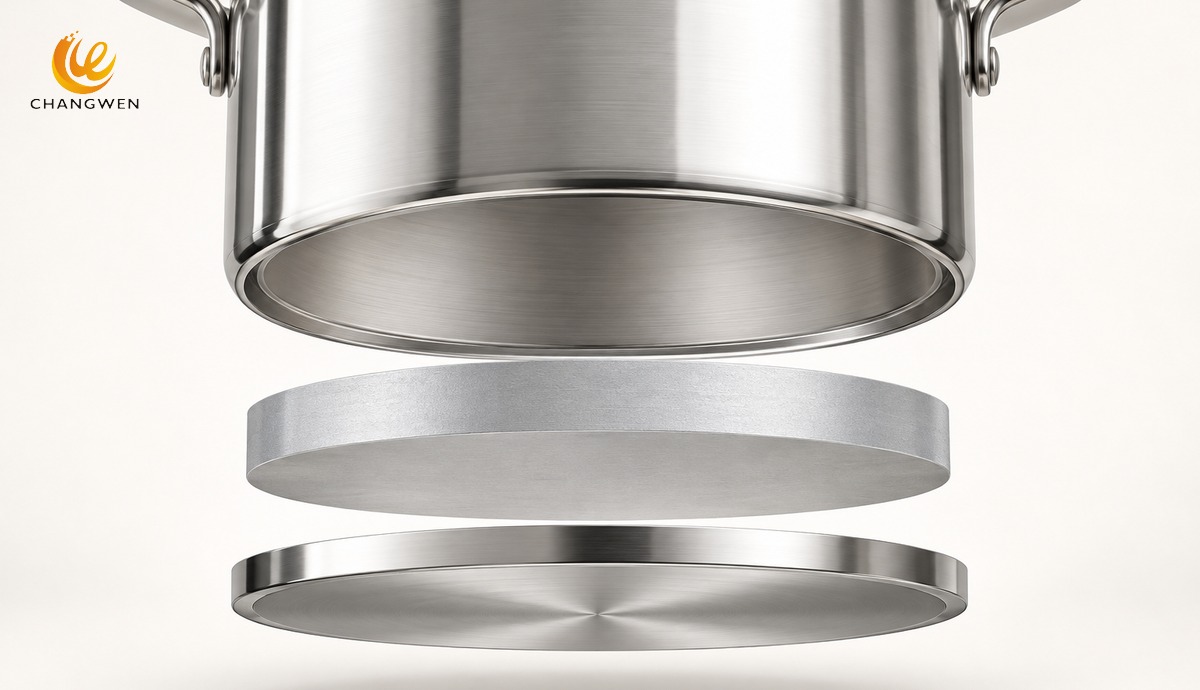
The core must remain protected from normal exposure and must bond consistently across the intended contact area. The outer cap should cover and retain the core without a loose edge, open gap, or irregular projection. The visible capsule edge is an inspection point, but appearance alone cannot show whether the internal interface is continuous.
Material names must be assigned to individual components. A food-contact interior, magnetic outer cap, core disc, handle, and fastener can use different alloys because they perform different jobs. When stainless steel grade is consequential, XRF testing can verify exposed stainless steel components, but XRF cannot measure a hidden aluminum core through a steel cap.
How is a capsule bottom joined to the cookware body?
Impact bonding uses high pressure to join the prepared base components into a compact assembly. The supplier controls surface preparation, alignment, component dimensions, pressing conditions, tooling, and post-bond finishing. A strong process produces intimate contact and stable geometry, while weak process control can leave inconsistent interfaces or dimensional variation.
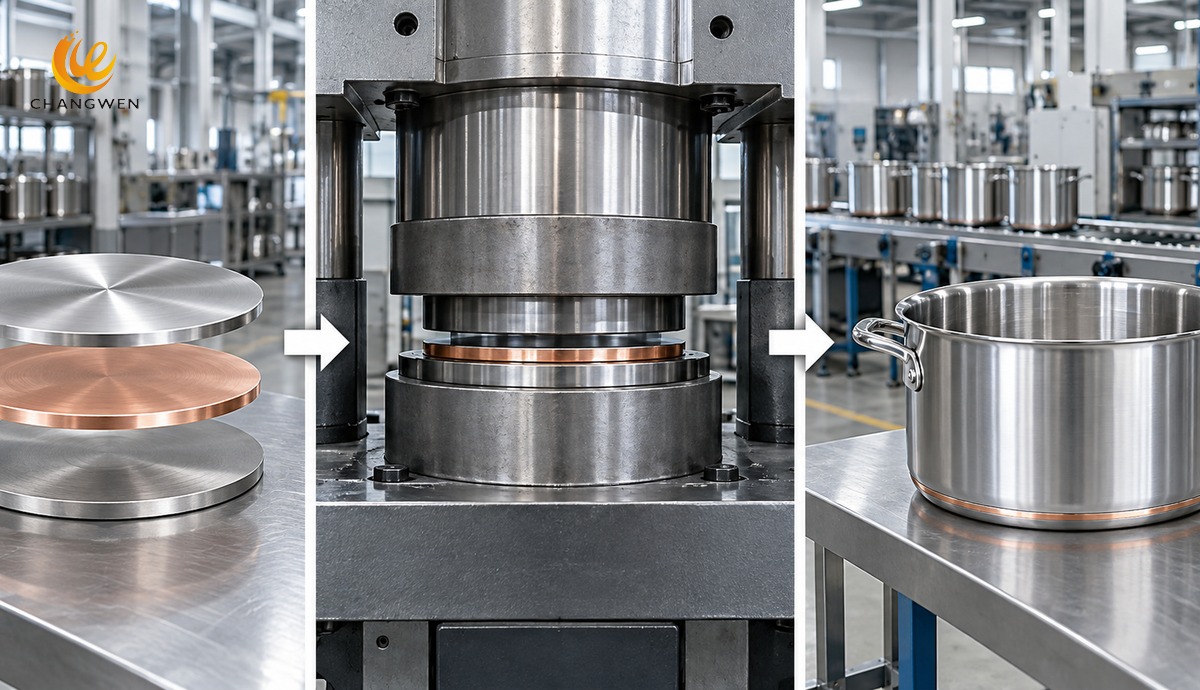
The term impact bonded describes a joining approach, not a verified result. A purchase order should not accept the phrase as proof of bond coverage or cycle life. Buyers need evidence from the finished sample: dimensional records, a controlled heating test, thermal-cycle results, and a cross section from the approved construction.
The manufacturing illustration is not a specification for the supplied SKU. Different factories may use different preforms, cap geometries, alloys, and tooling routes. The buyer should approve the functional outcome and critical dimensions while allowing the supplier to protect legitimate process know-how.
Why does conductive core diameter matter?
The core diameter determines how far heat can spread before reaching the edge of the usable cooking floor. A visibly large outer cap does not prove that the conductive core beneath it has the same diameter. The cap can extend beyond the core for retention, forming, or appearance, so the core footprint needs separate documentation.
Core coverage should be related to the usable internal floor, not only the outside vessel diameter. A tall stockpot may tolerate a modest unheated transition better than a shallow saute pan, but a wide cold ring can still delay boiling, reduce browning uniformity, or create different temperature zones. The detailed article on cookware base disc diameter and edge-to-edge coverage provides the calculation and measurement method.
One diameter should not be copied blindly across a cookware family. As vessel size increases, a fixed core can cover a smaller percentage of the floor. Each SKU should list vessel floor diameter, core diameter, cap diameter, and the measurement tolerance so that coverage remains intentional rather than accidental.
How thick should the conductive core be?
Core thickness affects heat spreading, thermal reserve, total weight, response time, and material cost. A thin core heats quickly but may not distribute energy far from a small burner. A thicker core can reduce short-term temperature drop when food is added, but it takes longer to heat and increases shipping weight.
No universal core thickness is best for every vessel. A small saucepan, large stockpot, and shallow saute pan present different floor areas, loads, and cooking tasks. The specification should connect core thickness to vessel diameter and intended performance rather than use one marketing claim for an entire set.
Total base thickness can be misleading because it includes the vessel floor, conductive core, outer cap, and sometimes a shaped profile. Buyers should request either a controlled cross-section measurement or component dimensions before bonding. The separate stainless steel thickness guide explains body-gauge tradeoffs; body thickness and core thickness should remain distinct fields.
What should buyers inspect at the capsule edge?
The capsule edge should be even, secure, and free from sharp projections. A consistent visible line can support cosmetic control, but the edge should not be judged by appearance alone. Buyers should check height variation, local gaps, deformation, exposed core material, polishing damage, and changes after thermal cycling.
A small visible seam is not automatically a failed bond because the internal interface extends beyond the line that can be seen. Conversely, a perfectly polished seam does not prove internal continuity. Visual criteria should separate acceptable forming marks from functional defects that expose material, trap soil, create sharpness, or indicate movement.
Edge finishing must be evaluated after the final polishing and cleaning process. Aggressive polishing can create waves, drag lines, burns, or inconsistent transitions near the cap. The cookware polishing defect atlas helps purchasing teams use consistent visual defect names instead of subjective descriptions.
Why is cold and hot flatness a system requirement?
Flatness controls stability, contact with radiant surfaces, and the user experience on a smooth cooktop. A base can be stable at room temperature yet distort when the body, core, and cap expand at different rates. The acceptance method should therefore define both the cold condition and the thermal condition.
Some cookware uses a deliberate cold profile to compensate for expansion. A slight design crown or concavity should not be called a defect without comparing it with the approved engineering target. The correct criterion measures gap, rocking, or contact pattern at specified temperatures and after a defined cooling period.
Flatness must be evaluated with a stable reference surface, a defined orientation, and a repeatable gauge method. Pressing a pot by hand during measurement can hide rocking. Inspectors should record the maximum gap and the position of instability rather than provide only a pass or fail opinion.
What does induction compatibility require?
Induction compatibility normally depends on a magnetic outer layer and a base geometry that the cooktop can detect. A magnet test is a useful screening step, but attraction strength alone does not establish heating power, efficiency, noise, or temperature distribution. The sample must be run on representative appliances.
The magnetic layer should cover the active base area and remain dimensionally stable. An induction hob heats the compatible base directly, so local material differences and cooktop coil geometry can influence the pattern. The U.S. Department of Energy explains the practical screening principle: a flat-bottomed pot or pan to which a magnet sticks can work with induction, but product validation still requires an appliance test.
Induction testing should record detection at several vessel positions, time to a defined temperature, power behavior, abnormal sound, and post-cycle flatness. A claim that cookware is induction ready should not be generalized from one size if each SKU uses a different base diameter or cap construction.
Which cookware shapes benefit most from a capsule bottom?
Stockpots and tall casseroles often benefit because most energy enters through the base, while the upper sidewall mainly contains liquid. A capsule concentrates heat-spreading material at the floor and avoids carrying a heavy core to the rim. This can improve value and handling in larger diameters.
Saucepans can also use capsule bases effectively when the core reaches close to the floor transition. For thick sauces or low-volume reductions, sidewall heating and responsiveness may matter more, so buyers should compare the actual task with a clad alternative. The correct construction depends on how the vessel is used, not on category name alone.
Frying and saute pans place more demand on edge heating because food may cover the entire floor. Capsule designs can work well when coverage is broad, but a small core under a wide shallow pan can create a pronounced temperature transition. A task-first set may therefore combine capsule-bottom pots with fully clad or differently engineered pans.
Which failure modes matter in a capsule base?
Bond separation is the most serious construction concern because a moving interface changes heat transfer and can progress with repeated cycles. Warning signs may include a new gap, local bulging, changed sound, edge movement, or visible core exposure. None of these observations should be used alone to diagnose the entire internal interface.
Base deformation can appear as rocking, an excessive hot crown, or an uneven contact pattern. Deformation may result from geometry, thermal stress, forming variation, material mismatch, or misuse. A supplier response should identify the affected dimension and process cause rather than simply polish or flatten the visible surface.
Corrosion or discoloration at the capsule edge can indicate trapped residue, inappropriate cleaning chemistry, incomplete finishing, or material exposure. The cause must be separated from normal heat tint and water marks. Acceptance criteria should define whether the defect is cosmetic, cleanability related, or evidence of exposed material.
How should a buyer validate a capsule bottom sample?
Begin with nondestructive checks: mass, outside base diameter, floor diameter, capsule diameter, edge height, cold flatness, rocking, magnetic response, finish, and handle stability. Record the tools, reference surfaces, temperatures, and tolerances so the same method can be used during production inspection.
Next, run functional checks with a controlled heat source and standardized load. Measure heating time, temperature spread, recovery after adding a load, boiling pattern where relevant, and flatness after cooling. The existing cookware hot-spot mapping protocol provides a repeatable comparison method without turning a dramatic thermal image into unsupported proof.
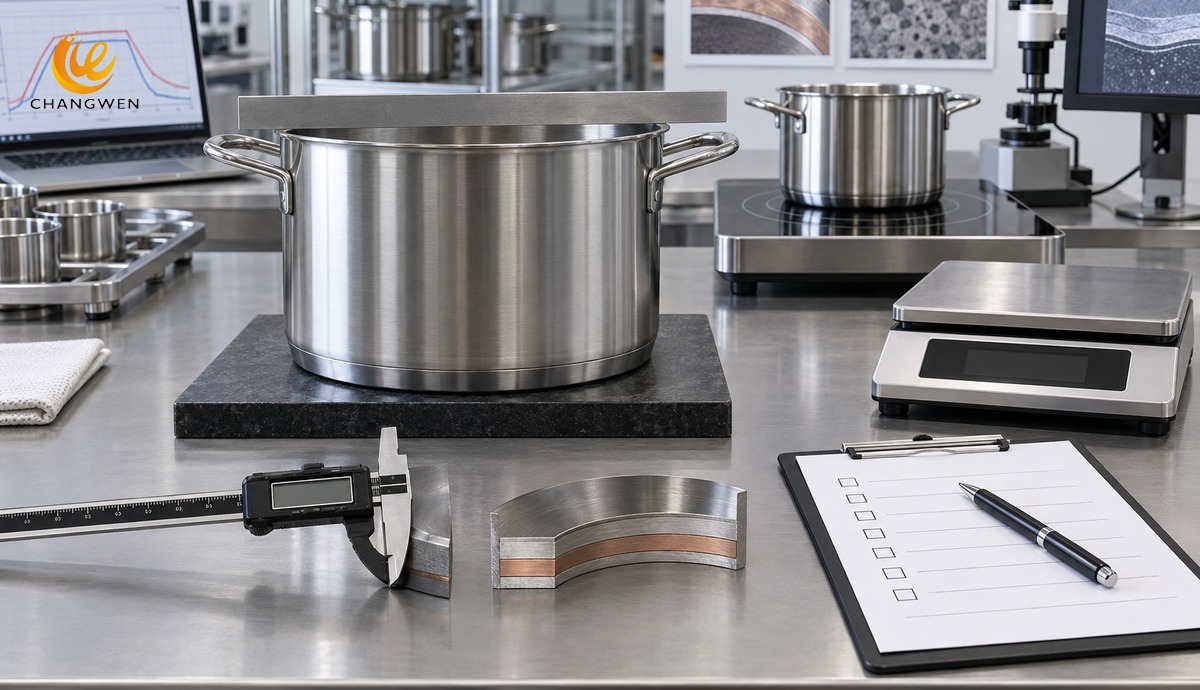
Finally, approve limited destructive verification when construction cannot be confirmed from the outside. A cut cross section can reveal layer order, core thickness, core diameter at the sampled plane, voids visible at the cut, and edge enclosure. One section does not prove every point in every unit, so the sampling plan should match order risk and process stability.
The destructive sample should be traceable to the same approved configuration as the functional samples. A supplier should not provide a separate demonstration disc that is not connected to the production vessel. Photographs, measurements, retained sections, and signed specification revisions create a usable approval record.
What should a thermal-cycle test include?
A thermal-cycle test should define starting temperature, heat source, power, target temperature or duration, cooling method, number of cycles, load condition, and inspection intervals. An undefined instruction to heat and cool the pot cannot be reproduced across laboratories or suppliers.
The cycle should represent intended use without introducing an unrealistic shock unless shock resistance is the claim being tested. Empty high-power heating and immediate quenching can create conditions outside normal instructions. If that severe sequence is required, it should be identified as an accelerated stress test rather than ordinary cooking.
After selected cycles, inspectors should check flatness, rocking, edge gaps, capsule movement, finish, induction detection, and a repeatable heating metric. The baseline must be recorded before cycling. A product passes because its changes remain within agreed limits, not merely because the capsule remains attached.
How should production consistency be controlled?
A golden sample is necessary but not sufficient. The control plan should identify incoming material checks, component dimensions, bonding records, in-process flatness, final appearance, and performance sampling. The signed sample represents the target, while process records show whether production can repeat that target.
Critical dimensions should be measured by SKU because larger pots may use different dies, discs, or caps. Sampling only the smallest size can miss coverage and flatness risks in the largest size. The 25-point cookware golden sample checklist can support the wider approval record.
Lot inspection should define sample size and defect classes before shipment. Sharp edges, loose handles, exposed core, severe rocking, or bond movement require different treatment from minor polish variation. Clear defect definitions reduce negotiation after the goods are packed.
What belongs in a capsule bottom purchase specification?
A complete specification should identify the vessel body material and gauge, food-contact finish, conductive core material, target core diameter and thickness, outer cap material, cap diameter and profile, total base dimensions, edge finish, flatness method, induction requirement, thermal-cycle procedure, and performance criteria.
The purchase specification should also define handles, lid, markings, packaging, documentation, quantities, tolerances, inspection level, and approved deviations. Capsule details cannot be isolated from total product weight, carton loading, cooktop fit, or target price. A change in one base component may affect all four.
Every quotation should state whether the supplier accepts each parameter or proposes an alternative. A price without a confirmed cross section, tolerance, testing scope, and packaging basis is not comparable. Revision numbers should connect the drawing, bill of materials, sample, test report, quotation, and purchase order.
How should buyers compare cost and value?
Material cost rises with core diameter, core thickness, outer cap size, body gauge, and total product weight. Tooling, polishing, testing, packaging, and reject control also affect price. A cheaper base can cost more after returns if it rocks, heats unevenly, or changes between production lots.
Value should be measured against the intended cooking task and retail position. A tall stockpot may gain little from conductive sidewalls, making a reliable capsule base a rational allocation of material. A premium saute pan may justify fully clad construction if wall response and edge heating support the promised use.
The best quotation is the lowest total-risk option that meets the specification, not automatically the lowest unit price. Buyers should normalize materials, dimensions, testing, packaging, logistics, and warranty assumptions before making the commercial comparison.
Frequently asked questions about capsule bottom cookware
Is capsule bottom the same as fully clad?
No. A capsule bottom places conductive material mainly under the vessel floor, while fully clad cookware carries a bonded core through the body and usually up the sidewalls. Both can perform well when matched to the cooking task.
Is every capsule bottom made with three layers?
No. Three functional components are common, but actual assemblies can differ. The buyer should approve a component-specific cross section rather than rely on a generic layer count or an illustration.
Can a magnet prove capsule quality?
No. A magnet can indicate a responsive outer layer, but it cannot reveal core diameter, core thickness, interface continuity, heating uniformity, or thermal-cycle durability.
Can a heavier base guarantee better heating?
No. Extra mass can come from the outer cap or a smaller thick region rather than a wide conductive core. Performance depends on material placement, coverage, thickness, bonding, and cooktop match.
When is fully clad cookware worth the added cost?
Fully clad construction can be worth the cost when sidewall response, curved-transition heating, or a premium construction promise materially supports the cooking task. It is not automatically necessary for tall water-based vessels.
What is the final buying rule?
Buy the verified base system, not the phrase on the carton. A good capsule bottom has a documented core material, appropriate footprint and thickness, a suitable outer cap, controlled bonding, stable flatness, repeatable heating, and acceptable change after thermal cycling. Those requirements should be measurable on samples and auditable during production.
Develop capsule bottom cookware with Changwen
Changwen supports cookware wholesalers, importers, and private label programs with product development, manufacturing, sampling, and quality control. A capsule-bottom project can define vessel dimensions, materials, base architecture, handles, lids, finish, logo, packaging, testing, and inspection around the target market and price position.
To prepare a comparable proposal, send the intended vessel types, sizes, target core construction, heat sources, quantity, packaging, market, and required tests. Review Changwen’s R&D and manufacturing capabilities or contact the team to discuss a wholesale, OEM, or private label capsule-bottom cookware program.
-
Safest Stainless Steel Cookware
-
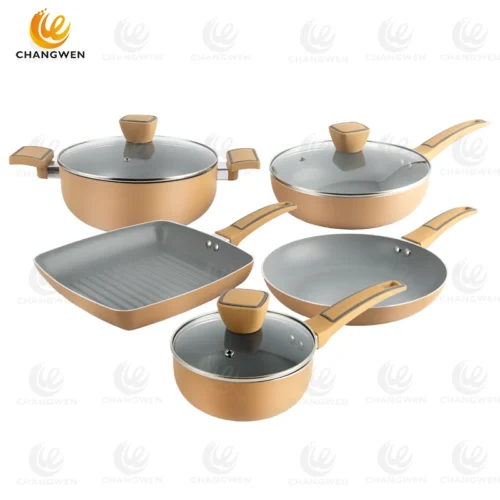
8pcs Stretched Aluminum Cookware Set Nonstick Pots and Pans | Aluminum Cookware Wholesale Supplier China
-
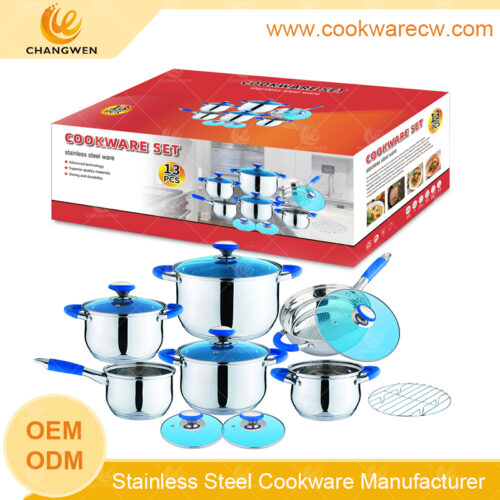
Wholesale price stainless steel pots and pans mirror polished cookware set saucepan milkpot casseroles with blue silicone and blue glass lids steamer wire rack CW-M1307G-01
-
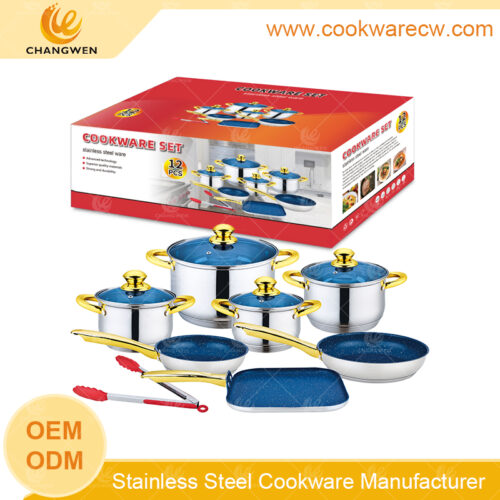
Hot sale SS ollas non-stick coated frying pans and pots stock pot with a kitchenware clip CW-M1204
-
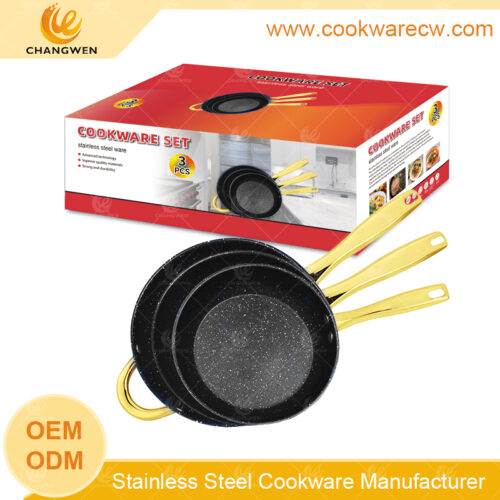
Hot sale 3pcs stainless steel nonstick fry pan set golden plated handles black coating cookware CW-M0301-01
-
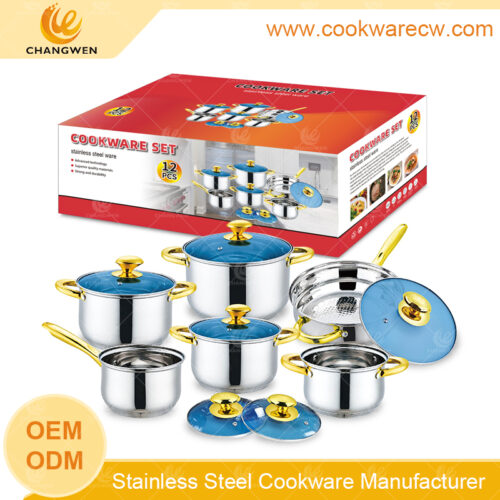
Mexican hottest stainless steel 12pcs cook pot frying pan with blue glass lid golden handle & knobs and 7 steps capsuled bottom CW-M1209
-
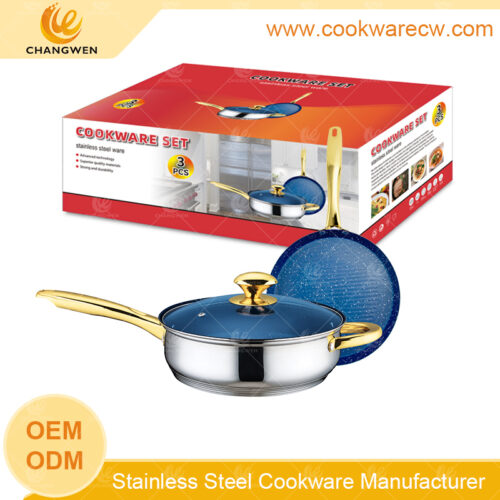
China factory wholesale blue marble nonstick coating fry pan set stainless steel mirror polished frypans golden handles and knobs CW-M0303
-
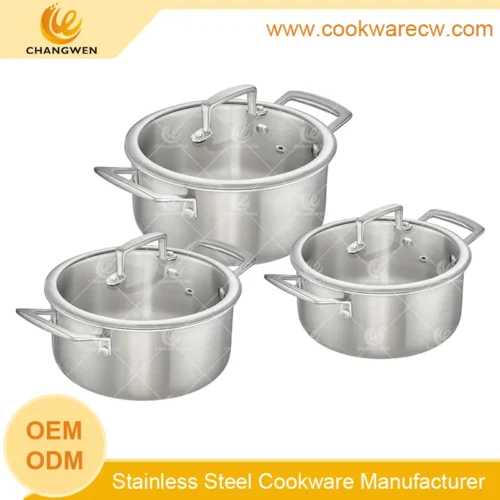
Versatile Stainless Steel Pot Set with Multiple Capacity Options CW-ETP018