
Start with the largest batch you cook regularly, then choose a stainless steel stock pot that can hold that batch with room to stir and simmer. Verify the flat bottom against the burner, and check the weight of the complete pot with the lid and ingredients. A pot that fits all three requirements will usually serve a kitchen better than a larger model chosen by its listed capacity alone.
A stock pot specification should state four things separately: usable capacity, base construction, finished wall thickness and lid design. They answer different questions. Capacity determines how much food the kitchen can prepare, the base affects how heat reaches the lowest layer, the walls influence weight and stiffness, and the lid affects evaporation and access. The best combination depends on whether the pot spends most of its time simmering broth, bringing pasta water back to a boil or stirring a thick soup.
How much stock pot capacity do you need?
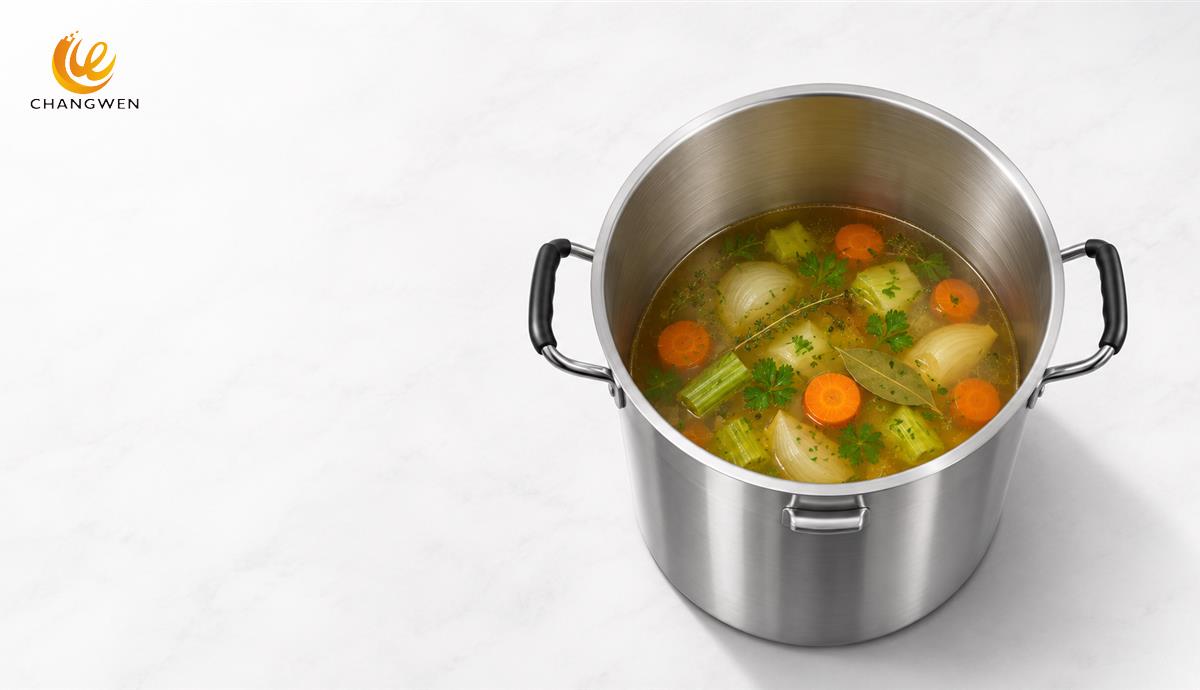
Start by distinguishing nominal capacity from working capacity. Nominal capacity is the advertised volume, which may be measured close to the rim or by another stated method. Working capacity is the amount you can cook while leaving space for ingredients, agitation and the recipe’s normal expansion or foaming. A 20-liter pot should never be assumed to handle a 20-liter cooking load. Ask where the listed volume is measured and whether the manufacturer gives a separate maximum fill instruction.
Estimate the largest simultaneous load rather than the finished yield. A batch that starts with 12 liters of liquid and an ingredient load that displaces roughly 3 liters already occupies about 15 liters before leaving room for stirring. If a test shows that the recipe needs about 3 liters of additional space, the initial target is at least 18 liters of measured internal capacity, subject to any lower manufacturer fill limit. A recipe that finishes at 10 liters after reduction still needs to fit at the start.
For a straight-sided pot, water calibration makes a volume estimate useful in daily work. Add known quantities of cold water from a measuring vessel and record the depth at each relevant level. A kitchen can then compare working loads on different samples without relying on rim height or a vague fraction of the pot. Confirm that any printed graduations agree with the check before staff use them for batch planning. Record liters or US liquid quarts explicitly if the pot will be sold in several markets.
Compare two pots using the food that needs the most clearance. Long bones or whole vegetables may need diameter more than depth. A tall narrow vessel can suit broth once ingredients fit beneath the liquid, while a wider one lets a cook stir or retrieve bulky pieces more easily. A larger mouth also exposes more surface when the lid is off. If reduction matters, assess how much output remains after the same recipe and cooking routine rather than assuming two pots with equal capacity behave identically.
A moderate stock pot is often enough for household cooking that alternates between pasta, soup and small batches of broth. The culinary medicine curriculum from the American College of Lifestyle Medicine uses an 8 US quart pot as an everyday kitchen reference. That size is a starting example rather than a universal recommendation. A commercial buyer should verify the actual starting load, extraction clearance and room for the ladle before selecting a size based on serving count. Culinary medicine kitchen equipment curriculum.
How should you match a stock pot to the stove and work area?
Measure the contact base, body diameter and handle span separately. The contact base relates to the heating zone, the body diameter determines space for adjacent pans, and the handle span determines whether staff can lift the pot through the available opening. A pot can match the burner yet block a second pan because its handles extend several centimeters. Sketch the range as it is used during a busy shift, with all normal pans and utensils present.
Check total height with the lid and enough room to remove it. A tall pot can fit under a shelf while leaving little space for lifting the lid, stirring with a long paddle or inserting a basket. If the daily job includes straining stock, check how the insert clears the rim and where it lands. Compare the full movement with that of a shorter vessel on the same burner. The greatest clearance demand may occur during serving or unloading instead of cooking.
Test the path from the stove to the receiving vessel with an unheated sample. One liter of water weighs about one kilogram, so 16 liters of water in a pot and lid weighing 4 kilograms already amounts to about 20 kilograms, before counting any additional ingredients. Use the kitchen’s handling procedures and equipment to decide whether staff should move the loaded pot, ladle from a fixed position or divide the recipe into smaller batches. The size that saves the most burner time can still cost more labor at the transfer step.
Which stock pot base makes sense for your recipes?
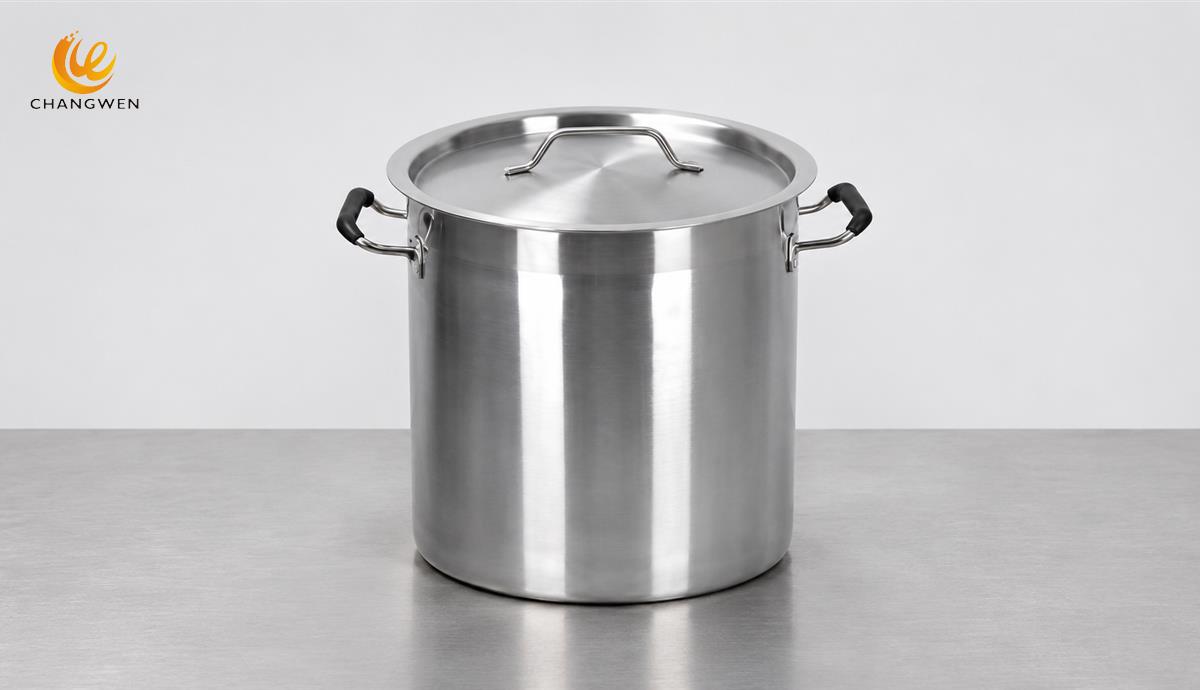
A single-layer stainless base can be sufficient for stock or water-heavy work on a suitable burner, depending on the construction and heat input. Moving liquid helps redistribute heat, and a simpler base may reduce purchase weight. A concentrated heat source can still create a hot zone at the bottom, especially when solids settle. If the regular menu includes thick tomato soup or beans that sit on the base, compare the actual result with a conductive-layer design using the same recipe.
A disc-bottom stock pot places a heat-spreading layer in the base, often with an aluminum core protected by stainless steel surfaces. The disc should be considered as a dimensioned part. A thick disc that covers a relatively small circle can leave a broad transition near the wall. Ask for the disc diameter, flat contact diameter and relevant thickness measurements, and compare them with the heating zone. Changwen’s guide explains how the extent of the disc changes the base geometry. Cookware base disc diameter and coverage.
A fully clad pot extends its layered construction from the base into the walls. That can be useful for recipes where a thick mixture contacts the sides during stirring or reduction, provided the actual sample gives the desired result. For a large pot used primarily to simmer dilute stock, the added weight and cost of conductive walls may offer less value than a wider base or an easier grip. Read the supplier’s cross-section to distinguish a clad body from a multilayer base fitted to a single-wall body.
Manufacturing terms such as “impact bonded” identify an assembly method and deserve a separate specification from the materials. Ask for the thickness of the assembled base, the layers included in that figure and how far the conductive layer extends. A photograph of the underside can show shape, but it does not identify the internal stack or prove its performance. For more detail on the joining method, see the site’s impact-bonded cookware guide.
For induction, confirm the exact size on the cooktop the customer actually uses. A magnet can indicate a magnetic exterior, but detection and performance also depend on the effective contact area and the cooker. On gas, follow the stove and pot makers’ instructions on burner size and flame placement. A larger pot may need a different heat source to reach the target time. For a fair comparison use the same cold fill, lid position, initial water temperature and power setting, then record time to the defined cooking condition.
How should you specify wall thickness?
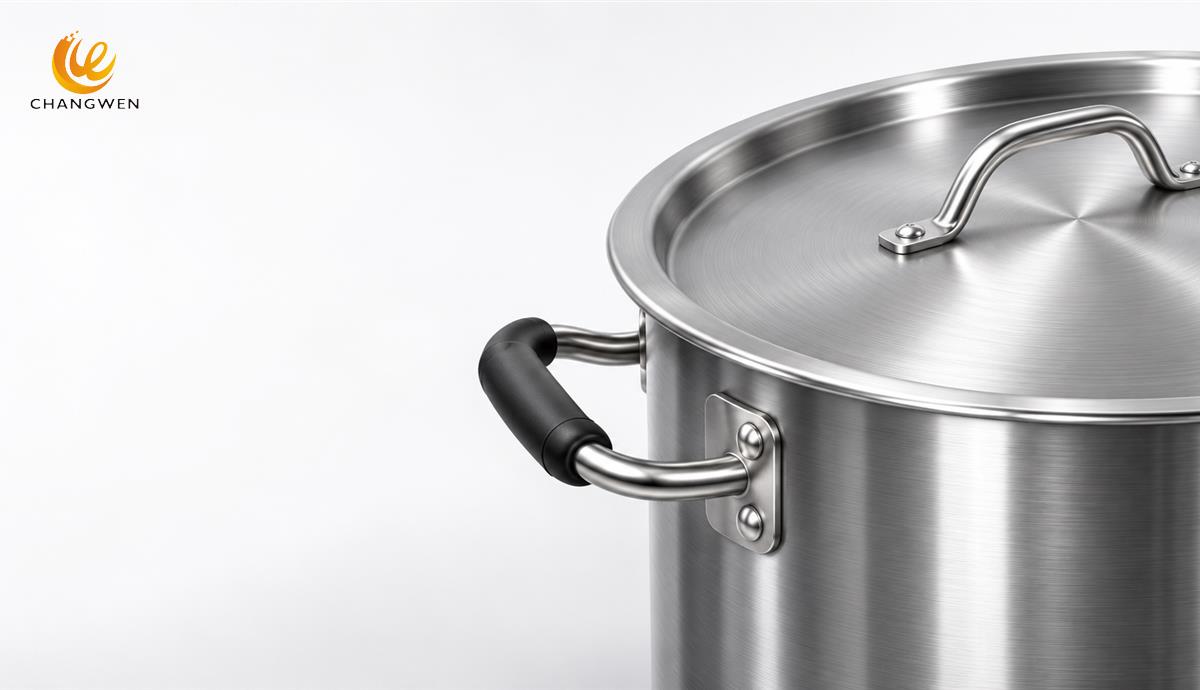
Specify the finished sidewall in millimeters at named locations. The rolled rim is thicker in profile than the adjacent wall because its edge has been formed. A measurement taken there cannot tell a buyer the thickness of the body. Ask how the supplier measures the exposed wall and whether the thickness next to the bottom radius changes due to forming. Separately record the base stack, lid metal thickness where relevant and total assembly weight. These figures explain different aspects of performance. Finished cookware thickness guide.
A thicker finished wall can improve stiffness, especially on a tall, broad body that sees frequent movement and washing. The weight penalty grows as the size and surface area increase. A smaller pot with a reinforced rim and well-supported handle attachment may be easier to use every day than a large pot whose thicker body makes it difficult to handle. Compare the same size and construction before attributing a difference to a few tenths of a millimeter.
Gauge is less informative than a numeric thickness if the supplier does not identify the convention. A quote should also say whether the number refers to incoming sheet, a nominal finished value or a minimum after forming. Agree on both the location and the permissible variation. A published procurement specification can show the value of this distinction by naming separate measurement positions for the base and wall. The numerical requirements in such a document apply to that particular kit. Example kitchenware procurement specification.
Compare the handle attachment along with the wall. Look at the grip opening with your normal oven mitts, the fastener or weld area and the clearance between the grip and a neighboring pan. Check whether the lid can be steadied or lifted without interfering with the side handles. An insulated or coated grip changes the cleaning and temperature limits of the assembly, so ask for the model’s instructions. The black grip surfaces shown on the reference product are visible design details and do not establish any temperature rating.
Which lid fits the way your kitchen cooks?
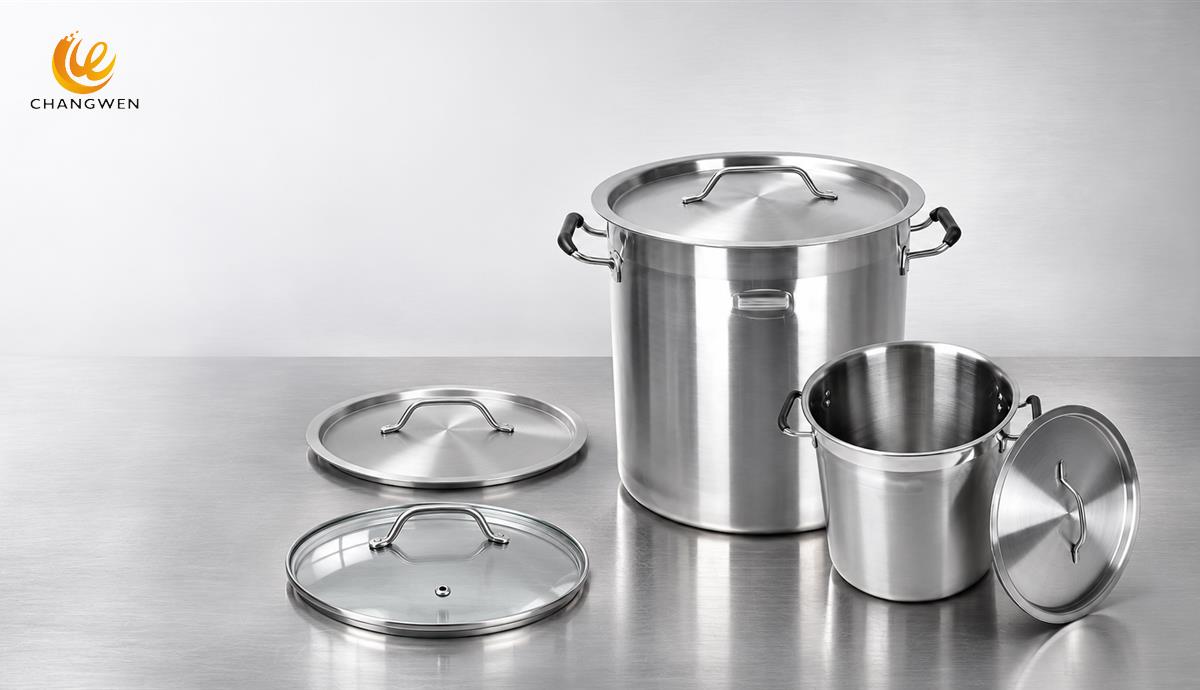
A stainless steel lid is useful when finished stock pots will be stacked, transported or washed in a busy kitchen. Compare its weight, rim profile and handle clearance before approving it. A glass lid can help cooks observe the contents before condensation blocks the view. Compare the two materials with the actual dishwashing rack and storage arrangement. If lids will be stacked independently, a taller handle that is comfortable to grasp can take more room than a low-profile alternative.
A solid lid helps reduce evaporation during heating and simmering, while a vent or loose seating can change how much steam escapes. Match the lid to the stage of the recipe. Some cooks heat the starting liquid covered, then set the lid aside for a controlled reduction. Compare yield by recording starting and ending volume under the same lid position in each sample. A vented lid on a regular stock pot should be evaluated as a steam escape path, and the pot must be used at ordinary atmospheric pressure as directed by the manufacturer.
Test the fit cold on at least two pots when replacements are important. The lid should seat as designed without binding, excessive movement or interference from a raised rim seam. Check where the user can put the lid after removing it and whether condensation runs onto the prep counter. A lid that performs well in a photo may be awkward if the knob leaves too little room for a mitt, or if there is no safe landing position during service.
A lid spec should state whether the quoted price includes it and how replacement covers are identified. Two pots with the same nominal diameter can have different rim profiles or seat depths. The replacement should be verified against the pot drawing or a sample fit, particularly when the same kitchen buys more than one model. If you plan to use baskets, confirm whether a lid seats directly on the pot and on the approved insert, since the two configurations can have different clearances.
How can you compare two pots with the same listed volume?
Use a fixed scenario and compare the sequence of work. Suppose two pots each hold a planned 14-liter batch. Sample A is narrow, weighs less and leaves a second burner free. Sample B is wider and lets a cook scoop bulky solids out with less reaching. For clear broth on a crowded stove, Sample A may fit the shift better. For a menu with frequent removal of large ingredients or deliberate reduction, Sample B may justify its footprint. The result depends on which step the kitchen repeats most often.
Time a representative run rather than only recording the first boil. Begin with the same measured water or recipe at the same starting temperature and follow each product’s normal instructions. Record heat-up, how long it takes to recover after adding the standard load, and the time needed to drain or portion the batch. For thick recipes, record any visible sticking with a consistent stirring routine. If the trial is for purchasing, decide beforehand which differences would rule out a sample. Repeatable comparison of cookware base heating.
Assess cleaning and storage after the food trial. A rolled rim, exposed fastener heads or the transition around a base disc can change how staff wash and dry the pot. Use the proposed washing instructions and inspect the seams after drying. If the pot must fit a rack or shelf, check it in the same orientation it will normally be stored. A larger body that nests in a photo can still occupy more kitchen space if the handles prevent useful nesting or if the parts need separation to protect the cooking surfaces.
When do two smaller stock pots make more sense than one large one?
Two smaller pots allow a cook to start one batch while the other finishes. That can help a kitchen that serves lunch in waves or offers two stocks with different flavors. The arrangement needs two suitable burners and room to land both lids, and the staff will have two vessels to wash. One larger pot can simplify a single bulk batch when the cooker supports it and the kitchen can safely dispense the contents without moving the entire load.
Compare output over the actual service window. Suppose the kitchen needs 24 liters ready by noon. Two 12-liter working loads can run together if both burners are free and give comparable results. A single 24-liter working load may fit the same schedule, but the heat-up and transfer times need to be measured separately. In a tight range layout, one oversized pot can also block an adjacent position even if it uses only one burner. Draw the two layouts and test the one most likely to work.
Use a smaller working load if the kitchen cannot move or portion a full batch within its normal procedures. The limiting step may be finding enough receiving containers at once, lifting a basket clear of the broth, or freeing a prep surface near the range. Check those steps before asking a supplier for a larger model. Dividing a recipe can increase the number of cooking cycles, but it can also make replenishment more predictable and reduce the time a cook spends handling any one load.
What numbers should appear on the sample approval sheet?
Record the capacity measurement, the loaded weight, the flat base diameter and the wall measurement locations in one place. Add the appliance model, recipe and results of the lid fit check. Mark which items come from the supplier’s drawing and which staff measured themselves. This distinction matters when a pot reaches the listed volume but the actual handles interfere with a countertop or another vessel. A sample can match its drawings and still be unsuitable for a particular station.
If the supplier offers several sizes, evaluate the smallest and largest sizes independently on each intended type of stove. Increasing the body diameter can change the ratio between the hot zone and the pot’s bottom, while increasing height can change how staff reach into it. Reuse the same approval form for each size, with a separate record for the lid and attachment style. The resulting comparison can show where the same construction works across the range and where a different base, grip or lid would serve a size better.
What should a purchase specification include?
List nominal capacity and its measurement method, target batch volume with headroom, body height and full handle span. Add the contact diameter, base construction, finished wall thickness at specified locations and the actual cooktop used for verification. Name the lid material, included accessories, replacement part identifiers and expected cleaning method. A supplier can then quote a defined product, and a buyer receiving the first shipment can compare it with a dated sample instead of trying to interpret broad terms such as “heavy duty.”
For a wholesale or private-label order, include packaging and replenishment details alongside the vessel. Ask how the lids and black grips are protected from contact in the carton, whether different sizes nest for shipment, and whether any insert or separate lid needs its own identification. A sample shipped on its own can arrive in good condition even if production packing allows stacked pieces to rub. Check a representative pack before approving the first order and keep photographs of its layout.
A distributor can translate the approved drawing into a clearer listing. Put the working example next to the nominal volume, explain which measurements include handles, and label any induction claim by the configuration verified. A photograph of broth below the rim can illustrate headroom, while a dimension drawing establishes what to measure. Offering those details helps a buyer decide whether the pot fits their batch, range and storage before arranging delivery.
Discuss stock pot sizes and specifications with Changwen
Changwen supplies stainless steel cookware for wholesale and OEM projects. Send your largest recurring batch, intended heat source, burner footprint, maximum handle span and desired lid style when asking about a stock pot. For a private-label range, also include order quantities and packaging requirements. A sample evaluated with your recipe and handling routine can help confirm the stock pot before placing a production order. Contact Changwen for stock pot specifications and a quotation.
-
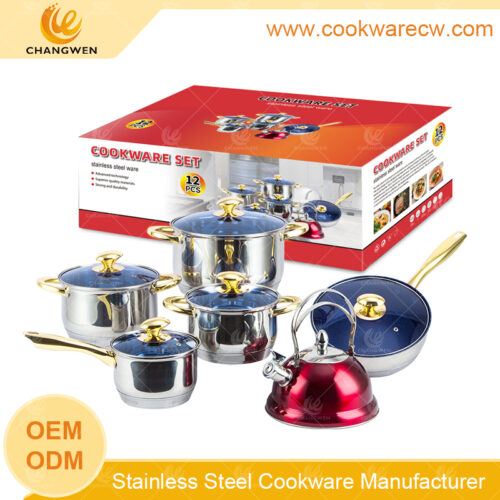
hot sales cookware supplier 12pcs cooking pots and pans stainless steel cookware set fry pan saucepan coating tea kettle CW-M1223
-
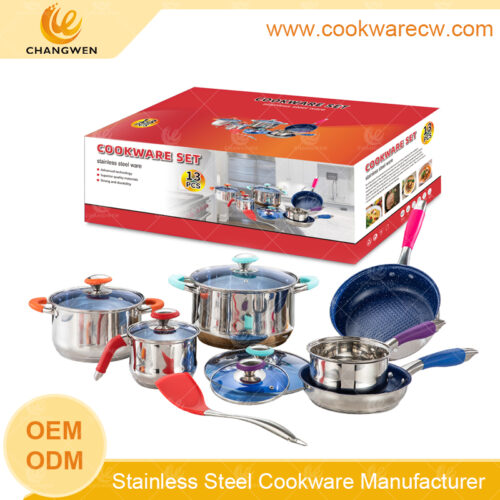
China manufacturer stainless steel pots and pans 12pcs cooking set fry pan nonstick set mirror polished cookware 3.0L whistling tea kettle soup stock pot kitchen set steamer rack CW-M1206G
-
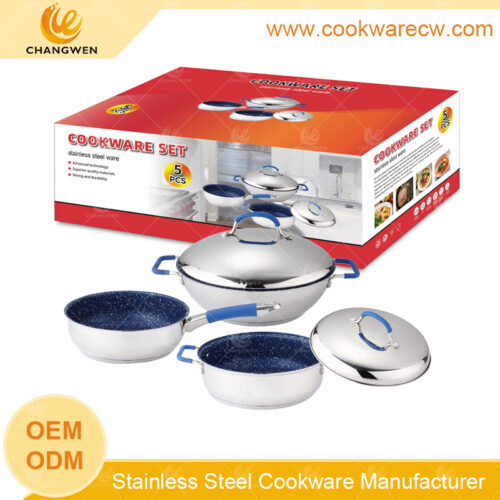
non-stick fry pans coating wok stainless steel wire handles & knobs with silicon cover high quality material lid CW-M0502G
-
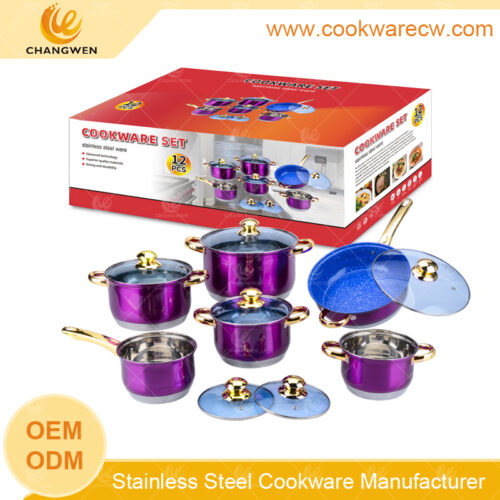
color coating surface stainless steel pots non-stick frypan golden S/S handles and knobs 430 protector for induction CW-M1225
-
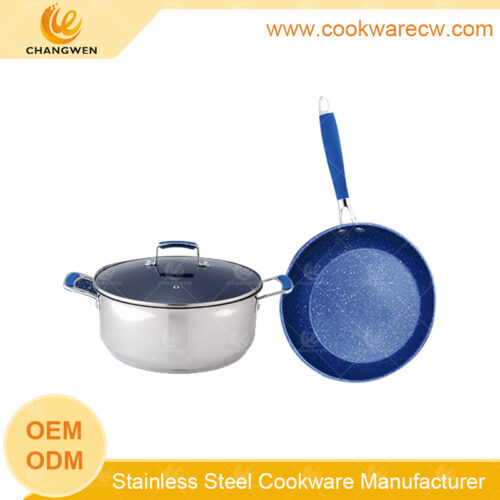
Camping Pot Stainless Steel
-
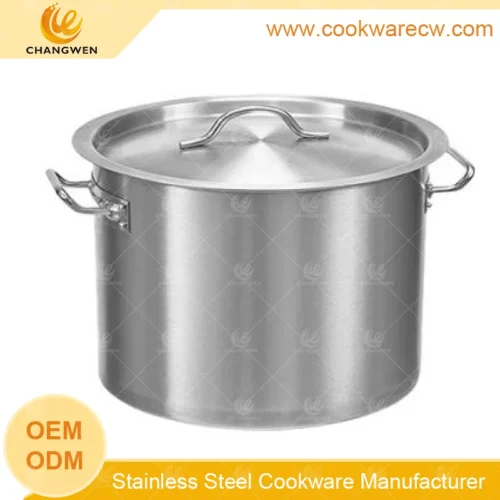
Stainless Steel Stock Pot For Restaurants CW-SP002
-
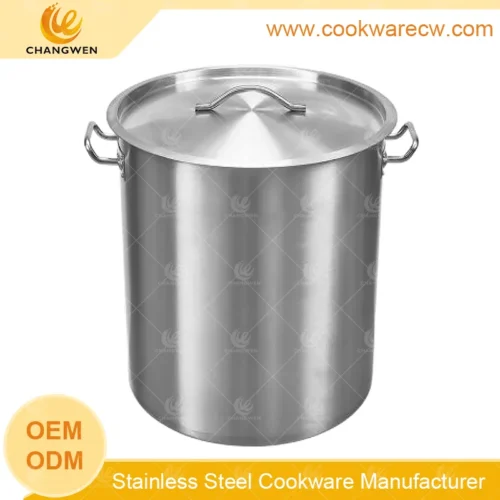
Commercial Stainless Steel Stock Pot CW-SP001
-
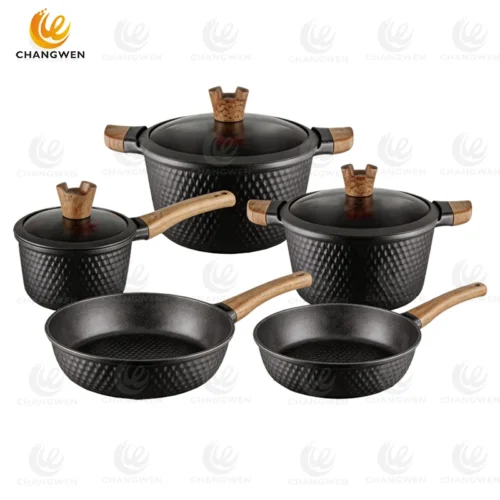
8pcs Die Cast Aluminum Cooking Set with Marble Ceramic Nonstick Coating